

How Do Websites Detect Browser Fingerprints
Cookies and browser fingerprints
Cookies should be nothing strange to today’s internet users. Cookies are text files stored at your browser storage with small pieces of data, like a username and password.
Cookies can store a wide range of information, including personality identifiable information, such as your name, home address, email address, and preferred language. When you visit the web using a browser, websites can identify your computer according to the cookies they access.
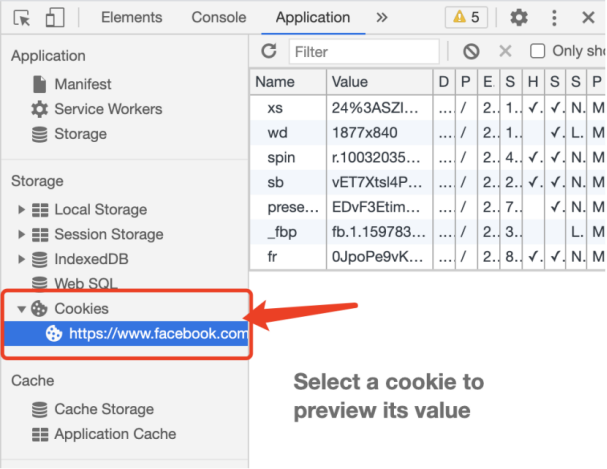
Similar to cookies, browser fingerprints are also used by websites to track the users. Websites collect unique browser fingerprints that can be traced back to the specific device.
By doing so, websites actually collect user data at the same time. Even if you clear cookies in the browser after visiting the web, the records of browser fingerprints can still be used by websites to continuously track you online.
How do browser fingerprints work?
Websites analyze JavaScript to gather browser fingerprints (such as UserAgent, time zone, screen size, resolution, font, plug-ins, etc), and create unique digital signatures based on the acquired information.
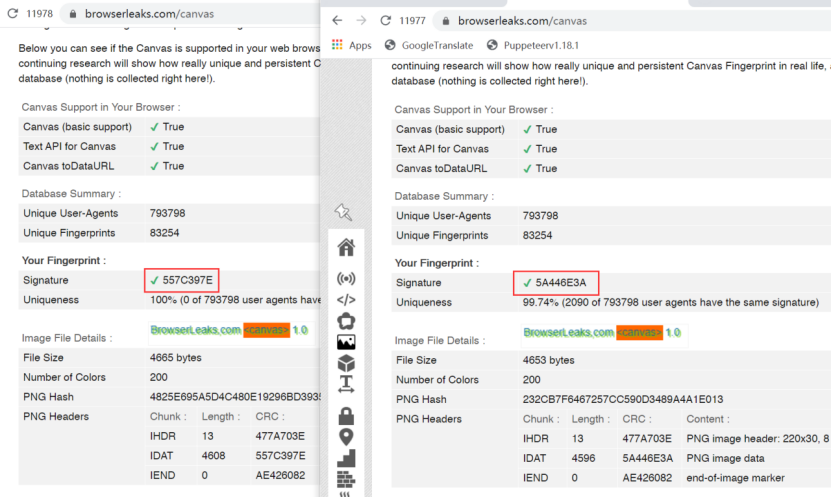
Source: https://browserleaks.com/javascript
Some websites use HTML5 canvas to process graphics. This is also a common method to gather detailed information of a specific device since the GPU of different computers render graphics in different ways.
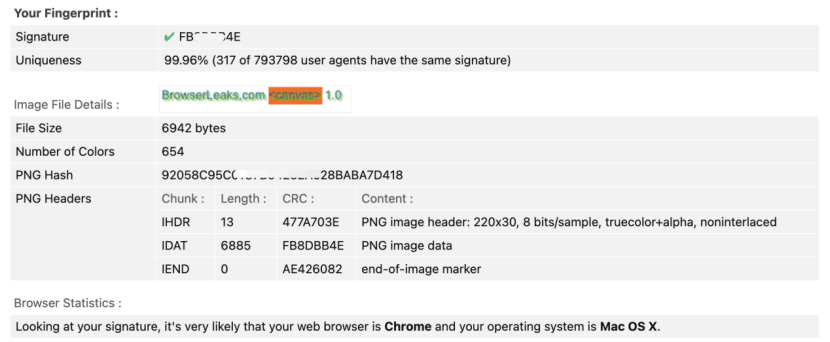
Source: https://browserleaks.com/canvas
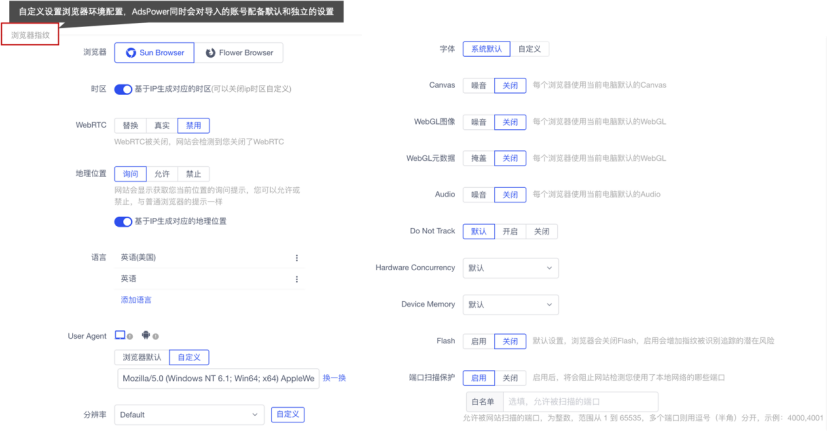
In AdsPower, you can easily change fingerprints, like UserAgent, time zone, and font size, as well as create multiple browser profiles to emulate multiple computers.
What are browser fingerprints used for?
In the same browsing environment, if you register multiple accounts on a website within a few minutes, even if you clear all cookies and change to a different IP address every time you are to register a new account, the website can still detect that you’re operating on one computer. This will be identified as fake account creation and will lead to your accounts being verified or banned.
What can you do with AdsPower?
Based on Chromium, you can set up proxy IPs and change basic fingerprints, such as UserAgent, time zone, language, geo-location, resolution, and font, in AdsPower.
Most importantly, hardware fingerprints, like Canvas, WebGL, and Audio, can also be changed in AdsPower.

Mọi người cũng đọc
- Nhận dạng dấu vân tay trình duyệt là gì?

Nhận dạng dấu vân tay trình duyệt là gì?
Bài viết này đi sâu vào thế giới phức tạp của việc nhận dạng dấu vân tay trình duyệt, làm sáng tỏ cách thức hoạt động, ứng dụng, ưu điểm và nhược điểm của nó.
- Rò rỉ dữ liệu WebRTC là gì và làm thế nào để ngăn chặn chúng?

Rò rỉ dữ liệu WebRTC là gì và làm thế nào để ngăn chặn chúng?
Các lỗ hổng Web RTC có thể gây nguy hiểm cho bạn bất cứ lúc nào. Vì vậy, trong bài viết này, chúng ta sẽ tìm hiểu chúng là gì và cách phòng tránh chúng.
- Phân tích chi tiết User Agent (UA): Các thành phần của UA và cách tra cứu thông tin.

Phân tích chi tiết User Agent (UA): Các thành phần của UA và cách tra cứu thông tin.
Trong bài viết này, bạn sẽ tìm hiểu user agent là gì, các thành phần của nó và cách tìm chuỗi UA của trình duyệt.
- AdsPower xây dựng dấu vân tay trình duyệt ở cấp độ nhân (Kernel) như thế nào?

AdsPower xây dựng dấu vân tay trình duyệt ở cấp độ nhân (Kernel) như thế nào?
Tìm hiểu cách AdsPower sửa đổi dấu vân tay trình duyệt ở cấp độ nhân Chromium để cải thiện tính nhất quán, giảm rủi ro bị phát hiện và hỗ trợ quản lý nhiều tài khoản.
- Giải thích về rò rỉ DNS: Bảo vệ profile AdsPower với proxy phù hợp

Giải thích về rò rỉ DNS: Bảo vệ profile AdsPower với proxy phù hợp
Rò rỉ DNS có thể làm lộ vị trí thật của bạn. Tìm hiểu cách bảo vệ profile AdsPower bằng proxy và thiết lập DNS chuẩn.
