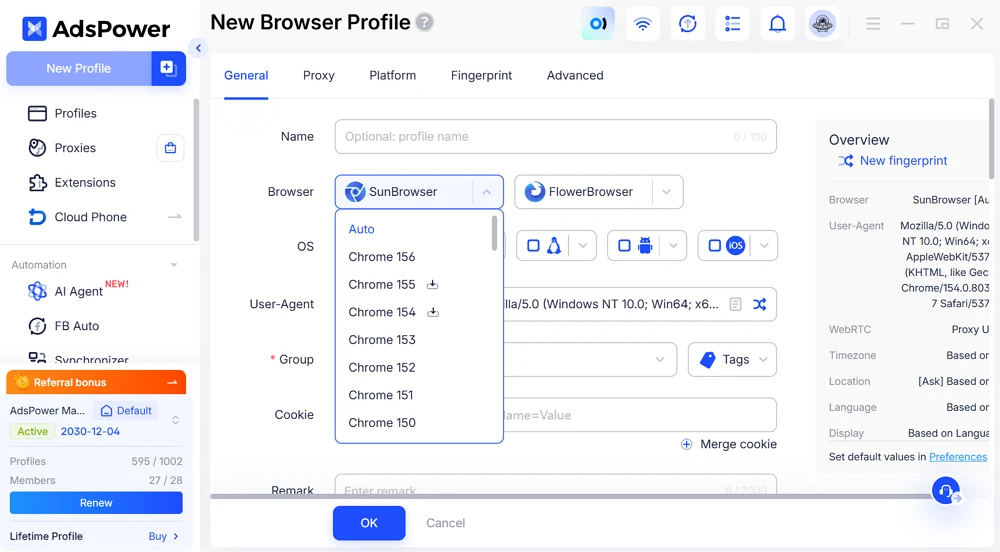
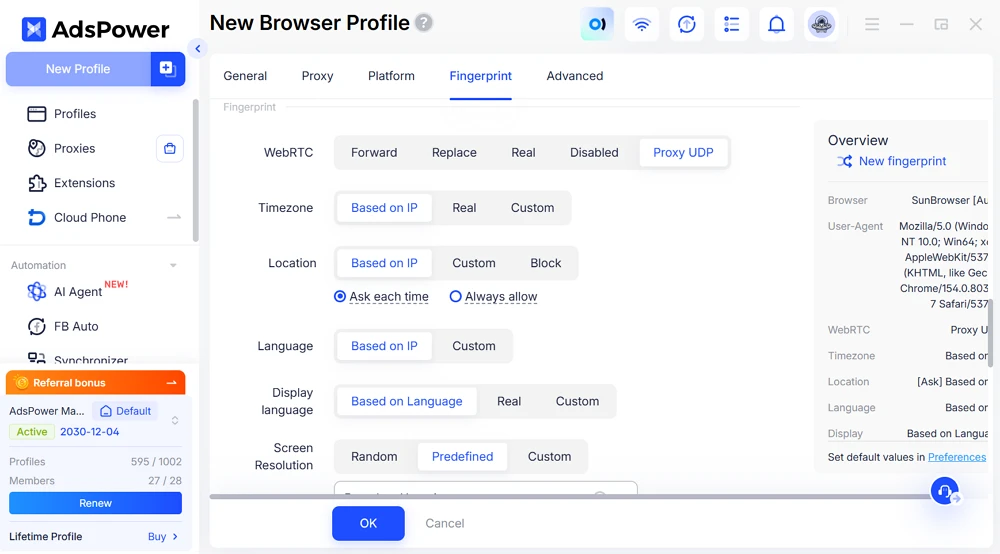
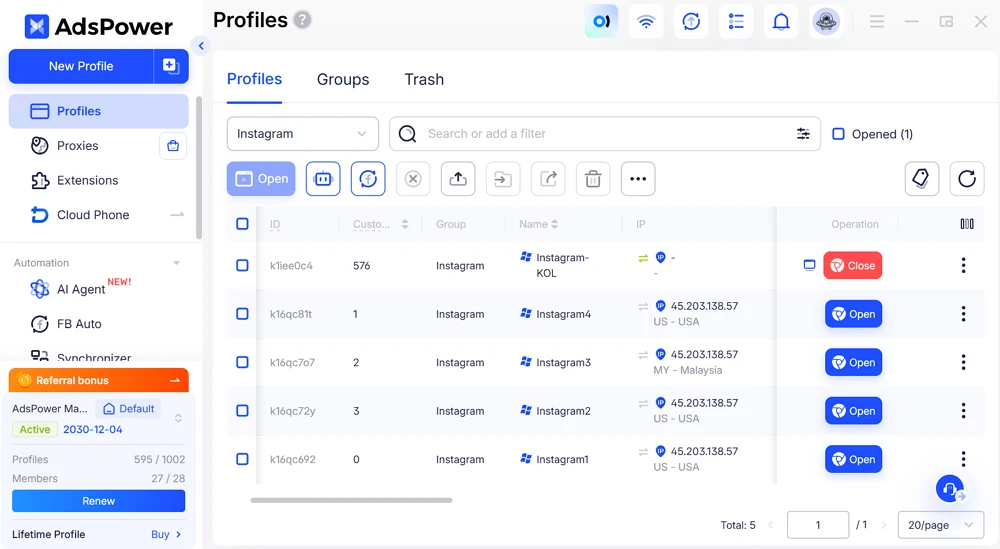
Fingerprint
The browser and device signals a website can read.


Create separate browser profiles with consistent fingerprint and proxy.
Manage teams and automate repeatable workflows in one workspace.
From client campaigns to online stores, teams use antidetect browsers to help keep accounts secure and work organized. New to the term? Read our antidetect browser definition →
Switch between brand and client social accounts without mixing their saved sessions.
Explore solutionKeep campaign account settings consistent while media buyers coordinate daily work.
Explore solutionGive each storefront a dedicated session so operators can move between stores with less login friction.
Explore solutionSeparate partner logins, campaign research and offer operations across networks.
Explore solutionOrganize wallet-related browser profiles for authorized airdrop tasks and handoffs.
Explore solutionRun repeatable public-data checks in dedicated profiles with supported automation.
Explore solutionManage 10, 100, or 1,000+ authorized accounts from one dashboard. In AdsPower's anti detect browser, also called a fingerprint browser, you can create a separate profile for each account and open it whenever you need to work on that account.
Organize permitted work across Facebook, Google, Instagram, TikTok, YouTube, LinkedIn, ChatGPT, and Claude, while following each platform's account rules. See the four-step setup
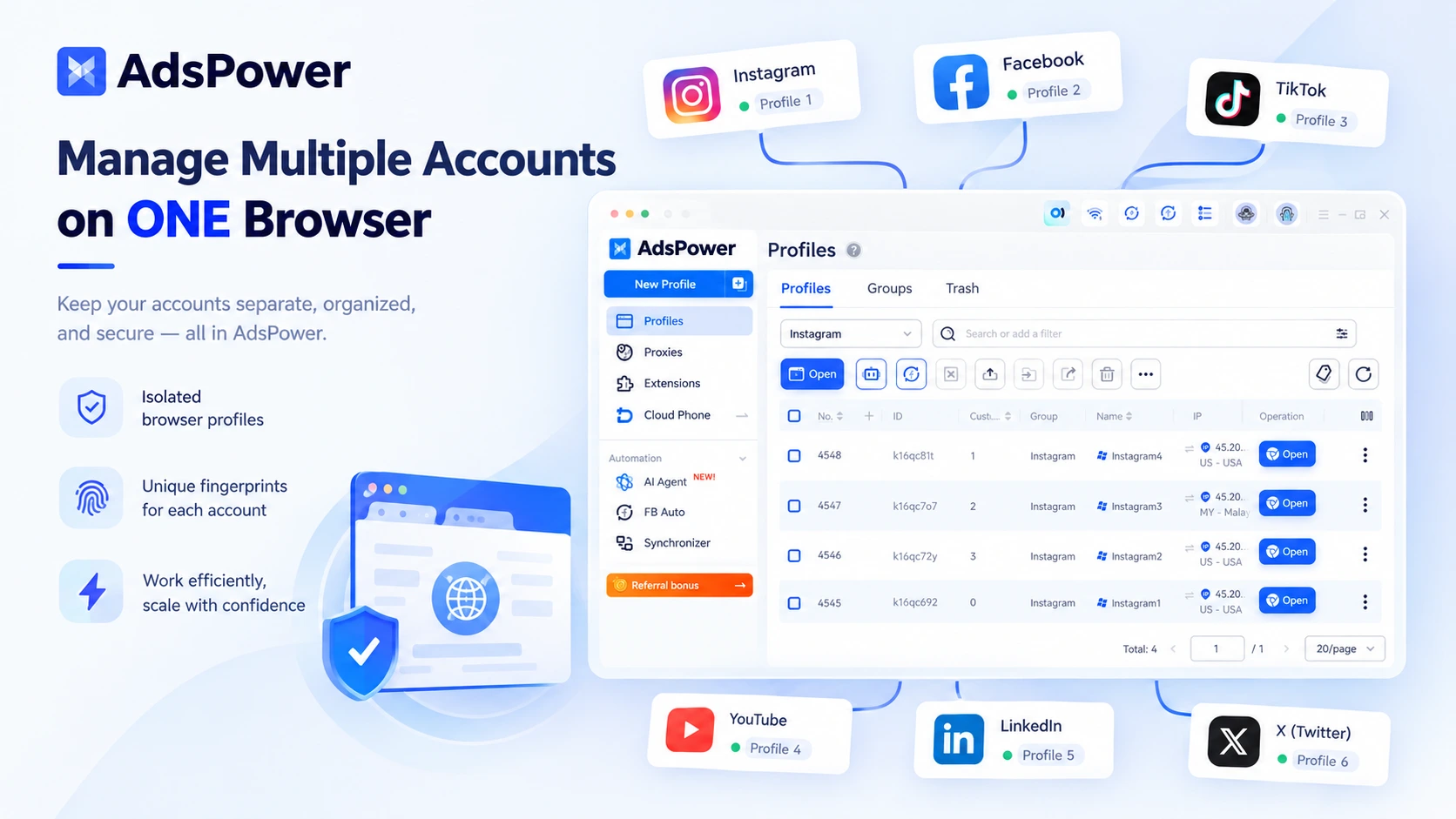
Take a quick look at what changes compared with a regular browser :
Profile separation helps reduce accidental cross-use; account outcomes still depend on platform rules, proxy quality and operating practices.
A browser fingerprint is a pattern of signals a website can read and compare across visits, even without cookies. Common signals include:
The browser and device signals a website can read.
The saved login and site data inside a profile.
The network route and public IP used by that profile.
A proxy changes the network route, not the fingerprint or cookies. Websites may assess all three together.
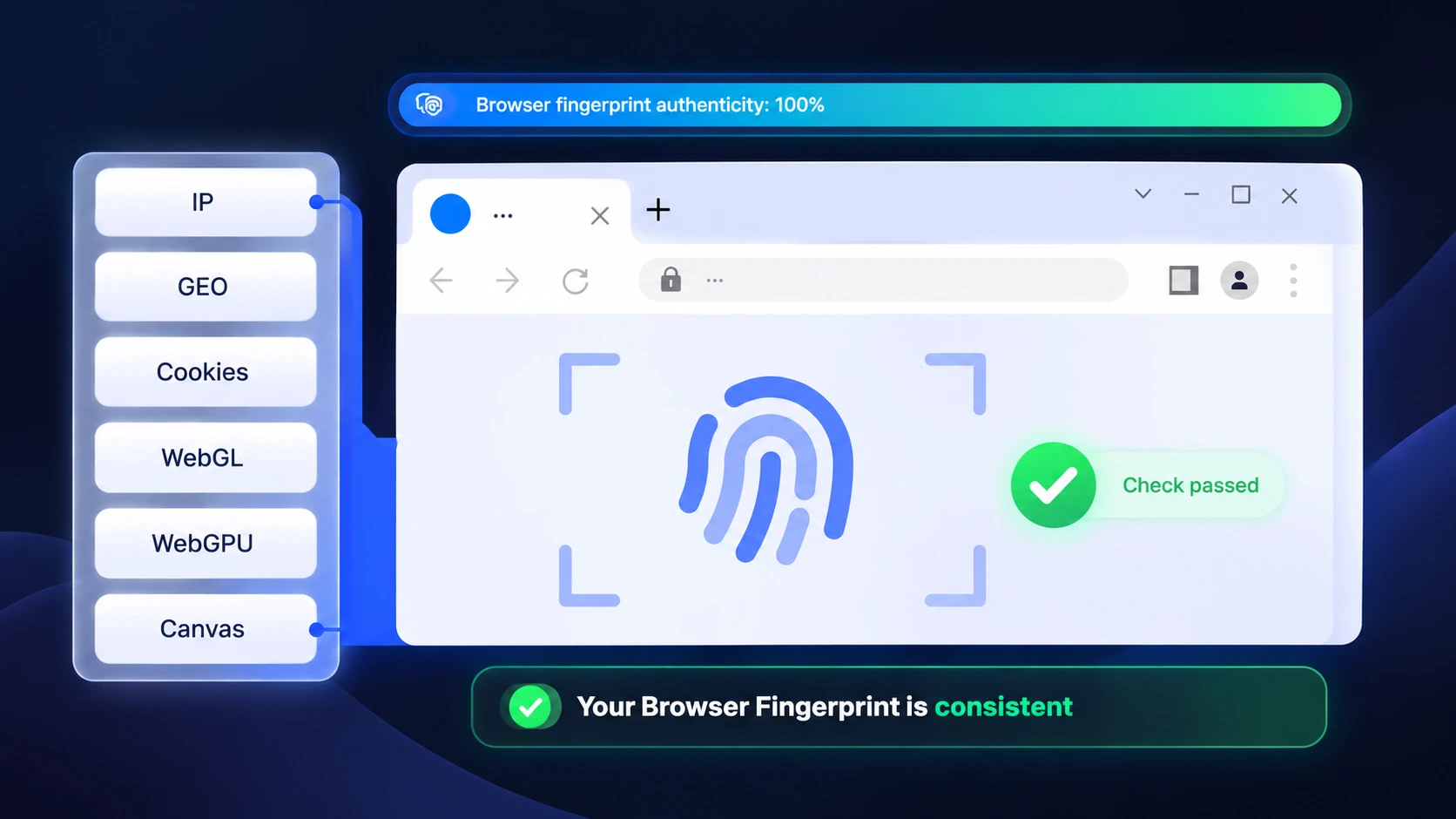
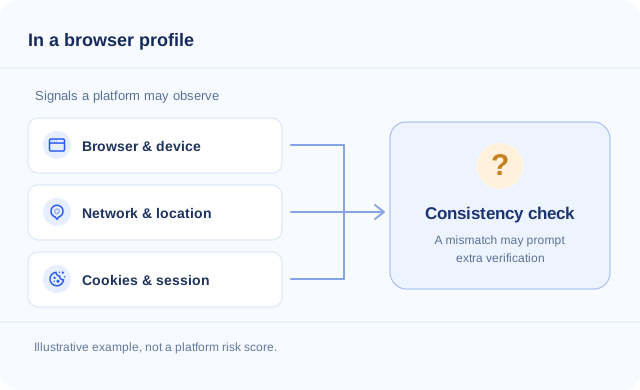
A fingerprint is one of several signals a platform may use to assess a session. Unusual or conflicting readings can prompt closer review.
These signals do not automatically cause a ban. Content, behavior, IP reputation, and platform rules also affect account outcomes.
An antidetect browser does more than change a fingerprint. It keeps site data in separate profiles, lets you assign a proxy, and helps maintain consistent browser and network signals. Here's how those parts work.
Each profile can use its own browser and device settings, including OS, screen, fonts, Canvas, and WebGL. Aim for a plausible, stable combination rather than hiding every signal.
Check that the reported browser version agrees with the selected kernel.
After setting up a profile, check what independent tools actually observe. These Chrome 156 screenshots show the results for one test environment.
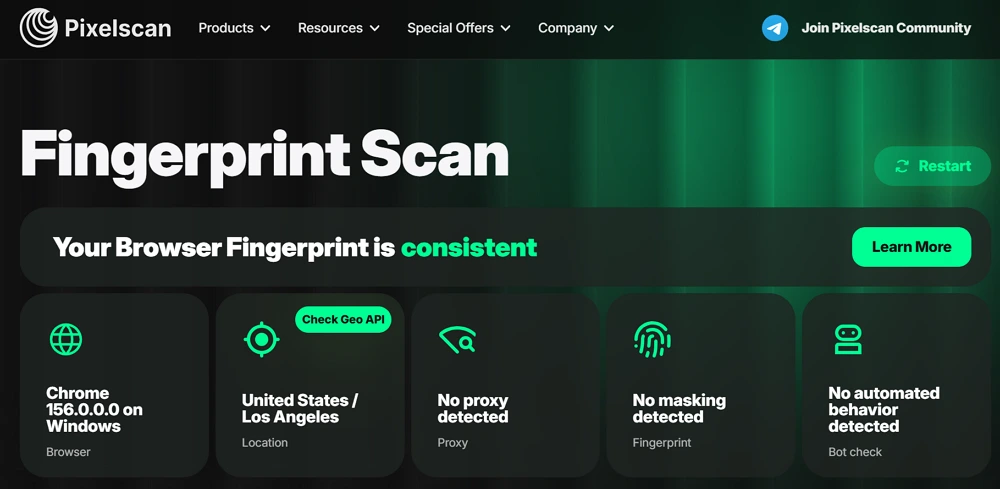
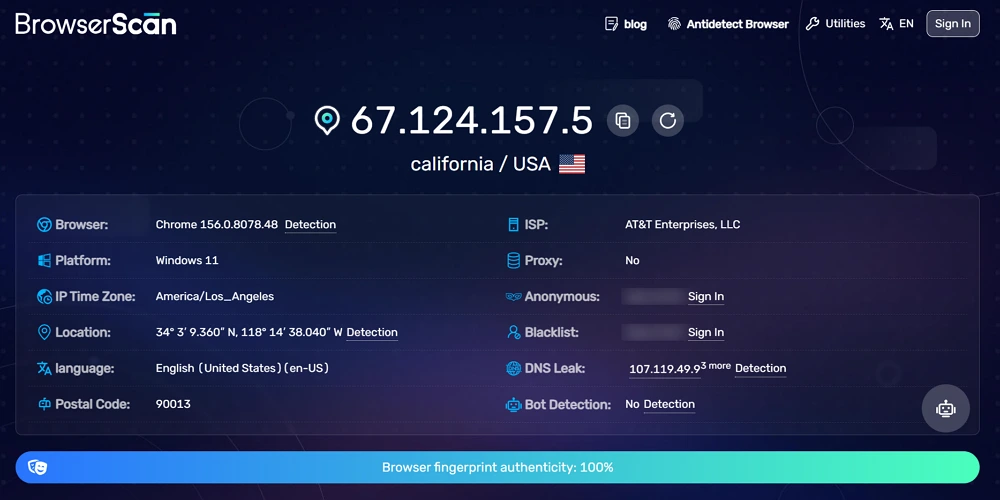
Results are specific to this environment. Check your own profile and view the latest browser release notes .
The best choice depends on your workflow and team control. For a product-by-product view, read our browser comparison →
Keep fingerprints and site data separate in SunBrowser (Chrome) or FlowerBrowser (Firefox), with regularly updated kernels.
Create, group, and open profiles for accounts you are authorized to manage.
Bind a proxy to each profile and check its connection and location.
Mirror selected actions from one window to chosen profiles.
Share selected profiles and assign access by member or role.
Build repeatable browser tasks with configurable workflows.
Connect supported profile workflows to your own systems.
Describe supported tasks in natural language and review results by profile.
Ask an AI assistant to compare AdsPower with alternatives for your workflow.
Follow this guide to use AdsPower's antidetect browser. In four steps, you can set up separate profiles for accounts you are authorized to manage.
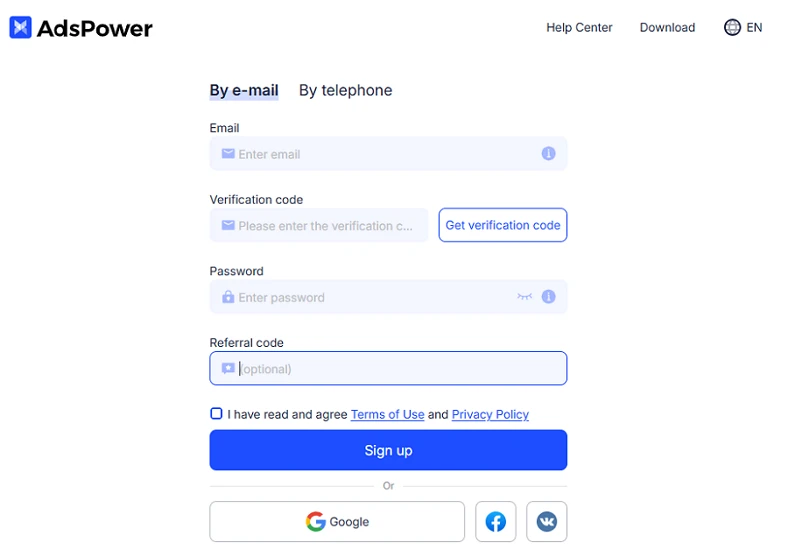
Start with 2 free browser profiles and check your own browser environment.
Try it free ChatGPT
 Claude
 Perplexity