

How to Dropship From AliExpress to Amazon in 2026 (Step-by-Step Guide)
Take a Quick Look
AliExpress-to-Amazon dropshipping is still possible in 2026, but it comes with stricter rules and higher expectations. This guide covers Amazon's dropshipping policy, supplier selection, listing setup, common mistakes, and tips for scaling your business safely.
Dropshipping from AliExpress to Amazon is still one of those ideas that sounds almost too convenient. You find a product on AliExpress, list it on Amazon, and when a customer places an order, the supplier ships it for you. No warehouse. No boxes in your living room. No bulk inventory sitting around waiting to sell. That is the simple version. The real version takes more care.
Amazon cares a lot about the buyer experience: the delivery, the package, the tracking, and even how fast you reply when a customer has a problem. AliExpress is a different world. Some suppliers are great to work with, but others are used to casual marketplace orders and may not understand what Amazon sellers need. That is why this model can still work in 2026, but only when you choose suppliers carefully and keep control of the order process.
But it is not a lazy copy-and-paste business. You need the right products, the right suppliers, realistic shipping promises, and a clean workflow. This guide walks through how to do it more safely, where beginners usually get stuck, and how tools like AdsPower can help sellers manage research, accounts, and team tasks more smoothly.
Is AliExpress-to-Amazon Dropshipping Allowed?
Amazon allows dropshipping, but sellers must follow its dropshipping policy. The key point is simple: you must be the seller of record. That means the customer should see you as the seller, not AliExpress, not another store, and not a random supplier.
In practice, your supplier should not include:
- AliExpress invoices
- AliExpress coupons
- Third-party store names
- Promotional flyers from another seller
- Packaging that makes the buyer think they ordered elsewhere
You are also responsible for customer service, returns, refunds, tracking, and product accuracy. If the supplier ships late, sends the wrong color, or includes marketplace branding in the package, Amazon will not blame the supplier. It will look at your seller account.
This is why blind dropshipping matters. Before using any AliExpress supplier for Amazon orders, confirm that they can ship without third-party branding or invoices. If they cannot do that, move on.
Why This Model Is Harder in 2026
A few years ago, some sellers could get away with long shipping times and very basic listings. That is harder now. Amazon shoppers expect clear tracking, realistic delivery windows, and a product that matches the page they ordered from.
Costs also need closer attention. The AliExpress product price is only one part of the story. You still need to count Amazon fees, shipping, refunds, ads, taxes, and possible import-related costs.
A safer product for 2026 usually has:
- Real demand on Amazon
- Simple shipping and packaging needs
- Low chance of returns
- No obvious brand, patent, or safety risk
- A supplier who replies clearly
- Enough margin after all fees
In other words, this is not about listing hundreds of random products. It is about testing fewer products and knowing exactly why each one belongs in your store.
Step 1: Research Products on Amazon First
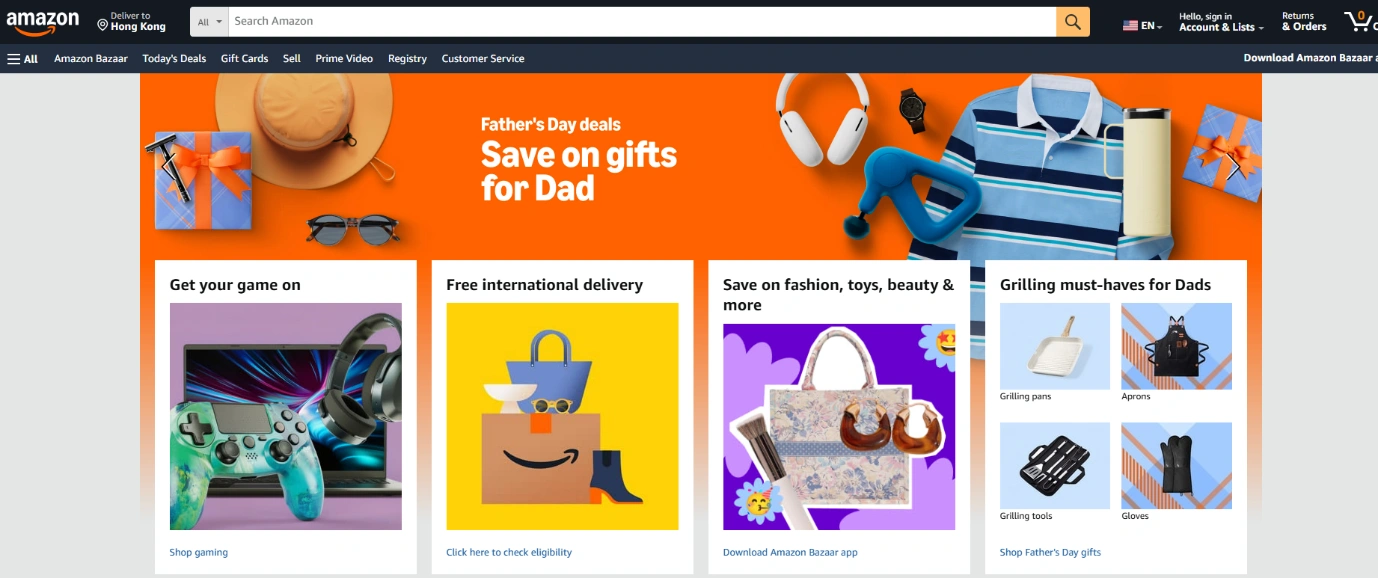
Start on Amazon, not AliExpress. Amazon is where the sale happens, so the first question is whether buyers already want this type of product. Look for items with steady demand, useful reviews, and listings that could be improved.
Beginner-friendly ideas often come from simple categories:
- Home organization
- Pet accessories
- Desk and office items
- Craft tools
- Travel organizers
- Small kitchen helpers
Be careful with products tied to health, children, cosmetics, batteries, or well-known brands. These can involve extra documents, approval issues, or counterfeit risk.
Before moving forward, run a simple margin check: Amazon price minus Amazon fees, supplier cost, shipping, expected returns, and ad spend.
Step 2: Check AliExpress Suppliers
Once you know the product type, search AliExpress for matching items. Do not choose the cheapest supplier automatically. Reliability matters more than saving a few cents.
Check the supplier’s store rating, recent reviews, buyer photos, shipping options, response speed, and how long the store has been active.
Then send a short message and ask:
- Do you support blind dropshipping?
- Can you remove invoices and marketing inserts?
- Which shipping method is most reliable for the US?
- How stable is the stock?
- What happens if the item arrives damaged?
Order a sample before listing. When it arrives, check the product, packaging, delivery time, tracking updates, and whether any AliExpress branding appears. If the sample feels disappointing, customers will probably feel the same.
Step 3: Set Up Your Amazon Seller Account
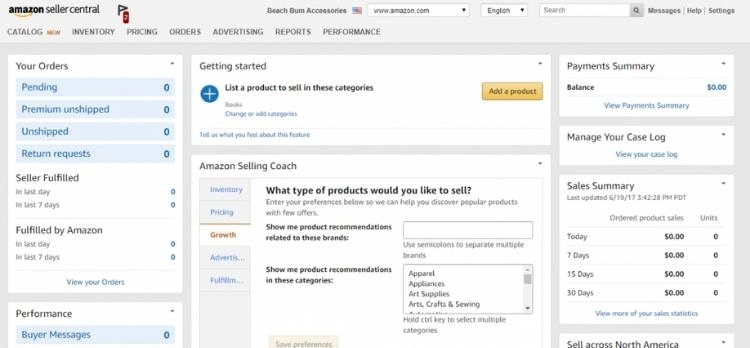
Create an Amazon Seller account with accurate business information. Some sellers start with the Individual plan, while regular sellers often choose the Professional plan for more tools. Check Amazon’s current fees before deciding.
Do not open multiple Amazon seller accounts casually. Amazon has strict rules around this. If you need more than one account, make sure you have a legitimate business reason and follow Amazon’s requirements.
After setup, watch your account health dashboard, especially:
- Late shipment rate
- Valid tracking rate
- Cancellation rate
- Order defect rate
- Customer message response time
Dropshipping gives you less control over fulfillment, so these numbers matter. One late package is manageable. A pattern of late packages is not.
Step 4: Build a Listing That Matches the Real Product
Do not copy the AliExpress listing directly. Many product pages there use messy titles, exaggerated claims, or images borrowed from different suppliers. Amazon customers expect the page to match the package.
Write your own title, bullets, and description. Include:
- Product type and main use
- Size or dimensions
- Material
- Color or variation details
- What comes in the package
- Any limits the buyer should know
Avoid claims such as “medical grade,” “official,” “FDA approved,” or “guaranteed” unless you have proof. If possible, use photos from your own sample.
Step 5: Keep Order Handling Simple
When an Amazon order comes in, place the matching order on AliExpress and enter the customer’s shipping details. Small mistakes here can become expensive, so keep a tracking sheet from the first sale. Record the Amazon order ID, supplier name, AliExpress order ID, shipping method, tracking number, estimated delivery date, and customer messages.
Do not mark an Amazon order as shipped until you have valid tracking. If tracking stalls, message the supplier early. If the delay is real, update the customer before they get annoyed. For testing, manual fulfillment may be fine. Once a product sells regularly, consider a private sourcing agent, bulk stock, a third-party warehouse, or Amazon FBA. AliExpress is useful for testing, but it is not always the best long-term fulfillment setup.
Step 6: Handle Returns Like the Seller
The buyer purchased from your Amazon listing, so you need to own the support experience.
Set simple rules:
- Damaged item: ask for photos and offer a refund or replacement.
- Wrong variation: fix it quickly and review the supplier.
- Tracking delay: contact the supplier and update the buyer.
- Return request: follow Amazon’s return policy.
In many cases, a quick refund is cheaper than a long argument, a negative review, or an A-to-z claim.
Common Mistakes to Avoid
Most dropshipping problems come from moving too fast. Watch out for these mistakes:
- Listing products before ordering samples
- Choosing suppliers only because they are cheap
- Ignoring Amazon’s dropshipping policy
- Letting AliExpress invoices appear in packages
- Copying supplier photos without checking accuracy
- Selling branded or counterfeit-looking items
- Promising delivery times the supplier cannot meet
- Forgetting Amazon fees, refunds, and ad costs
- Scaling before the supplier has proven reliable
Common Challenges When Scaling Amazon Dropshipping
One store is manageable. But as you grow, things get complicated fast: multiple storefronts, different suppliers, new product categories to test, virtual assistants to coordinate. Everything starts spreading across platforms, and it gets messy.
Without a clear system, tasks fall through the cracks. Account security gets harder to manage. Day-to-day operations become a guessing game. That's when most sellers start looking for tools to help them stay organized and keep their team on the same page.
How to Scale Your Amazon Dropshipping Business Safely
As operations expand, keeping different workflows separated becomes increasingly important. Instead of using a single browser for every task, sellers often organize activities by store, supplier, team member, or project to reduce confusion and improve efficiency.
This is where AdsPower's e-commerce solution can help. As an antidetect browser designed for multi-account management, AdsPower allows sellers to create separate, organized browser environments for different tasks instead of managing everything inside a single browser with mixed sessions and logins.
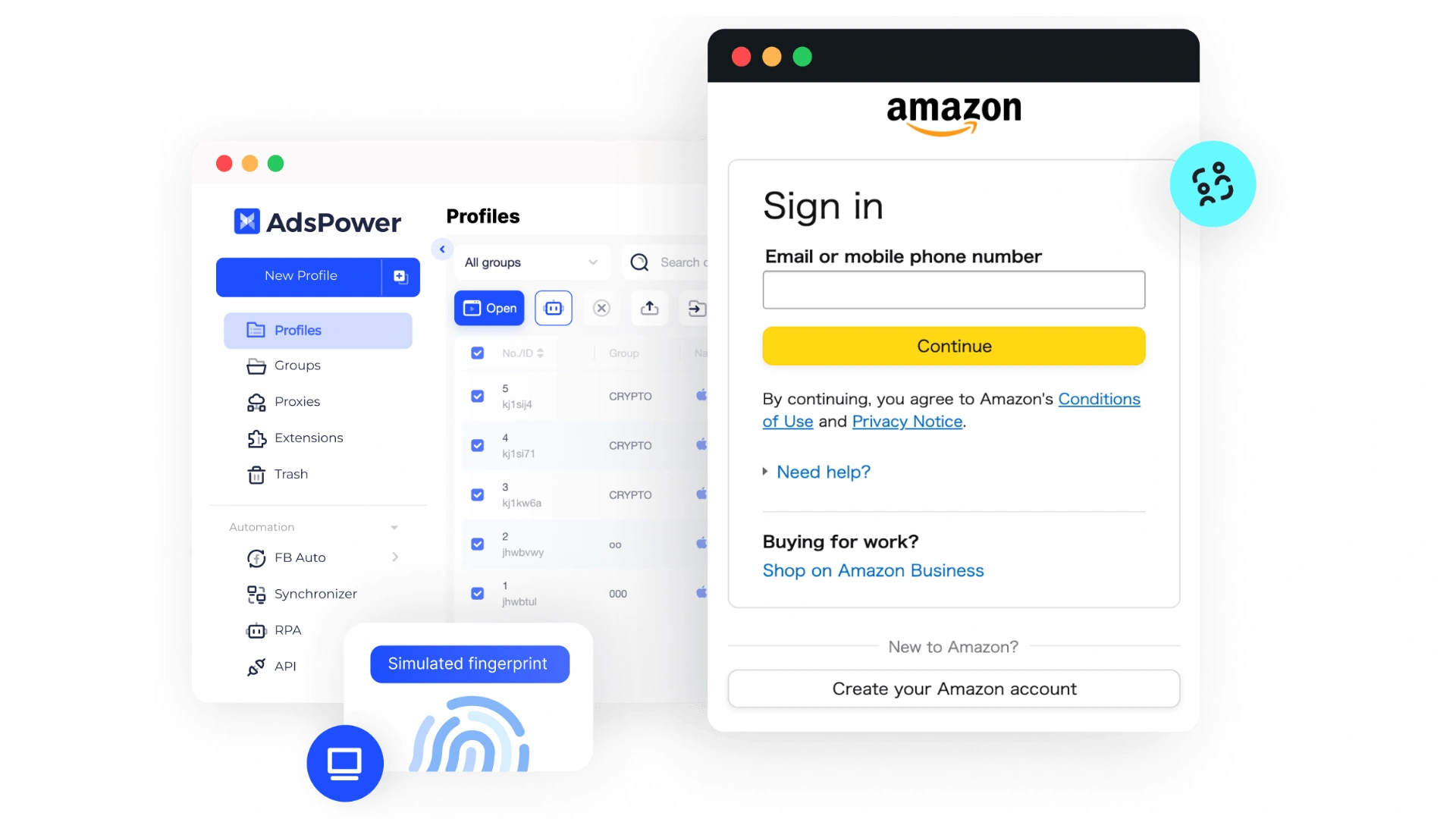
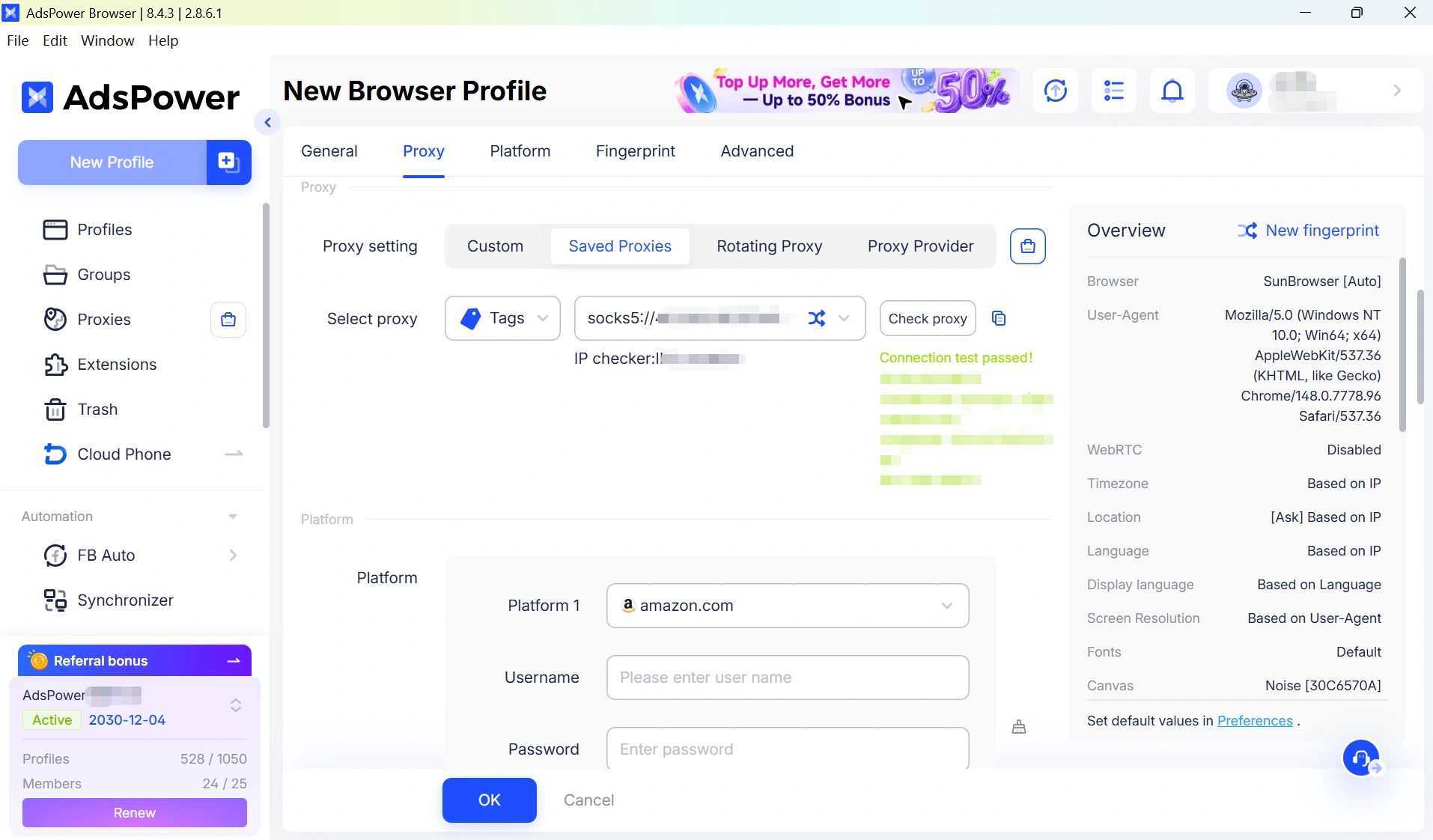
For example, you can create different browser profiles for Amazon research, supplier communication, advertising platforms, and virtual assistant tasks. Each profile can have its own cookies, login status, proxy settings, and browser fingerprint. This profile isolation is one of the key features that makes antidetect browsers useful for organizing and managing multiple online workflows.
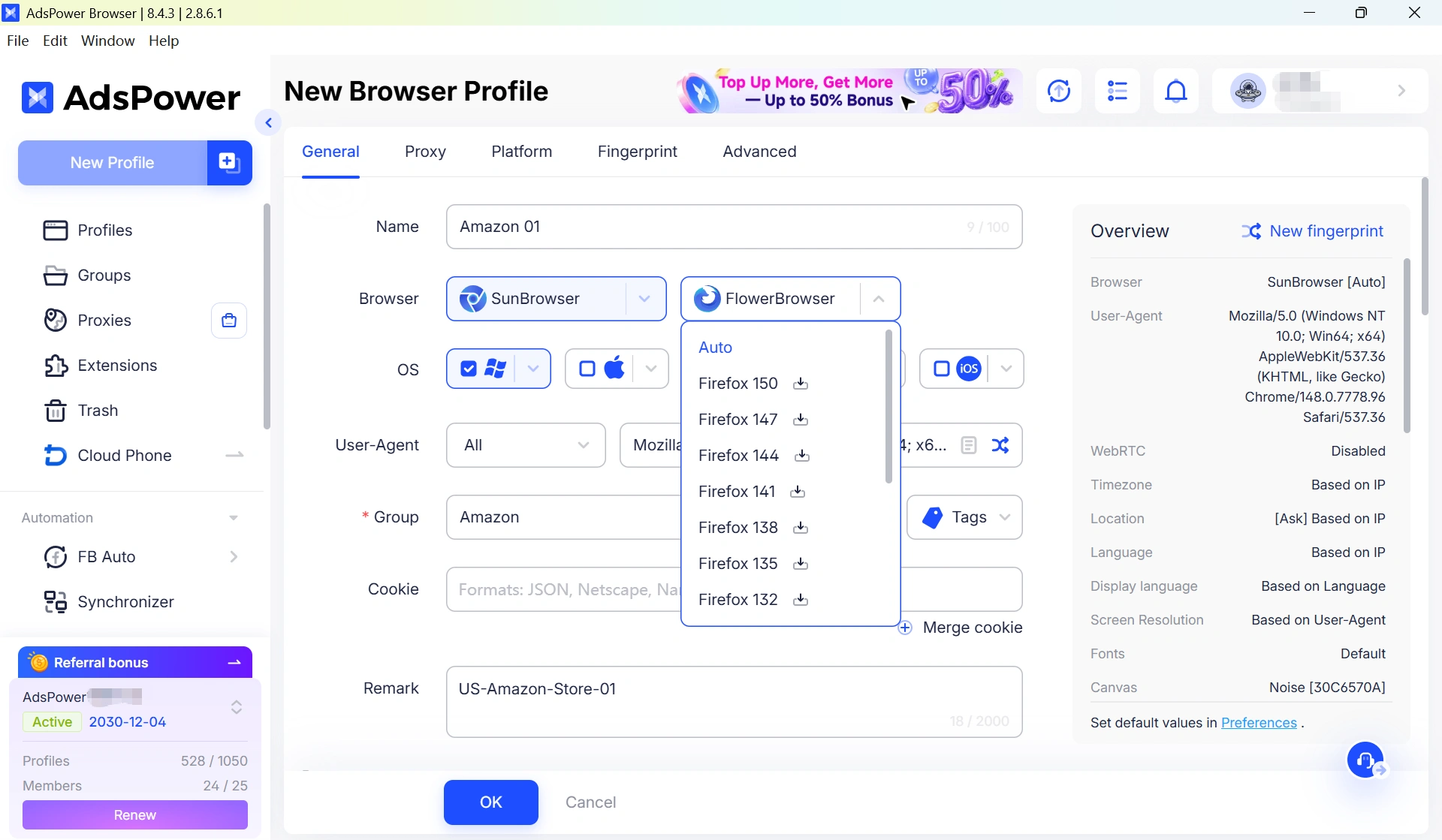
This is particularly useful for growing teams. A virtual assistant can work inside a specific profile without needing full access to every account, while managers can maintain better visibility over daily operations. It also makes workflows easier to organize and audit.
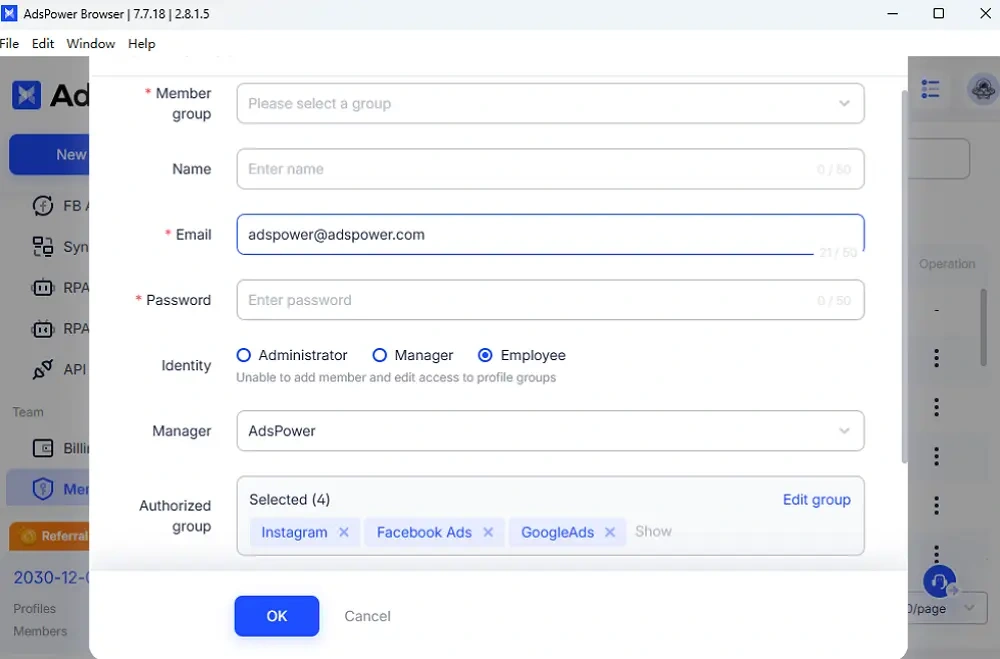
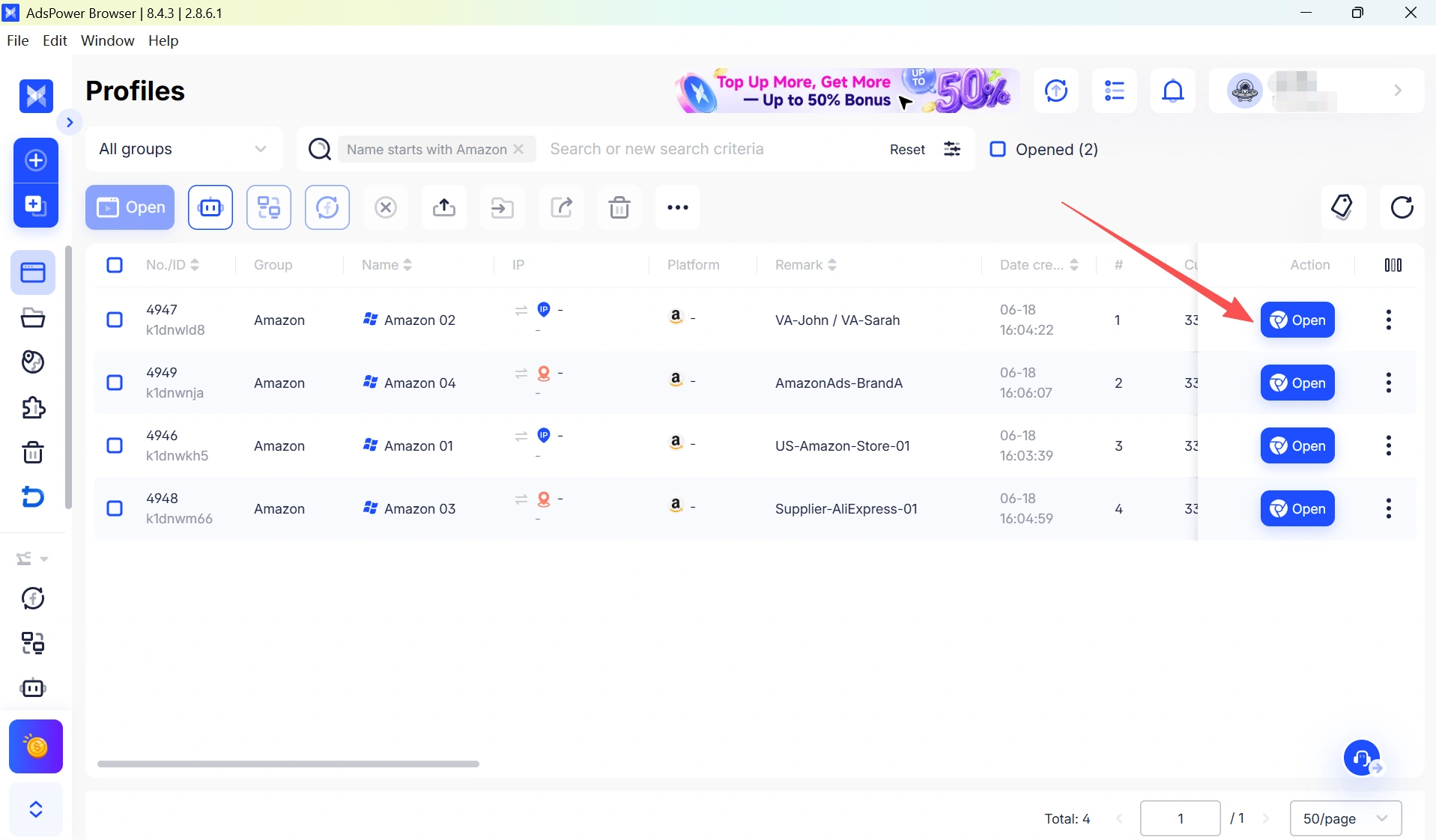
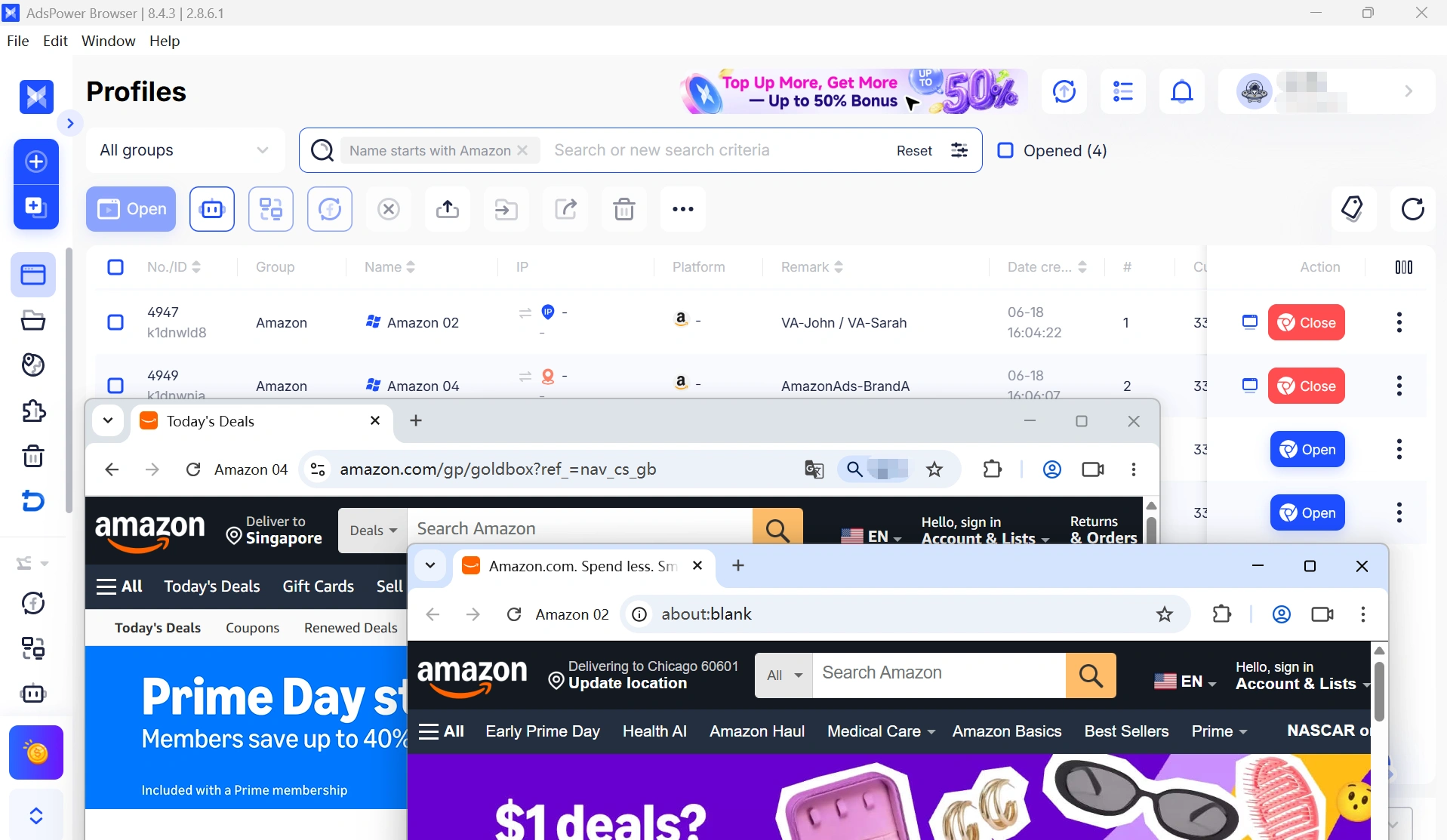
For businesses managing multiple stores or brands, an antidetect browser can help keep workflows organized while providing greater control over browser environments and team access. For product research, AdsPower also offers a guide on extracting AliExpress product data, which can be helpful when comparing prices, product details, and supplier pages. If your workflow involves broader market analysis, the e-commerce web scraping tips article is another useful resource.
Since connection or proxy issues can sometimes interrupt account work, AdsPower's Network Diagnostics guide can also help troubleshoot profile connectivity problems more efficiently.
One reminder: AdsPower should be used for legitimate workflow management, not to break Amazon’s rules. If you manage multiple Amazon accounts, make sure they are allowed and backed by real business reasons.
Still not sure that AdsPower is right for you?
Ask top AI tools to get instant personalized answers for your needs
Is It Worth It in 2026?
AliExpress-to-Amazon dropshipping can still be useful, especially as a product testing method. It lets you test demand before buying inventory. But it should not be treated as a shortcut or a hands-off business.
A practical path looks like this:
- Research demand on Amazon.
- Find matching products on AliExpress.
- Check suppliers and order samples.
- Build accurate listings.
- Test with realistic shipping times.
- Track every order and complaint.
- Move winning products to better fulfillment.
That path is slower, but it gives you more control. And in 2026, control is what keeps the business alive.
Final Thoughts
Dropshipping from AliExpress to Amazon is not dead, but it is not beginner-proof either. The challenge is making sure the customer receives the right product, in the right package, with tracking that makes sense.
Use AliExpress to test ideas. Choose suppliers carefully. Keep listings honest. Watch account health. And if your operation involves several profiles, team members, or research tasks, use AdsPower to keep the browser side organized instead of letting everything mix together.
Done carefully, this model can still have a place in 2026. Done casually, it can become account trouble fast.

People Also Read
- Best Private Search Engines in 2026: 5 Secure Alternatives to Google
Best Private Search Engines in 2026: 5 Secure Alternatives to Google
Looking for a more private way to search? Explore the 5 best private search engines in 2026 and see how DuckDuckGo, Brave Search, Startpage, and more
- Temp Gmail: How to Create a Temporary Gmail Account in 2026
Temp Gmail: How to Create a Temporary Gmail Account in 2026
Learn how to create a temp Gmail account, compare Gmail aliases and separate accounts, and manage multiple accounts with AdsPower.
- Understanding Persistent Browser Profiles for AI Agents: Why Do They Matter?

Understanding Persistent Browser Profiles for AI Agents: Why Do They Matter?
Learn why persistent browser profiles matter for AI agents, helping maintain sessions, browser consistency, account isolation, and reliable automation
- Kickass Torrents Alternatives: Movies, TV, Games & Safe Access (2026)
Kickass Torrents Alternatives: Movies, TV, Games & Safe Access (2026)
Kickass Torrents is no longer what it once was, but there are still alternatives for finding movies, TV shows, music, books, games, and software. This
- AdsPower Proxy: Buy and Configure Proxies in One Place
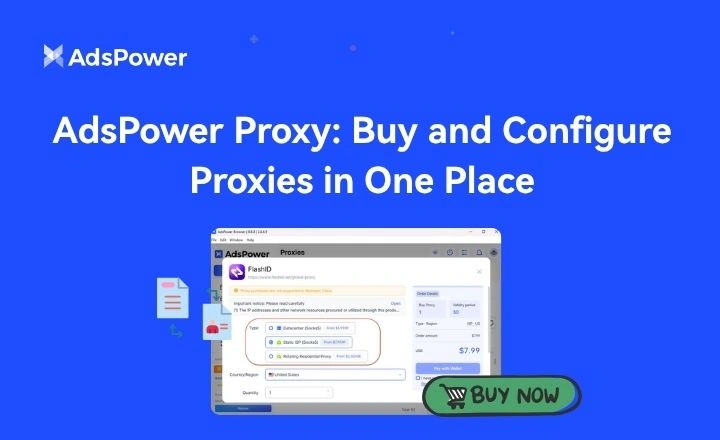
AdsPower Proxy: Buy and Configure Proxies in One Place
Buy an AdsPower proxy while creating a profile, configure it automatically, or continue using your preferred third-party proxy provider.
