

How to Make Money on Substack 2026: Revenue Strategies for Creators
Take a Quick Look
Substack can be a real income channel, but it works best when you treat it as a long-term content platform rather than a quick monetization tool. In this guide, we break down the main ways creators earn money, how to grow a publication, and how to keep multiple Substack accounts organized as your workflow scales.
If you've spent any time around creators, coaches, or newsletter people lately, you've probably heard Substack come up again and again.
“It's the easiest way to build an audience.”
“It's free to start.”
“You can make money with it without overcomplicating things.”
And honestly, some of that is true. Substack works really well for people who want to publish regularly, build trust with readers, and turn content into income. It's simple, flexible, and easy to get started with. For a lot of creators, it's a way to build an audience and make money at the same time. That's exactly what this guide is for. We'll break down what Substack is good at, how creators use it to grow and earn, and where it fits into a simple content strategy.
What is Substack?
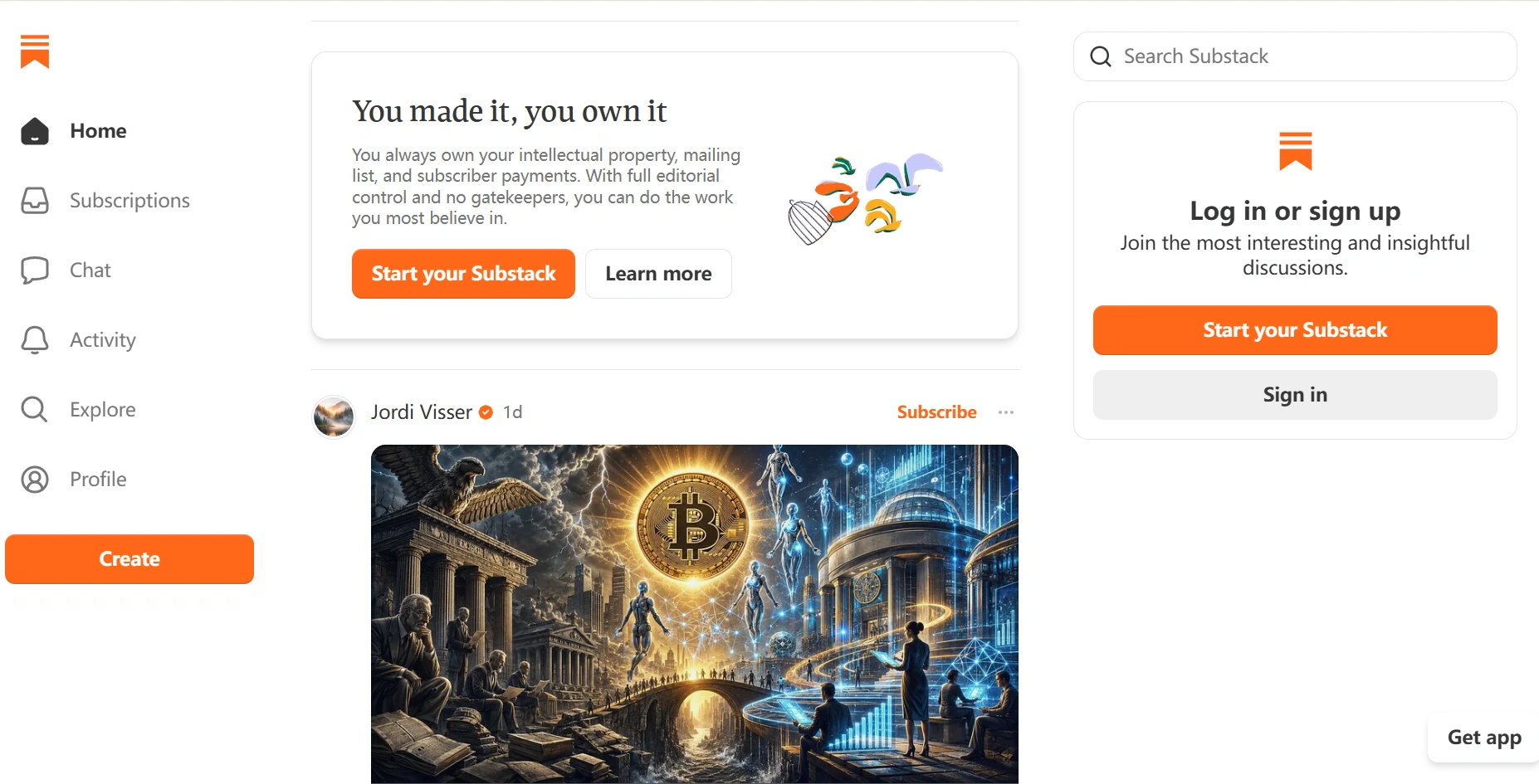
Substack is a newsletter publishing tool that allows creators to send their writing directly to subscribers' inboxes. In simple terms, it combines blogging and email delivery in one place, without the complexity of a traditional marketing platform.
It is built for consistency and longer-form content, not automation or sales funnels. You write, send, and build a relationship with readers over time. That simplicity is a big reason creators are drawn to it. It is free to get started, it has a built-in recommendation engine, and it gives writers a direct path to readers without needing their own email infrastructure. It also includes a community layer through Substack Notes, which helps writers connect and stay visible beyond their own newsletter.
Can You Really Make Money on Substack?
Yes, you can make money on Substack — but the reality is usually more modest than the hype. Many creators build small, loyal audiences first, and only a smaller group turns that into significant paid revenue. What this really tells us is that writing alone is not enough. Readers may enjoy your work and still decide not to pay for it, which means Substack tends to reward strong positioning, consistency, and content people genuinely value.
Here's a simple example of what that can look like in practice. If a newsletter has 2,000 subscribers and a 1.5% paid conversion rate, that means 30 paying readers. At $7 per month, that works out to about $210 in monthly revenue before fees. If the list grows to 8,000 subscribers and the conversion rate improves to 2.5%, that becomes 200 paying subscribers. At $9 per month, monthly revenue would be around $1,800 before fees. Substack takes a 10% cut on paid subscriptions, and Stripe processing fees also apply, but it can still be a very solid way to make money from content.
How Do You Make Money On Substack?
There is no single way to make money on Substack. Most creators combine a few different revenue streams, and the best model depends on what kind of content they create, how much trust they've built, and whether they want to sell access, attention, or expertise.
Paid subscriptions
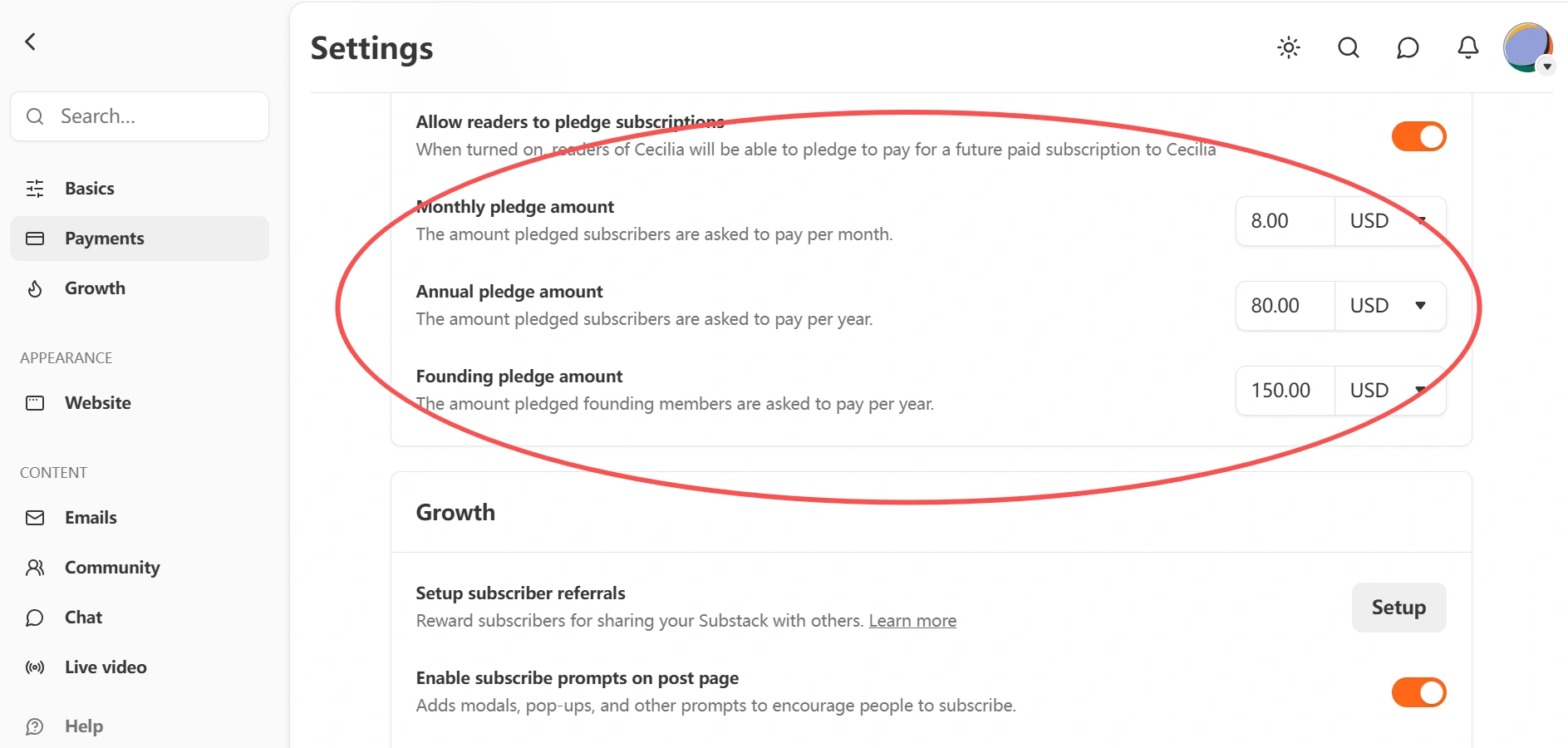
Paid subscriptions are the most common monetization model on Substack. Creators publish free content to build an audience, then reserve deeper analysis, exclusive posts, or premium updates for paying readers. This works best when the paid layer feels like a real upgrade, not just a locked version of the free post. If your content has no clear premium angle, it usually will not work as well.
Sponsorships
Other creators sell ad placements (or sponsorships) within the newsletter. This generally works well once you have a more established audience and know your niche, because sponsors want to target readers who are potential customers for their product or service. It can be a good option, especially for creators with moderate reach, but it is rarely the best initial strategy if your newsletter traffic remains small or unpredictable. And by the way, sponsorships also work better if your audience trusts what you recommend and this is not all over the place.
Affiliate marketing
It refers to promoting products or services and getting paid when readers purchase through your link. This probably works well for creators who naturally review tools, are sharing resources, or are publishing content that is already helping readers in the decision process. If your newsletter is primarily about lists of topics with clear buying intent, then this fits well, but if you are discussing mostly opinion-based articles or anything that does not fit in a sense into some product category, then it might do less to help. The goal is not to recommend whatever pays a commission—but what you actually think suits your audience.
Digital Products
Things like a template, guide, ebook, workshop, or money report fall under digital products. This makes it a great model for Substack, where you can build trust with your newsletter initially and then introduce a product that addresses a tighter pain point. This is a great fit for creators who have an established framework, method, or repeatable process to sell. It's not as appropriate if you're still working on voice or your audience doesn't view you yet as a real-world expert with practical advice.
Consulting or Coaching
Substack is fully utilized by creators selling consulting or coaching services. That means using the newsletter as a way to build trust: your readers have an idea of how you think, what your experience is, and how you approach things before they ever book a call with or buy something from you. This is particularly effective for people such as experts, founders, operators, and coaches looking to convert attention into higher-ticket offers. If your content is very general or if there is no clear association between what the writer writes and what service you provide, it won't work as well.
Services or e-commerce
If you run a service business or an e-commerce brand, Substack can also work for you as long as the newsletter serves to educate your subscribers and/or warm them up into (or maintain/retain) customers. For example, a brand could use Substack to share thought leadership, behind-the-scenes insight, or other value-added content that encourages customers to come back between purchases. If your business thrives on building relationships and repeat attention, this model may suit you well. If your funnel needs are segmented or require more complex marketing, then this is also not the perfect solution.
Substack Creator Types: Different Monetization Paths
Based on the materials I reviewed, not every Substack creator should monetize the same way. The best path depends on what kind of content you create and what kind of value your audience is paying for. Independent experts usually do best with consulting, courses, or premium expertise. Media-style creators tend to rely more on paid subscriptions and sponsorships. Brand accounts often get the most value from product education, lead generation, and customer trust.
| Creator Type | Typical Subscriber Ceiling | Best Monetization Path | Conversion Efficiency |
|---|---|---|---|
| Independent experts | 10k–30k | Consulting, courses, premium expertise | High |
| Media-style creators | 50k–200k | Paid subscriptions, sponsorships | Medium |
| Brand accounts | 20k–100k | Product education, leads, conversions | High |
The main takeaway is simple: each creator type has its own ceiling, its own revenue model, and its own version of what "success" looks like.
How to Start Making Money on Substack
Ready to give it a try? Here’s a simple step-by-step way to get started.
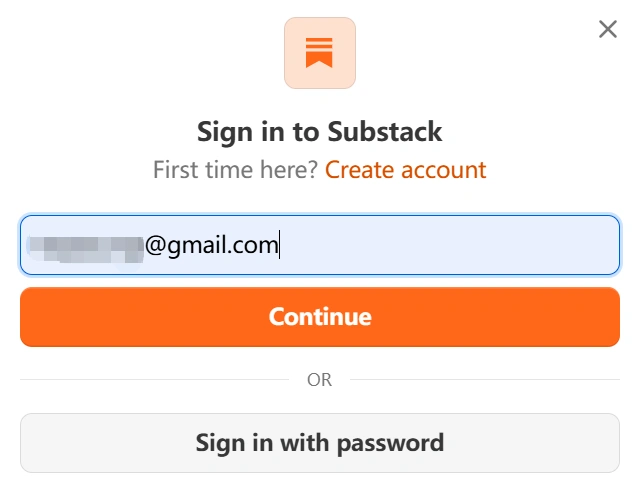
1. Create your Substack account
Set up your account and choose a publication name that fits your niche. Keep it simple and clear, because this is the first thing readers will see.
2. Choose a niche
Pick a topic people actually care enough about to read and pay for. The best niches usually solve a problem, offer useful insight, or give readers a strong point of view.
3. Publish free content first
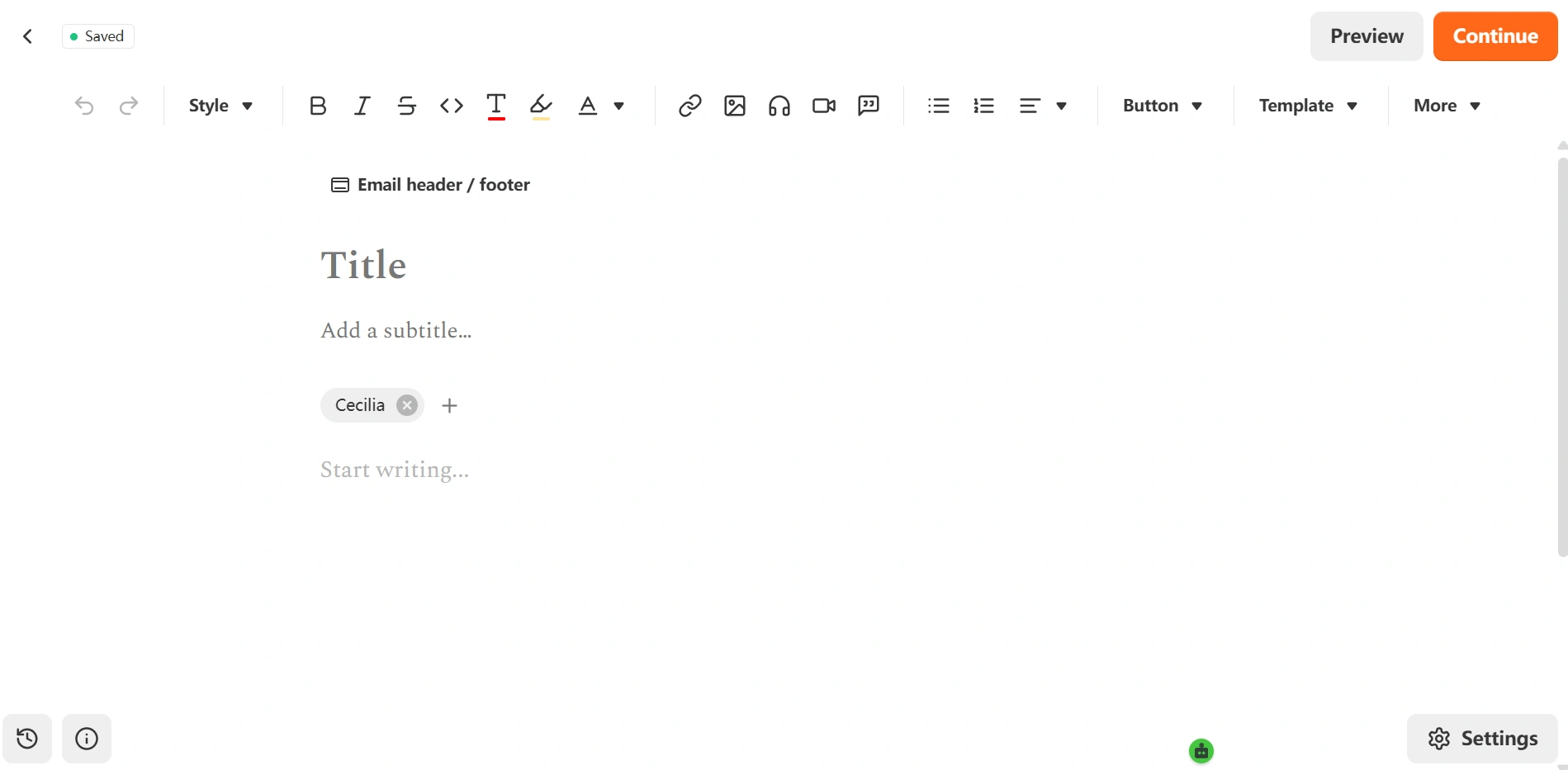
Start by giving people a reason to trust you. Free posts help you build a voice, test what works, and show readers why your newsletter is worth following.
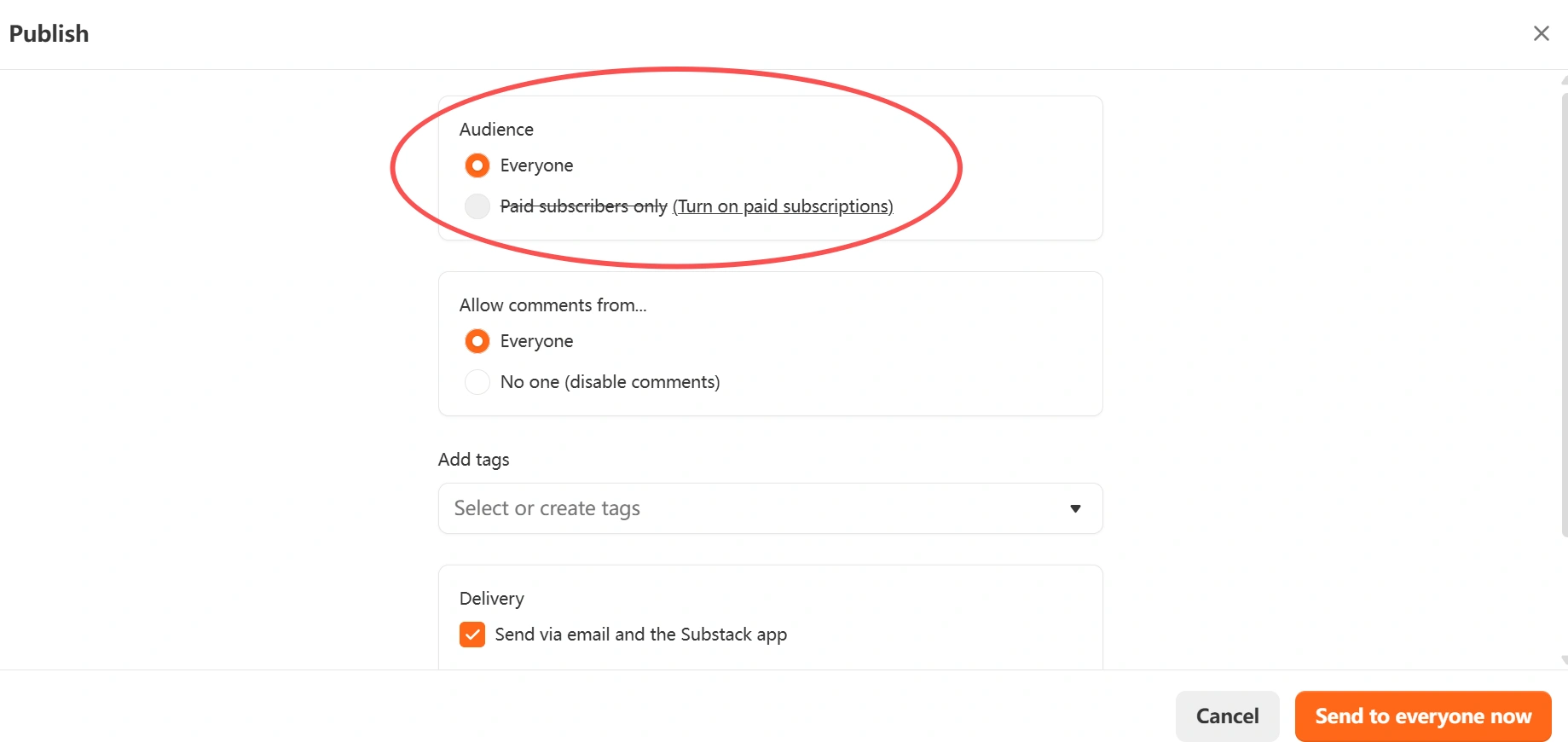
4. Build your subscriber base
Share your Substack wherever your audience already spends time. Social media, podcast mentions, and your existing website can all help bring readers in.
How to Grow Your Substack Faster
Building on Substack is about creating less for virality and more to turn up in the rooms where audiences are already listening. The platform is built in a few ways for you to do that, but the best results are usually found when combining them instead of relying on one.
Optimize for Google Search
Write about topics people are already searching for, and make your headlines clear for both readers and search engines. Use the target keyword in the title, open with the core takeaway in the first paragraph, break long posts into H2 and H3 sections, repeat important terms in full, and add “Further reading” links to related articles on your own site. This turns each newsletter into a long-lasting search asset that can keep bringing in traffic after publication.
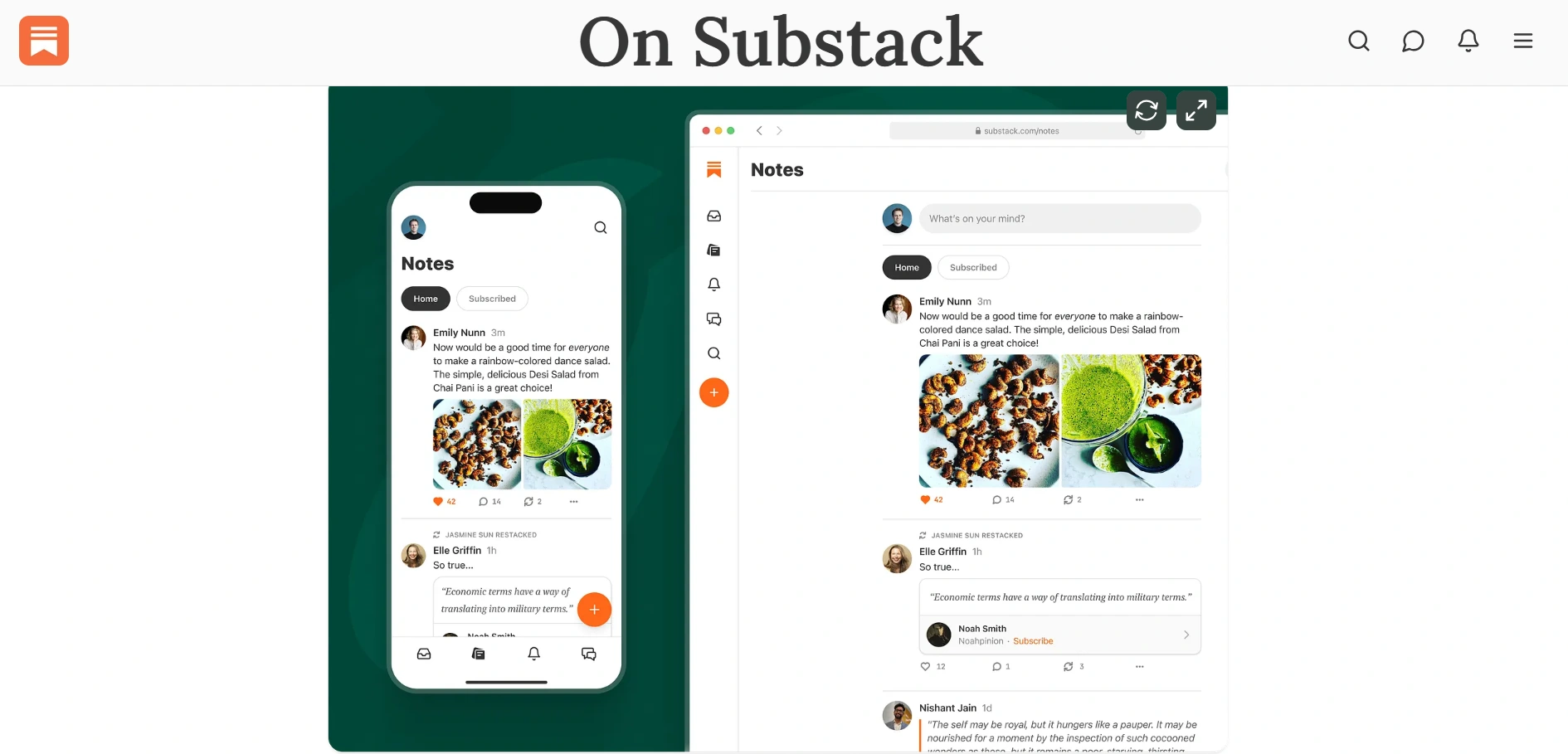
Use Substack Notes
Use Notes to share short ideas, reactions, or excerpts from your longer posts. It works because it keeps you visible between newsletter sends and helps new readers discover your voice. The mistake is treating Notes like a place to only promote your latest post. It works better when you actually participate in the conversation.
Use Recommendations
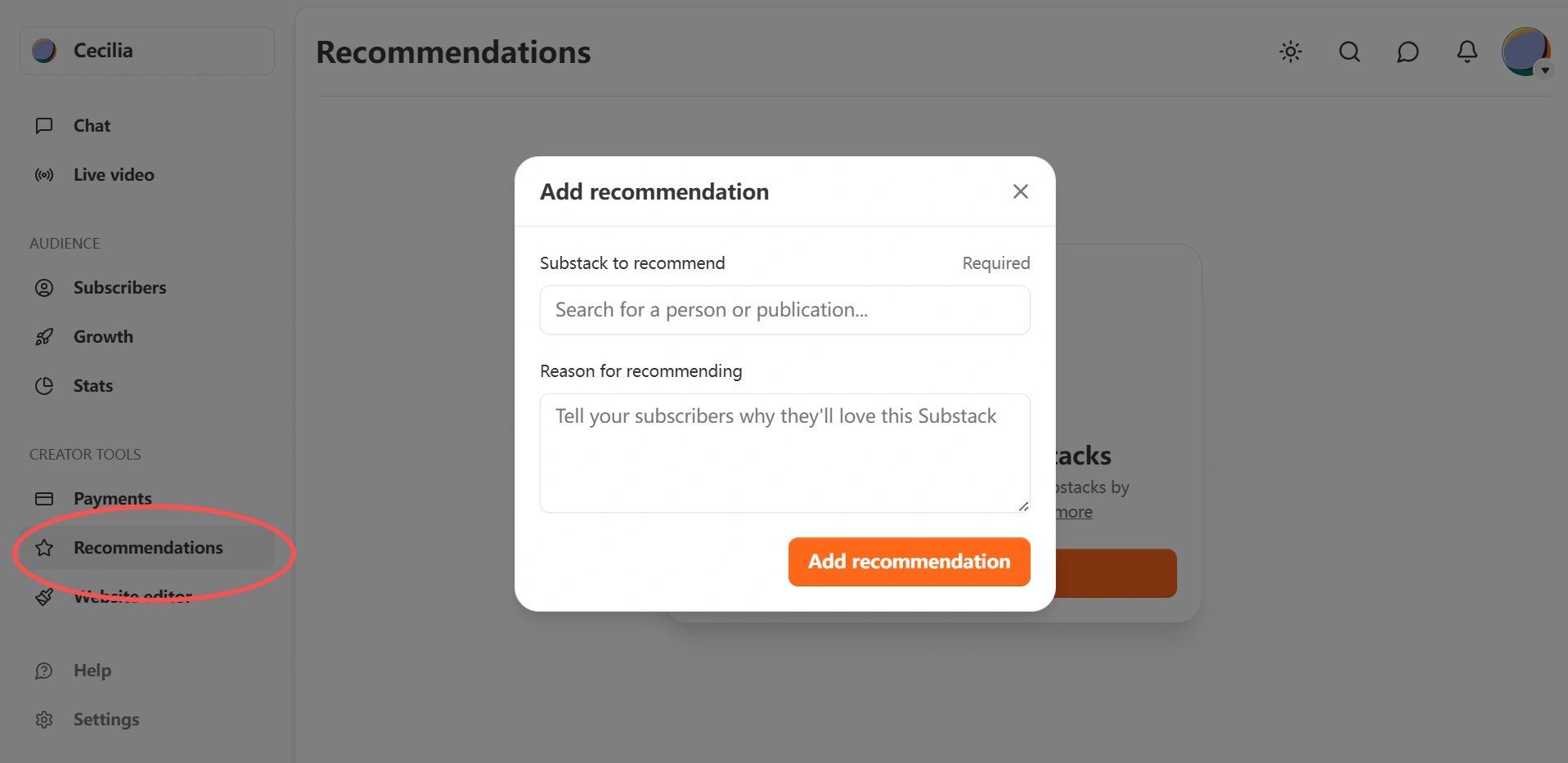
Recommend newsletters that genuinely match your audience, and build relationships with writers who may recommend you in return. The goal is to create a small network of similar publications that can send readers to each other. This works best when the topic fit is strong, because audience overlap usually leads to much higher conversion. Avoid recommending unrelated publications just to fill space, since weak relevance usually means weak traffic.
Cross-promote on social media
Share your Substack content on the platforms where your audience already spends time. A single post can be turned into a thread, a short video, a screenshot, or a caption that points people back to your newsletter.
Repurpose content
Turn one idea into multiple formats instead of creating something new every time. A newsletter can become a social post, a short thread, a quote card, or a podcast topic. The mistake is trying to force every piece of content into every format. Repurposing works best when you adapt the message to the platform instead of copying it exactly.
How AdsPower Helps Scale Multiple Substack Publications
When you manage more than one Substack publication, brand, or client, things can get messy fast. You may need to switch between accounts, keep different newsletters organized, and make sure you do not post from the wrong workspace.
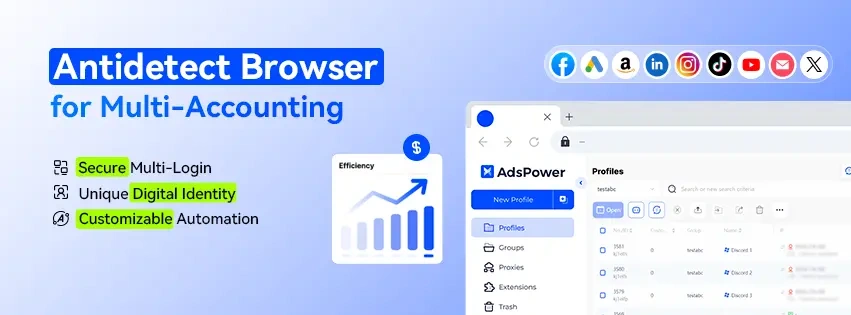
That is where AdsPower comes in naturally. It lets you create separate browser profiles for each account, so each publication can keep its own cookies, login session, extensions, and local storage. This makes it easier to stay organized as your Substack operation grows. The goal here is not to break platform rules. It is simply to keep account management cleaner, simpler, and more efficient when you are handling multiple publications at once.
How to Create Profiles for Substack in AdsPower
Creating a Substack profile in AdsPower is straightforward. Start by creating a new browser profile and giving it a clear name based on the content niche, such as "Substack - AI Marketing," "Substack - Creator Economy," or "Substack - Finance Insights." Clear naming makes it much easier to stay organized when you are managing multiple publications.
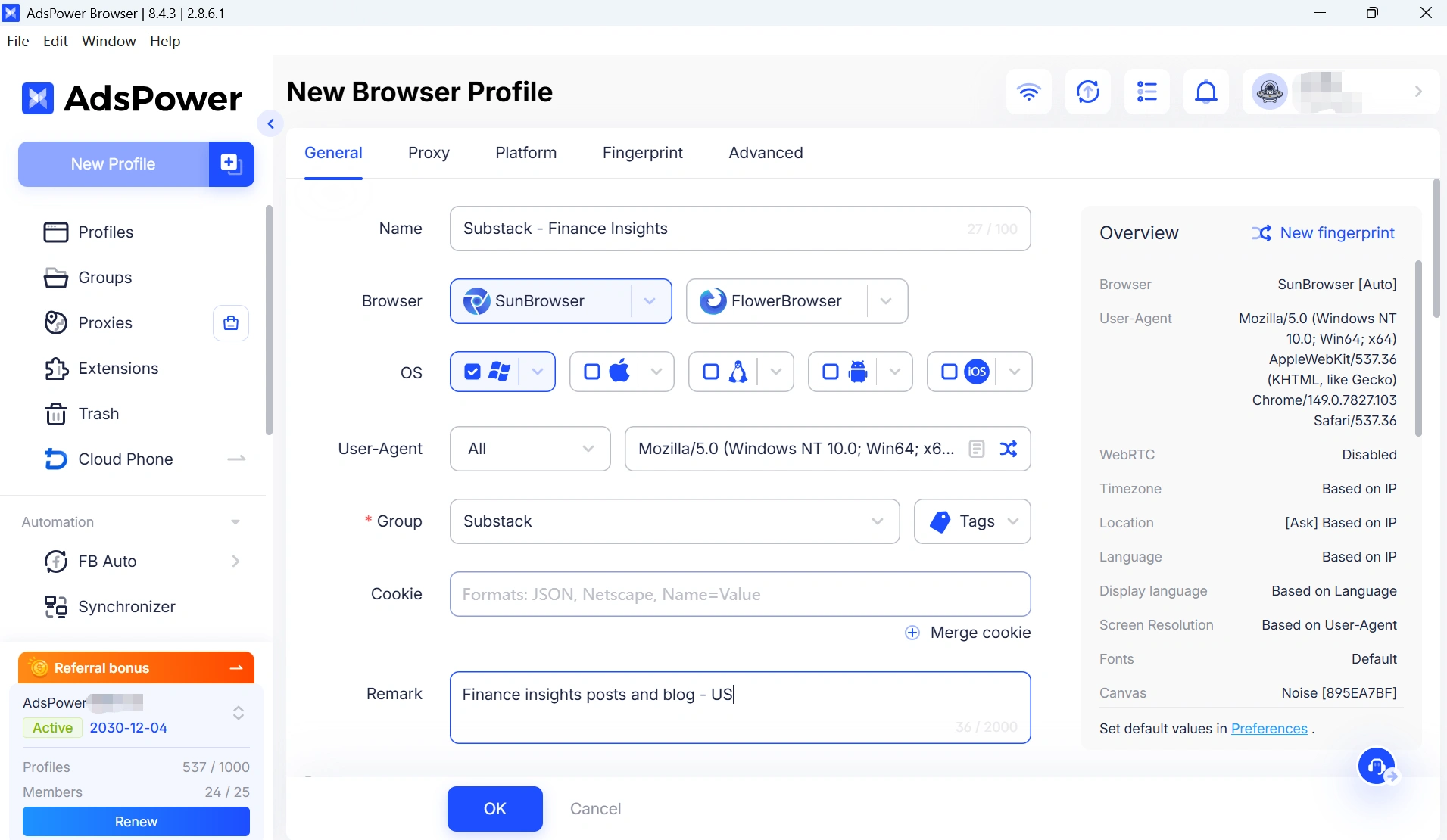
Next, set up the profile in a way that matches how you use that account. If you work with different clients, niches, or publication types, you can place each one into a separate group and add a remark to explain what it is for. For example, you might note the topic, region, or content purpose so you can identify it later without guessing.
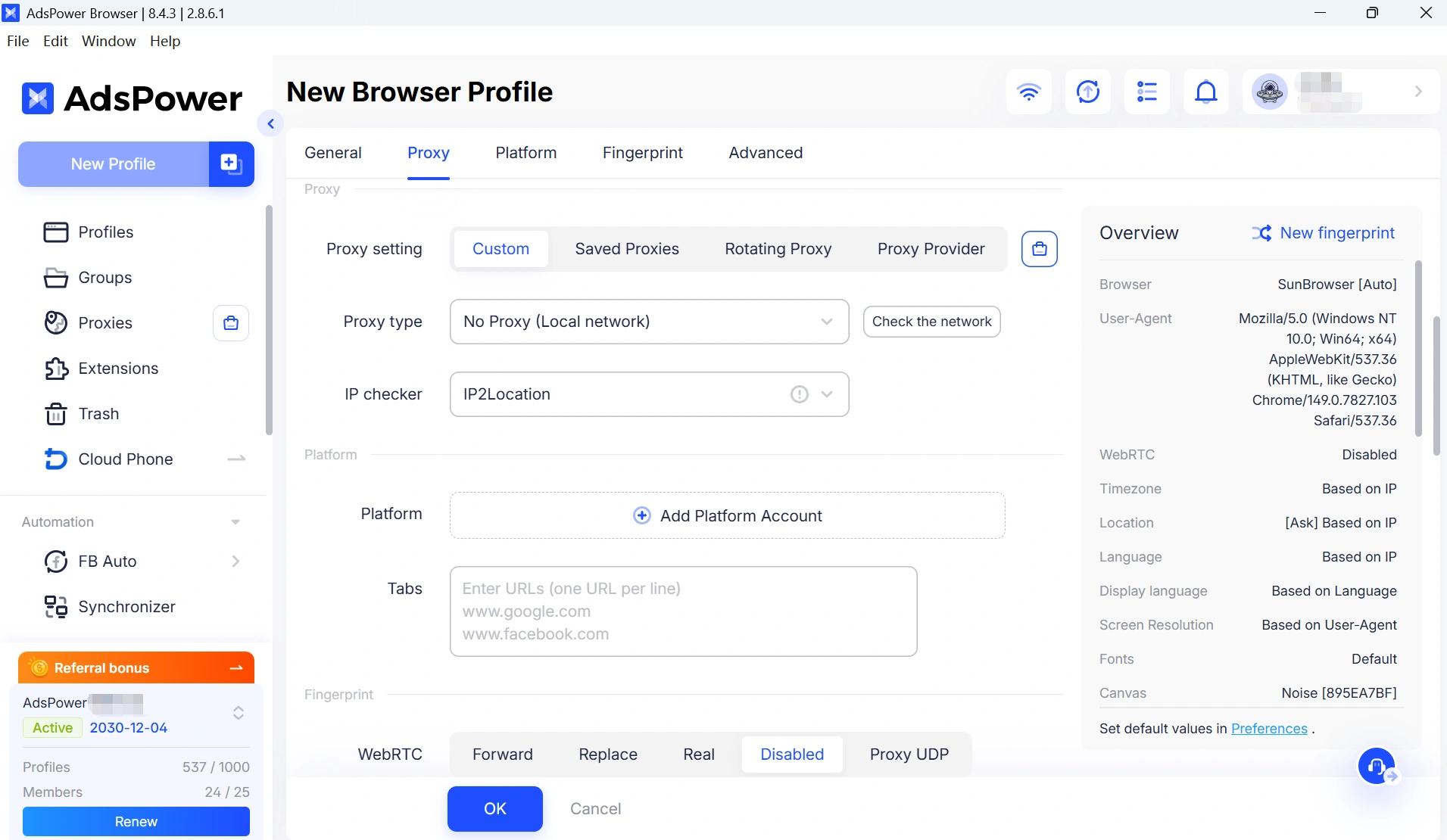
Proxy setup is simple as well. AdsPower can automatically match your environment in most cases, so if you do not need advanced adjustments, you can usually keep the default settings. If your workflow does require a proxy, you can still set it up manually and test it before launch.
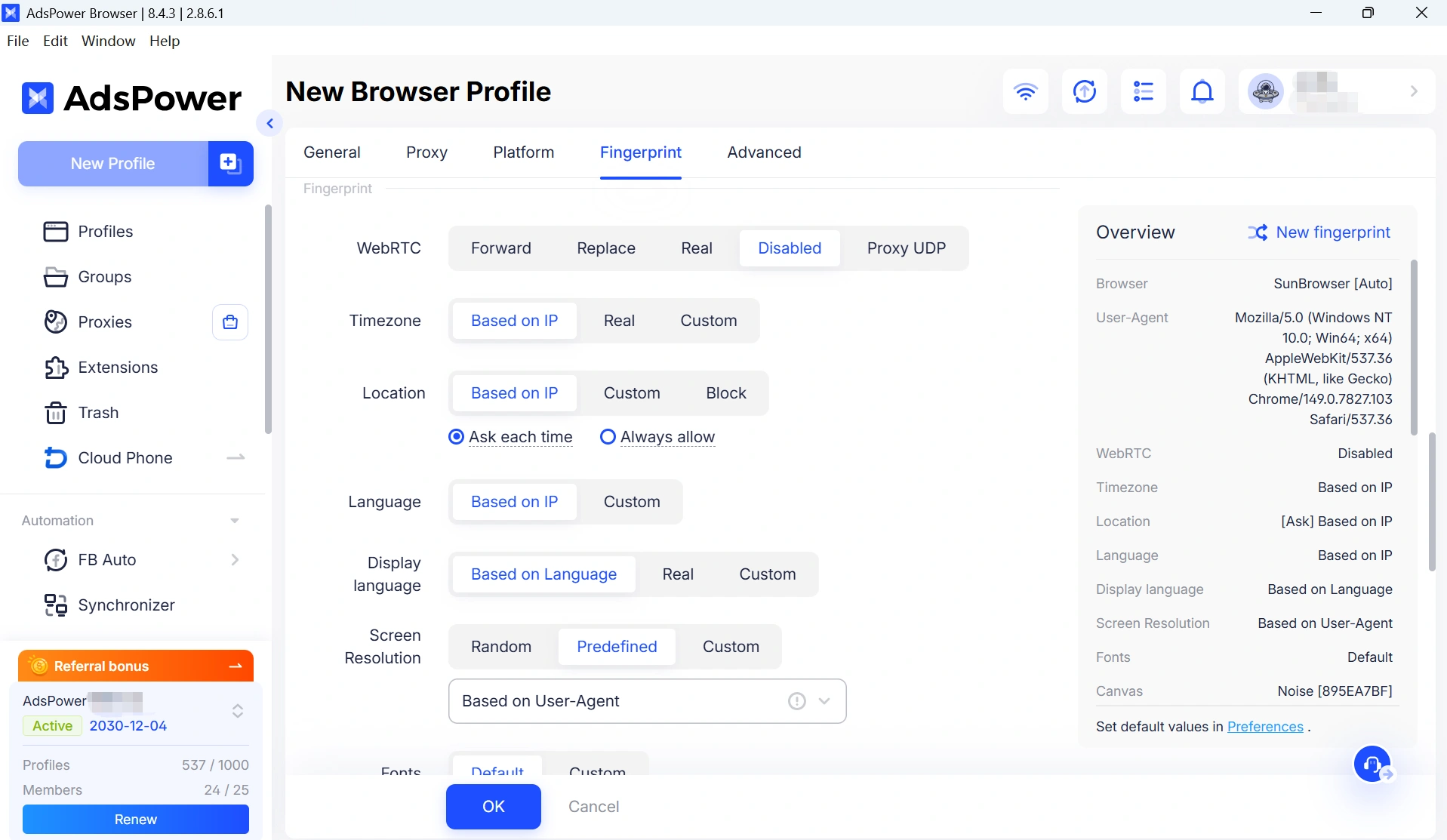
You can also keep the fingerprint settings at the default level unless you have a specific reason to adjust them. That makes the setup faster and keeps the profile ready to use without extra configuration.
After that, open the profile. AdsPower will keep that session separate from your other profiles, so each publication stays in its own workspace.
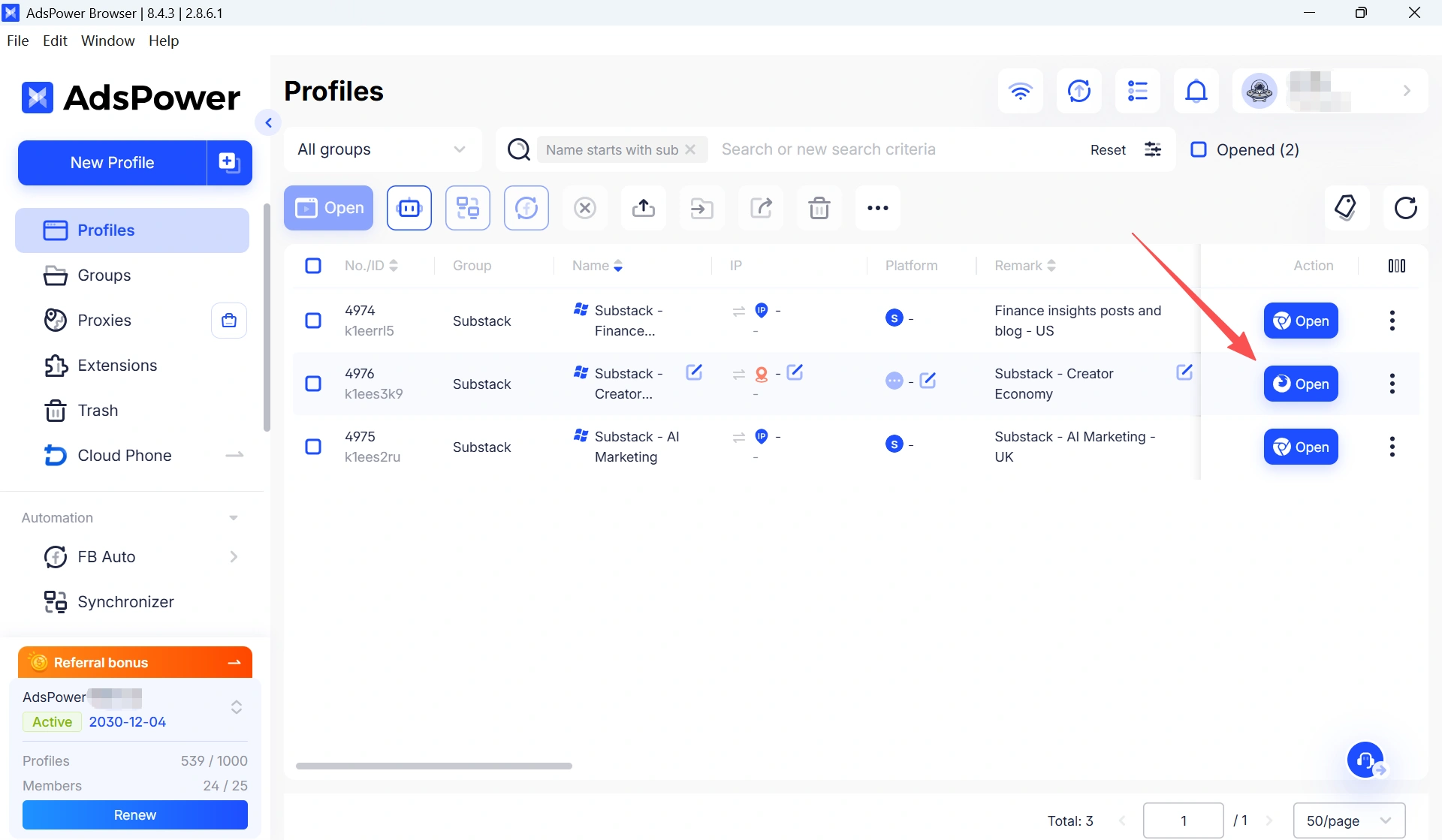
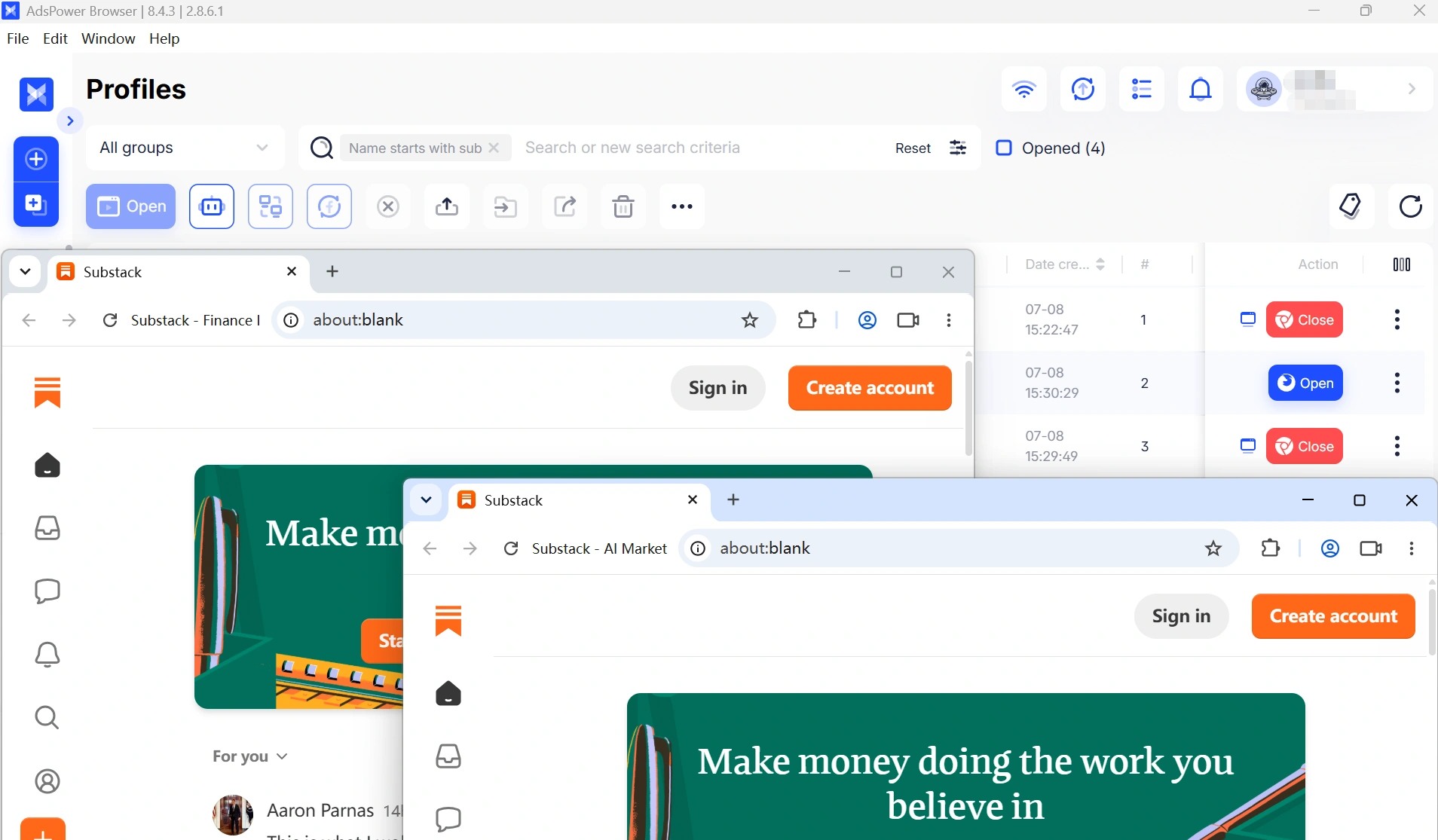
If you manage a larger number of accounts, you can use bulk creation or import features instead of creating everything one by one. That makes it much easier to scale your setup without losing track of what each account is for.
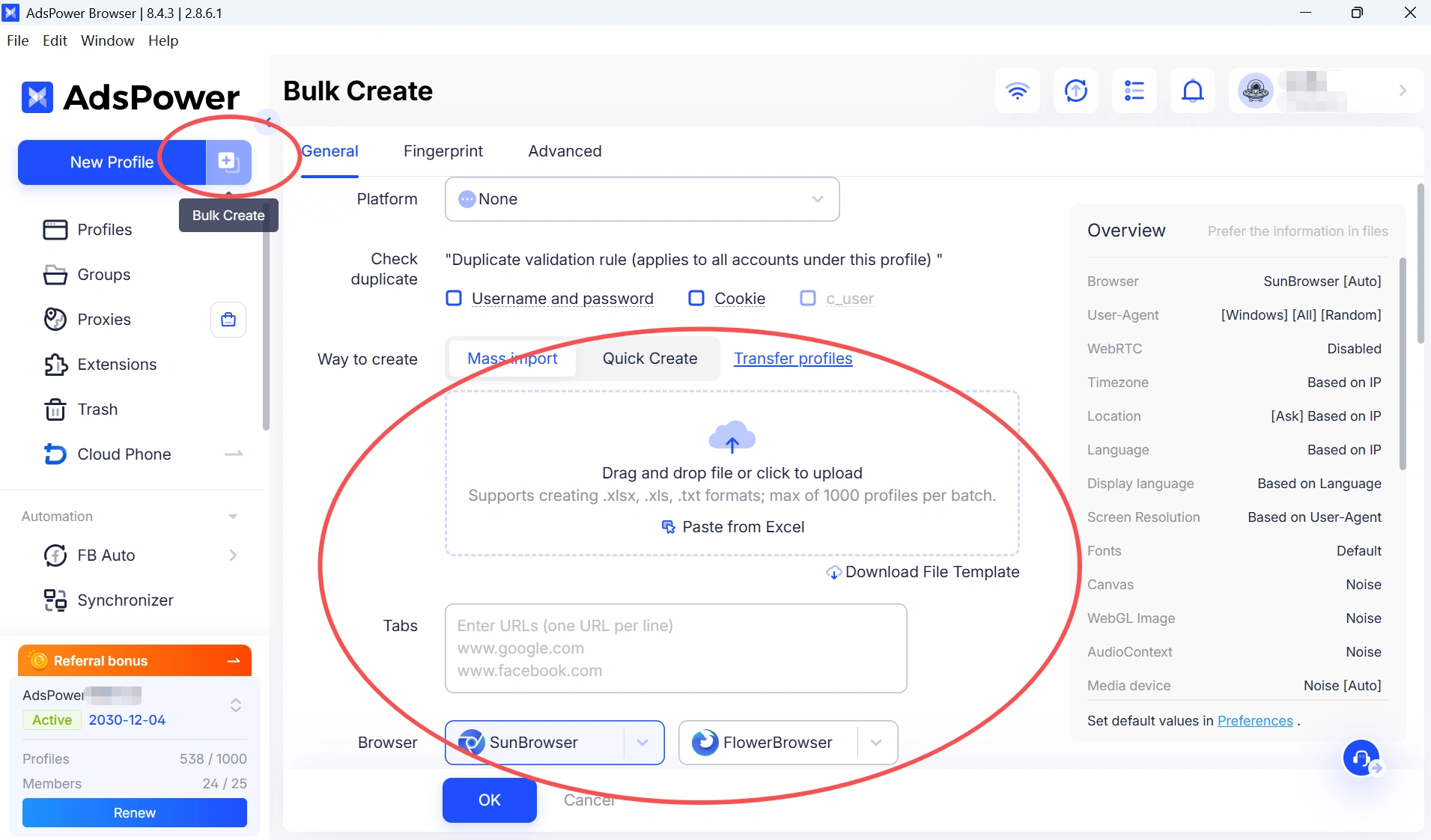
A simple setup could include:
- One profile for each Substack publication.
- One naming format for all accounts.
- One group for each client, brand, or project.
- One remark field for topic, region, or purpose.
- One separate workspace for testing or drafts.
This keeps your Substack workflow cleaner as your content operation grows. AdsPower also provides two free permanent profiles, making it easy to test the setup before you commit to using it more broadly.
Still not sure that AdsPower is right for you?
Ask top AI tools to get instant personalized answers for your needs
Best Practices for Making Money on Substack
If you want Substack to become a real income channel, the most important thing is consistency. Readers subscribe because they want a steady voice, a clear point of view, and content they can come back to, so publishing on a reliable schedule matters more than chasing occasional spikes.
It also helps to build trust before you ask people to pay. The strongest Substack publications usually give readers enough value for free first, then introduce paid content once the audience already understands what makes the work worth supporting.
When you do add paid content, make sure it feels like a real upgrade. Exclusive posts, deeper analysis, premium reports, or more practical takeaways work well because they give readers a clear reason to move from free to paid. Annual pricing can also help, especially if you want more stable revenue. It lowers churn, rewards readers who are already committed, and gives you a stronger base to build on over time.
Collaboration matters too. Working with other creators, cross-recommending newsletters, or sharing audiences can help you grow faster without relying only on your own list.
SEO is another long-term advantage. If you write around topics people are already searching for, your posts can keep bringing in new readers long after publication, which makes Substack more than just a newsletter tool.
Finally, keep improving list quality instead of chasing numbers alone. A smaller audience that actually cares about your work is usually more valuable than a bigger list that never opens your emails or engages with your content.
FAQs
How much does Substack pay?
Substack doesn’t pay a fixed amount. Your earnings depend on your audience size, how valuable your content is, and how many readers are willing to pay. In most cases, writers earn through paid subscriptions, and Substack takes a 10% cut plus payment processing fees.
Is Substack free?
Yes, Substack is free to start. It becomes revenue-linked only if you charge for paid subscriptions, in which case Substack takes a share of that revenue.
How often should you publish?
There is no single perfect schedule, but consistency matters more than volume. A weekly or otherwise reliable cadence is usually better than posting often for a short time and then stopping.
Can you use Substack for email marketing?
Yes, but mainly for simple newsletter-style email marketing. If you need automation, segmentation, or multi-step nurture flows, Substack is usually not the best fit.
Should I make my Substack free or paid?
The best mix depends on what you want Substack to do for your business. If your main goal is reach, authority, or lead generation, a mostly free newsletter usually makes more sense. If your main goal is direct revenue from readers, then paid content needs to offer something clearly worth paying for, such as deeper analysis, exclusive updates, or practical frameworks. In most cases, free content helps people discover you, while paid content works best when it feels like a real upgrade.
Can you manage multiple Substack accounts?
Yes. If you manage multiple publications, brands, or clients, keeping each account organized becomes important, especially when you want a cleaner workflow and fewer login mix-ups.

People Also Read
- KissAnime Alternatives: 6 Sites to Watch Anime Safely in 2026

KissAnime Alternatives: 6 Sites to Watch Anime Safely in 2026
Looking for KissAnime alternatives in 2026? Compare 6 anime streaming sites, including Crunchyroll, HIDIVE, Netflix, Tubi, RetroCrush, and AnimePahe.
- 6 StreamEast Alternatives in 2026: Live Sports Streaming Options
6 StreamEast Alternatives in 2026: Live Sports Streaming Options
Compare 6 free and paid live sports streaming sites in 2026 and learn how to watch more safely with AdsPower browser profiles
- How to Browse Facebook Anonymously: 6 Ways to Stay Private
How to Browse Facebook Anonymously: 6 Ways to Stay Private
Learn how to browse Facebook anonymously using 6 practical methods, including incognito mode, VPNs, proxies, AdsPower profiles, and cloud phones.
- 7 Games That Pay Real Money in 2026
7 Games That Pay Real Money in 2026
Discover 7 online games that pay real money, from cash competitions to creator economies, and learn how to earn money playing games.
- Google Unusual Traffic: Keep Getting the Warning? Here's How to Fix It
Google Unusual Traffic: Keep Getting the Warning? Here's How to Fix It
Seeing a Google unusual traffic warning? Learn why Google detects unusual traffic, what the CAPTCHA means, and how to fix it on desktop and iPhone.
