

Learn RSOC vs AFD differences, feeds, and arbitrage basics. Find the right model and start testing smarter with AdsPower today. Try it now.
Search arbitrage has changed a lot over the past few years. If you’re researching what is RSOC, what is AFD, or trying to understand RSOC vs AFD, you’re not alone. Many media buyers and publishers are looking for clearer, safer ways to monetize search-driven traffic.
Before you dive in, a quick recommendation: if you're testing multiple feeds, landing page structures, or traffic sources, using AdsPower can help you manage accounts and browser environments safely from one place. You can check their official site and sign up for a free trial to see how it fits your workflow.
In this guide, you'll learn how RSOC and AFD actually work, how RSOC search arbitrage functions in practice, and how to choose the right model for your traffic.
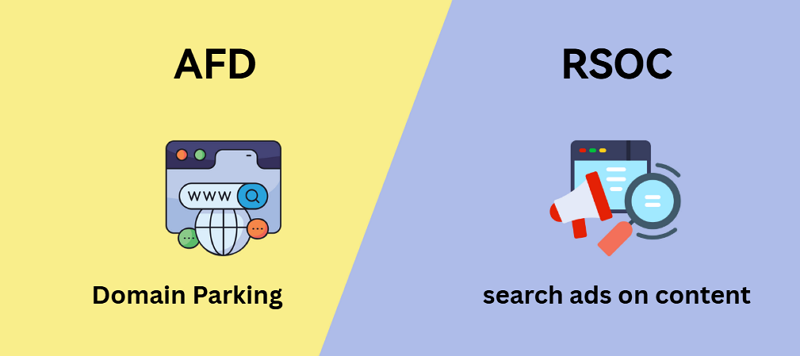
What Is RSOC in Search Arbitrage?
RSOC stands for Related Search On Content. It is a monetization model that places related search units directly inside useful, topic-focused content.
When people ask what RSOC is, they usually want a simple answer:
RSOC is a feed-based system that shows "related searches" inside or alongside content, allowing users to refine their intent and click into sponsored search results.

Here's how it works in simple terms:
- You create a content-driven page (article, guide, comparison, etc.).
- The page includes natural RSOC blocks.
- These blocks display relevant search suggestions based on the page's topic.
- When users click a term, they are sent to a monetized results page.
The Google RSOC feed is one of the most well-known sources behind RSOC-powered pages. It prioritizes:
- User intent matching
- Quality content structure
- Natural placement of related searches
RSOC is designed to feel native to the reading experience. That's why it often converts better for intent-driven traffic such as native ads or content discovery platforms.
What Is AFD in Search Arbitrage?
AFD stands for Ads for Domains. If you've searched what is AFD, here's the easiest way to understand it:
AFD is a monetization model that turns domain traffic directly into search-style ad pages.

Instead of embedding search units in content, AFD ads usually appear on:
- Parked domains
- Thin search pages
- Direct navigation domains
With AFD, the typical flow looks like this:
- A user lands on a domain, often via typo traffic or broad keywords.
- They see ad-heavy search results.
- Clicking an ad sends them to advertiser's offers.
AFD doesn't rely heavily on long-form content. Its strength comes from:
- Domain relevance
- Keyword matching
- Traffic source quality
Compared to RSOC, AFD is more about direct redirection to monetized ad results than building a content experience.
RSOC vs AFD – What's the Real Difference?
This is the part most people care about. If you're comparing RSOC vs AFD, here are the real, practical differences that matter.
Key Differences Between RSOC and AFD
RSOC focuses on:
- Content-first monetization
- Embedded "related search" units
- High-intent user journeys
- Better performance with native or social traffic
AFD focuses on:
- Domain-based monetization
- Ad-heavy search result layouts
- Faster click paths
- Better performance with direct or broad match traffic
- A shrinking role in modern arbitrage, with many platforms gradually reducing AFD availability or pausing support, which is why more teams are now shifting their budgets toward RSOC-based campaigns.
When RSOC Works Best
RSOC is usually a better fit when:
- You're running native or content discovery traffic.
- You can build real articles or guides.
- You want better long-term feed stability.
- You want to follow the current industry trend, where most serious media buyers are moving away from AFD and focusing more heavily on RSOC placements.
When AFD Works Best
AFD is usually a better fit when:
- You own or control strong domains.
- You're working with direct navigation traffic.
- You want simple, fast-to-deploy pages.
- You're testing keyword-driven funnels.
- You still have access to stable AFD feeds, as some networks are limiting or sunsetting AFD support over time.
In short, RSOC is a content-driven model, while AFD is a domain-driven model. The right choice depends on your traffic source and how much control you want over the user journey.
How RSOC Search Arbitrage Actually Works
Let's break down RSOC search arbitrage in a simple, transparent way so it's easy to understand.
A typical, compliant RSOC flow looks like this:
- A user clicks an ad or link.
- They land on a helpful content page.
- The page answers their question clearly.
- Related search units appear naturally.
- The user chooses a refined search.
- They land on a monetized results page.
This model only works well when:
- Content is real and useful.
- Page structure is clean and fast.
- The RSOC blocks don't mislead users.
Bad RSOC pages often fail because they:
- Hide content behind ads.
- Use fake buttons.
- Misrepresent what the user will get next.
If you focus on real user value, RSOC becomes a sustainable model instead of a short-term trick.
Google RSOC Feed: How It Works & What You Should Know
The Google RSOC feed is designed to power content-first search experiences. It doesn't behave like basic ad widgets.
Here's what you should know:
- The feed dynamically matches search terms to your page topic.
- It favors quality layouts with visible content.
- It relies on user intent, not forced clicks.
- It has strict compliance expectations.
To stay in line with best practices:
- Keep the content visible without scrolling too much.
- Clearly separate content from search units.
- Avoid misleading labels or fake buttons.
If you're building long-term projects, the Google RSOC feed is more stable when your pages feel like real publications, not shortcuts.
How AFD Ads Work in Modern Search Arbitrage
AFD ads still play a major role in modern arbitrage. The mechanics are simpler than RSOC, but they require more attention to traffic quality.
Here's how modern AFD usually works:
- Traffic lands on a domain-based page.
- The system detects search intent from keywords or referrer data.
- Ads are automatically populated.
- Users click through to advertisers.
AFD performance depends heavily on:
- Domain history and trust.
- Keyword relevance.
- Clean page structure.
AFD is less forgiving than RSOC when it comes to low-quality traffic. If your traffic doesn't match the ads, performance drops very fast.
How AdsPower Helps Run RSOC and AFD Campaigns Safely
Managing RSOC and AFD campaigns often means working with:
- Multiple feed accounts
- Several ad platforms
- Different traffic sources
- Separate test environments
This is where AdsPower browser becomes useful.
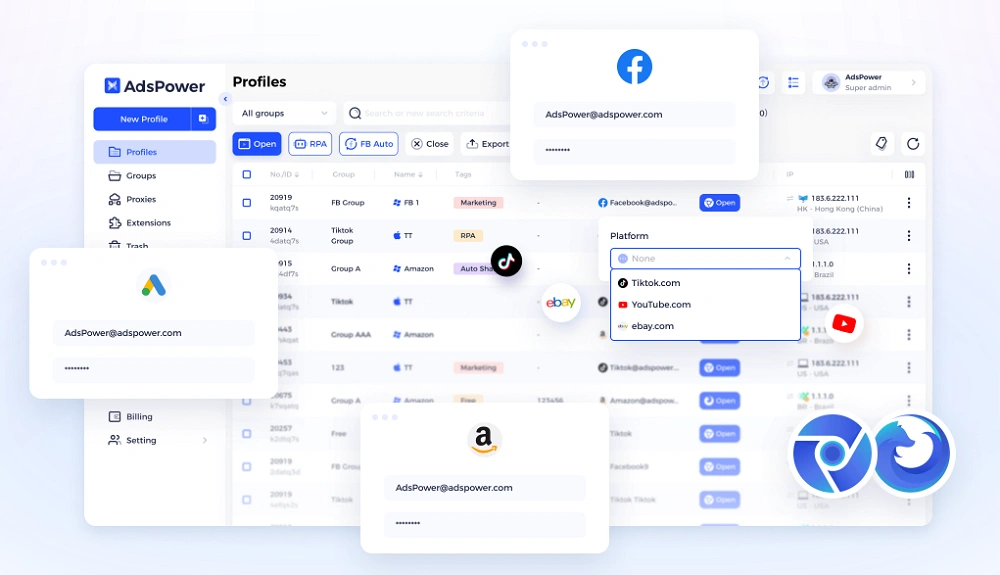
AdsPower is an anti-detect browser that helps you:
- Isolate browser fingerprints for each account
- Manage multiple accounts safely in a dashboard
- Keep campaigns separated
- Reduce the risk of account linking
- Automate the repeated tasks to streamline workflow
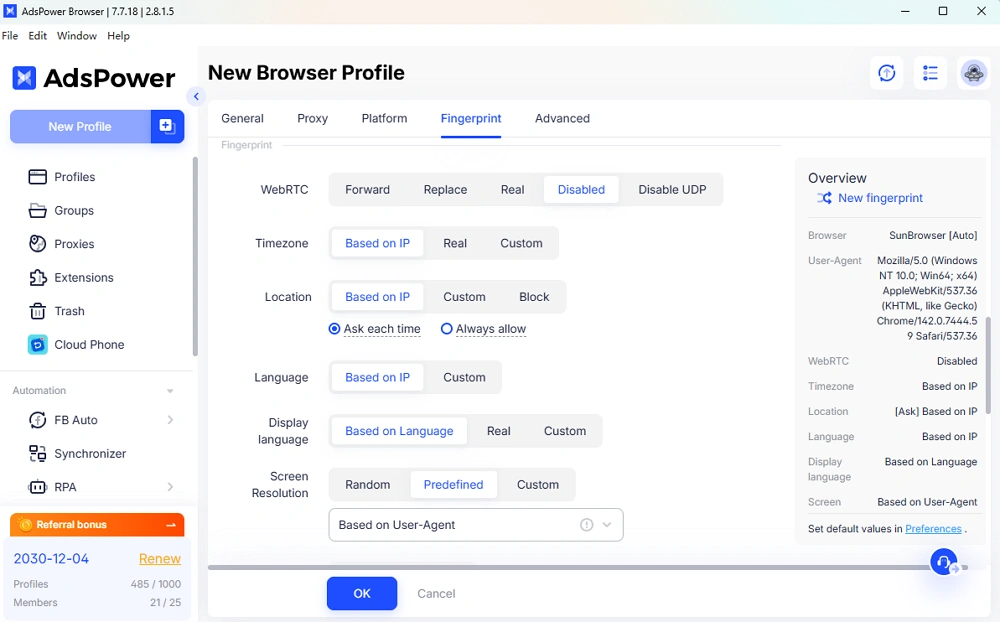
For RSOC and AFD teams, this means you can:
- Test RSOC vs AFD pages without cross-account contamination.
- Run different feed logins in isolated profiles.
- Share access with team members securely.
If you're serious about scaling, it's worth checking AdsPower website and signing up for a trial so you can test these workflows in a real environment.
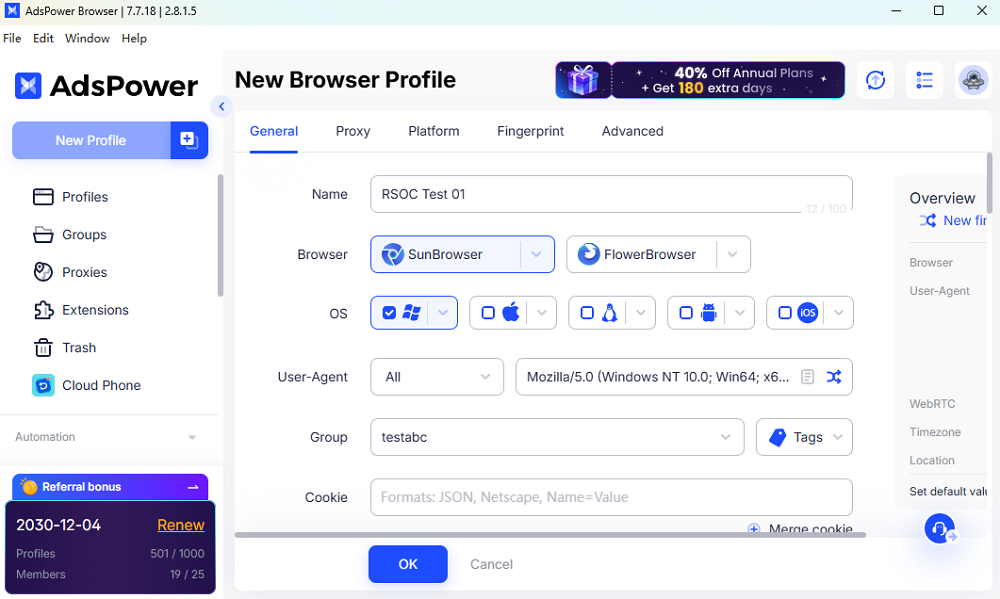
Steps to set up profiles for your Ads campaigns/accounts:
- Generate profiles by clicking New Profile.
- Enter the name and set up browser, OS, UA, cookies, etc.
- Set up a target proxy for the profile. (AdsPower can perfectly support different proxy types and brands.)
- Select the platform that you tend to visit or operate in the browser profile.
- Configure the fingerprint based on your needs.
- Save your settings and then open to have a test.
Best Practices for RSOC and AFD Campaign Optimization
If you want consistent results, focus on clean structure and honest intent matching.
Here are practical best practices that actually work:
For RSOC Pages
- Write content that answers real questions.
- Place RSOC units naturally, not aggressively.
- Match page topics tightly with traffic keywords.
- Track scroll depth and dwell time.
For AFD Pages
- Use clean, fast-loading layouts.
- Maintain strong domain hygiene.
- Keep navigation simple and focused.
- Continuously test keyword alignment.
For Both Models
- Always prioritize user intent.
- Avoid misleading design patterns.
- Monitor bounce rates and engagement.
- Run structured A/B tests instead of random changes.
Small improvements in intent matching often matter more than aggressive layout changes.
Conclusion: RSOC vs AFD – Which One Should You Choose?
There's no universal winner in RSOC vs AFD. The best model depends on:
✅Your traffic source
✅Your page-building capability
✅Your risk tolerance
✅Your long-term goals
If you work with content-driven traffic, RSOC is usually the stronger, more stable option. If you control strong domains and direct navigation traffic, AFD can still perform well.
For both models, proper environment management matters. Using AdsPower browser can help you test smarter, protect your accounts, and scale with more confidence. Take a moment to visit the official AdsPower site and sign up for a trial if you're building serious arbitrage workflows.
