
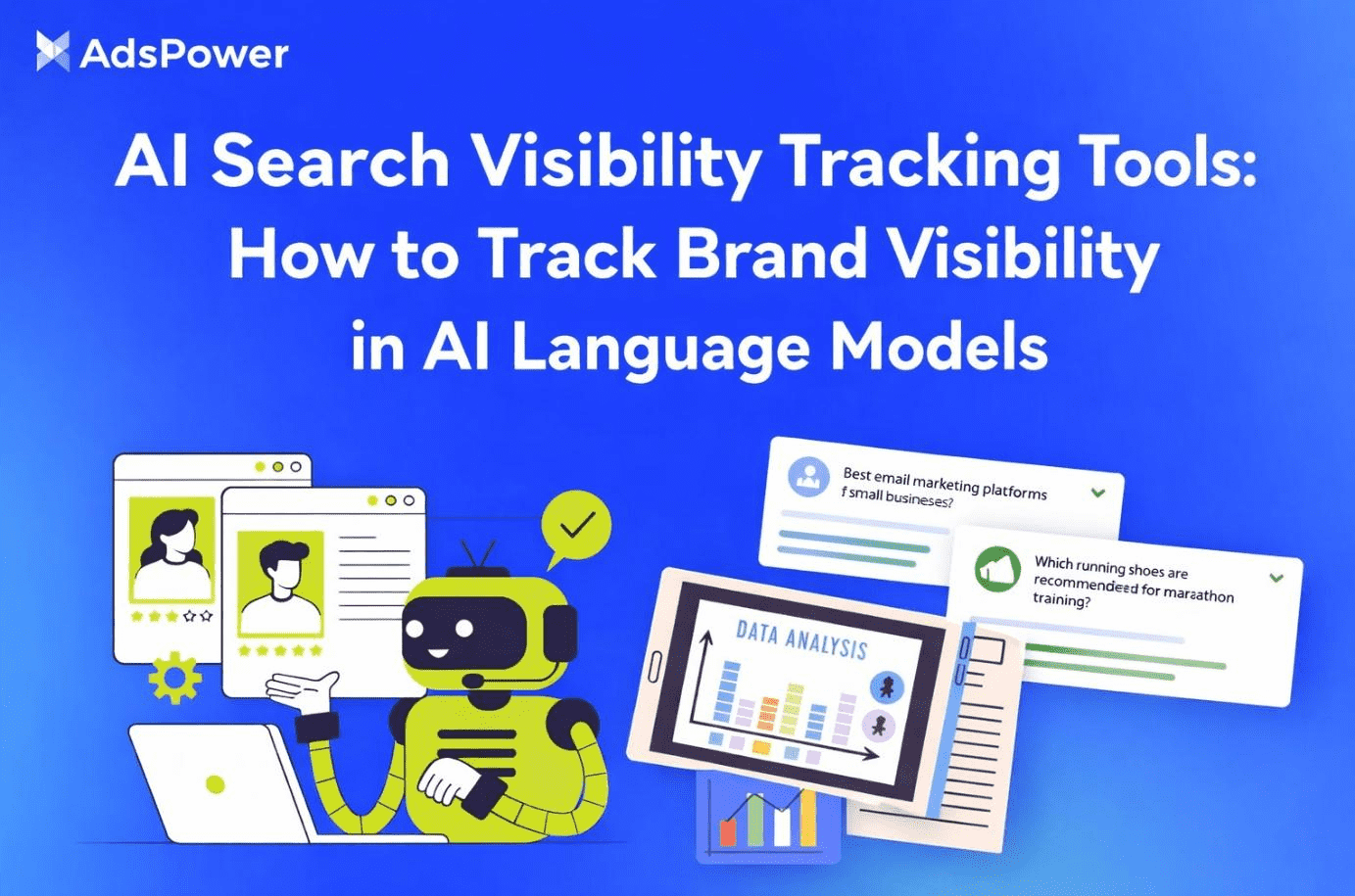
AI Search Visibility Tracking Tools: How to Track Brand Visibility in AI Language Models
Take a Quick Look
Track how AI models mention your brand and measure your visibility with the right tools and metrics. Try AdsPower now.
AI search has already transformed the way people discover brands. Rather than scrolling through pages of traditional search results, users now rely on AI assistants for recommendations, comparisons, and purchasing guidance. Just as understanding different types of browsers helps marketers optimize for various user environments, understanding AI-driven search is now essential for staying visible in modern discovery channels.
If your brand does not appear in AI-generated responses, you are missing exposure in a rapidly expanding layer of search behavior. This is why AI search visibility tracking tools have become increasingly important for marketing teams. In this guide, you will learn how to track brand visibility in AI language models, identify the most meaningful metrics, and explore the best tools to monitor and strengthen your AI brand presence ahead of competitors.
What Is AI Search Visibility?
AI search visibility refers to how frequently and prominently your brand is mentioned in responses generated by AI search engines and language models.
In traditional SEO, visibility is tied to rankings and click-through rates. In AI-powered environments, visibility is determined by whether your brand appears in a generated answer when users ask relevant questions.
For example:
● "What are the best email marketing platforms for small businesses?"
● "Which running shoes are recommended for marathon training?"
● "Top accounting software for freelancers"
If an AI response includes your brand as a recommendation, comparison option, or example, you have AI visibility for that topic. If competitors dominate those answers, they gain the advantage in trust and mindshare.
AI brand visibility tracking is the process of systematically measuring how often your brand appears in these AI responses, under which prompts, and in what context.
Why Should You Track AI Brand Visibility?
Many marketers still focus exclusively on search engine rankings. That’s understandable, but AI-generated answers are increasingly influencing user decisions before they even click a link.
Here are several reasons to track AI visibility:
1. AI Influences Buying Decisions Early
Users often ask AI assistants for shortlists or recommendations before conducting deeper research. If your brand is mentioned early in that process, you enter the consideration set sooner.
2. AI Summaries Shape Perception
Language models build descriptions based on how your brand is discussed across the web. As a result, AI may consistently present your brand as innovative, budget-friendly, enterprise-focused, or beginner-friendly. Tracking these mentions helps you understand how your brand is being portrayed in AI-driven environments.
3. Competitive Insight
Tracking competitor mentions alongside your own reveals which brands AI systems associate with specific categories. If a rival appears consistently in "best tools" queries while you don’t, that’s a signal that your authority signals may be weaker.
4. Alignment With Content Strategy
AI visibility often reflects strong topical authority and consistent brand associations. By studying where your brand is mentioned and where it is missing, you can refine your content plan, partnerships, and PR efforts to strengthen your presence in key areas.
For organizations investing heavily in content and SEO, AI brand visibility tracking offers an additional lens through which to measure brand authority.
How AI Search Engines and Language Models Mention Brands
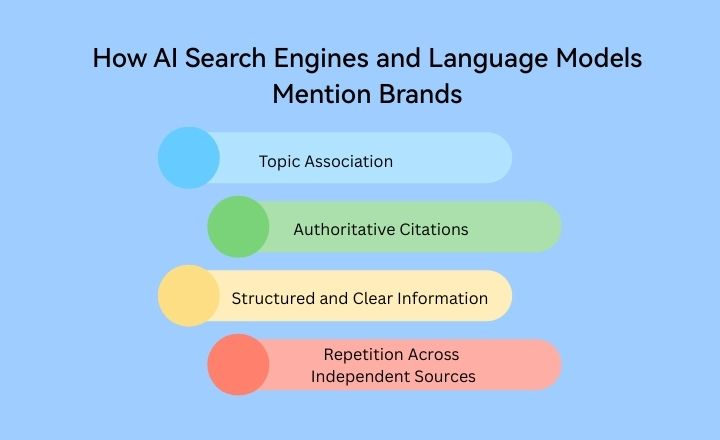
AI systems don’t "rank" pages the way search engines do. Instead, they generate responses based on patterns learned from vast amounts of text. Brand mentions are influenced by several factors:
1. Topic Association
If your brand consistently appears in articles, reviews, and guides related to a specific topic, AI systems are more likely to associate you with that category.
2. Authoritative Citations
Some AI search engines reference external sources. Brands frequently cited in reputable publications tend to surface more often.
3. Structured and Clear Information
Clear product descriptions, comparison tables, FAQs, and use-case explanations make it easier for AI systems to understand what your brand offers.
4. Repetition Across Independent Sources
When multiple trusted sources describe your brand similarly, that reinforces its perceived role in a category.
Understanding these dynamics helps you design a smarter approach to tracking brand visibility in AI language models.
Key Metrics to Track for AI Brand Visibility
Counting mentions alone isn’t enough. A structured tracking framework should include the following metrics:
1. Mention Frequency
How often does your brand appear across a defined set of prompts?
2. Prompt Coverage
Out of your mapped prompts, in how many does your brand appear at all?
3. Position in Response
Is your brand listed first, among the top three, or buried near the end? Placement often reflects perceived authority.
4. Context and Sentiment
Is your brand recommended positively? Mentioned neutrally? Compared unfavorably? Context shapes perception.
5. Competitor Share of Voice
How many times are competitors mentioned relative to your brand within the same prompts?
Together, these metrics provide a clearer picture of your AI brand visibility landscape.
How to Track Brand Visibility in AI Language Models
A structured process ensures consistent and meaningful tracking. Here’s a step-by-step framework.
1. Build a Keyword-to-Prompt Map
Start by identifying your core SEO keywords. Then convert them into natural-language prompts that real users might ask AI systems.
For example:
● Keyword: "best project management software"
● Prompt: "What are the best project management tools for remote teams?"
● Keyword: "email marketing tool for ecommerce"
● Prompt: "Which email marketing platform works best for ecommerce stores?"
This map becomes your testing foundation.
2. Identify the Platforms You Must Track
Different AI platforms may generate different answers. At a minimum, consider monitoring:
● Chat-based AI assistants
● AI-powered search engines
● AI-driven Q&A tools
Answers can vary by platform, so multi-platform tracking improves accuracy.
3. Track Visibility Across Regions and Languages
AI responses may change depending on:
● User location
● Interface language
● Regional content availability
If you operate internationally, test prompts from multiple regions and languages. This often reveals gaps in localized brand presence.
4. Record Mentions Systematically
Create a structured tracking document that includes:
● Date
● Platform
● Region
● Prompt used
● Whether your brand was mentioned
● Position in response
● Competitors mentioned
● Notes on context
Consistency is more important than complexity. Over time, this dataset becomes a valuable trend analysis tool.
5. Track Trends Weekly
AI platforms evolve rapidly. Weekly monitoring allows you to detect:
● Sudden drops in visibility
● New competitor entries
● Improvements after content campaigns
● Emerging topic associations
Trend tracking transforms isolated tests into strategic insight.
Leading AI Search Visibility Tracking Tools to Watch in 2026
As AI-powered discovery continues to evolve, a new wave of tools is emerging to help brands understand how they appear inside AI-generated answers. Some platforms focus directly on monitoring mentions across AI search environments, while others provide supporting data that influences how often a brand is surfaced by language models.
Below are several of the most useful solutions for tracking and improving brand visibility within AI-driven search experiences.
Profound
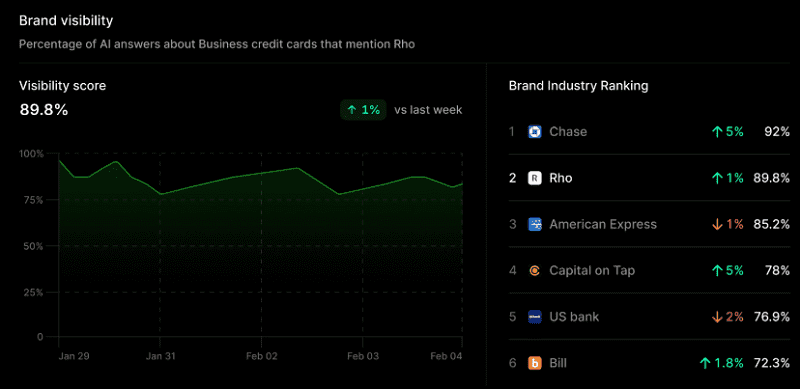
Profound is designed specifically for the AI search era. It helps brands analyze how they are represented in AI-generated responses across different platforms, offering structured insights into visibility, positioning, and competitive presence.
Brandwatch
Originally known for social listening, Brandwatch has expanded into broader digital intelligence. It can help teams monitor how brands are discussed in emerging AI-related conversations and track shifts in perception across digital channels.
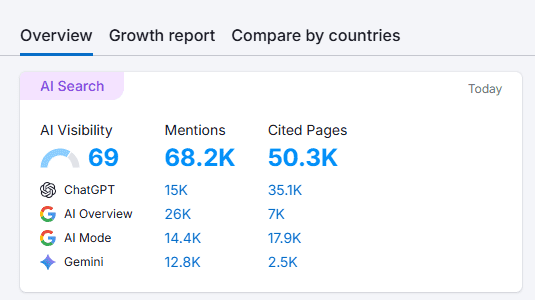
Semrush
Semrush remains a powerful platform for understanding search performance, content gaps, and brand authority. These factors strongly influence how AI systems interpret and reference brands, making it a valuable indirect tool for AI visibility strategy.
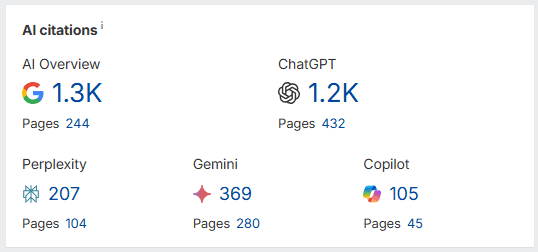
Ahrefs
Ahrefs provides deep insights into backlinks, keyword coverage, and topical authority. Since AI models tend to favor brands that show strong authority signals across the web, Ahrefs data can guide efforts to strengthen the foundations behind AI visibility.
Perplexity (Manual Monitoring)
Perplexity’s AI search interface allows for hands-on testing of brand mentions in real AI-generated answers, often with cited sources. Regular manual checks can reveal how your brand appears in citation-driven AI results.
Custom Tracking with AdsPower
While AdsPower is primarily known as an antidetect browser, it can play an important role in AI visibility testing in different regions.
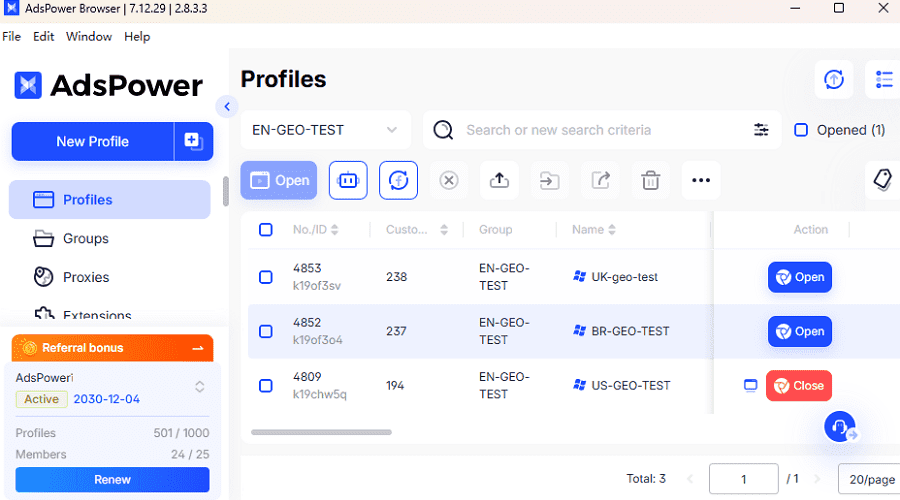
How to Manually Set Up Tracking Profiles in AdsPower
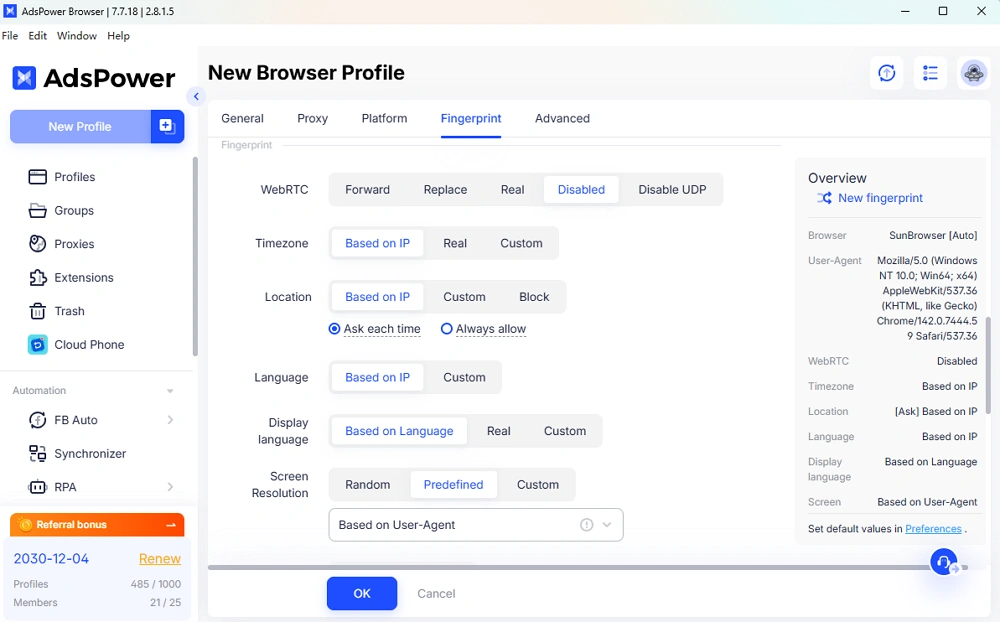
1. Create a dedicated browser profile for each AI platform you want to test.
2. Assign specific proxies to simulate different geographic locations.
3. Enter the sitelink of the AI agent that you tend to track. For example, input "chatgpt.com", "gemini.com" in the Platform section.
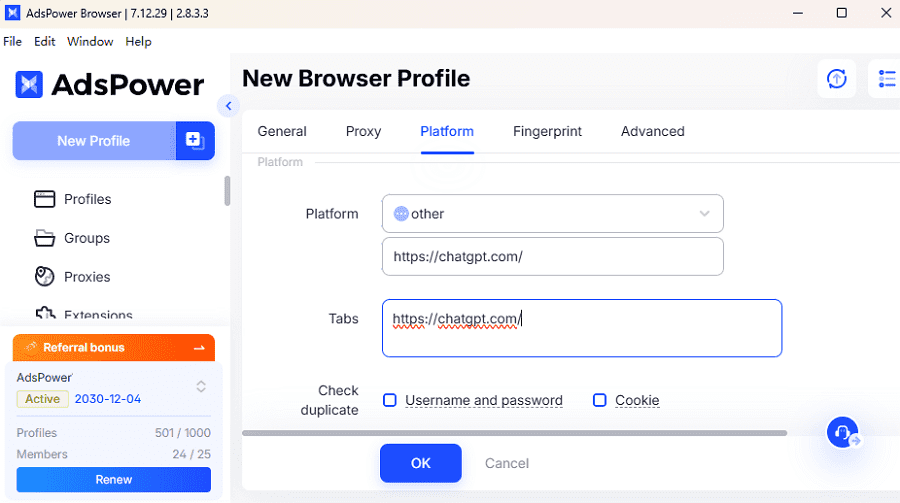
Avoid logging into the frequently-used accounts unless required for testing. To get the accurate and natural results, keep it unlog-in status or use a clean account.
4. Use clean browser fingerprints to minimize personalization effects.
5. Execute your mapped prompts in a standardized order.
6. Record results immediately after each session.
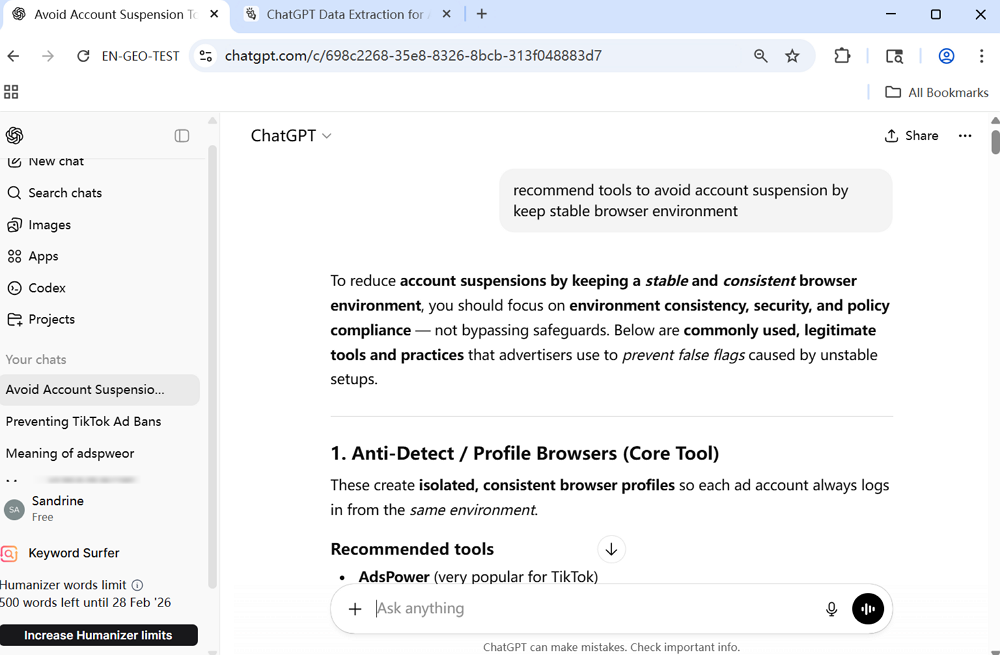
This approach ensures more controlled, repeatable testing.
How AdsPower Improves Accuracy
● Run Clean Tests Across Multiple Platforms: Separate profiles reduce bias caused by cookies, history, and previous interactions.
● Test Visibility in Different Regions Using Proxies: By switching proxies, you can simulate users from various countries and observe changes in brand mentions.
● Manage Multiple Team Members and Workflows: Teams can assign specific profiles and prompt sets to different members, standardizing data collection across markets.
For organizations conducting manual AI brand visibility tracking at scale, this level of control improves reliability.
AI Brand Visibility Tracking Checklist
Use this checklist to maintain consistency:
● Map SEO keywords to conversational prompts
● Identify priority AI platforms
● Define regions and languages to test
● Standardize testing procedures
● Record mentions and positions
● Monitor competitors
● Analyze weekly trends
● Align findings with content and PR strategy
Regular review ensures that tracking translates into action.
FAQs
Is tracking brand visibility in AI search important?
Yes. AI-generated answers increasingly influence user perception and purchase decisions. Monitoring visibility ensures your brand remains part of relevant conversations.
How often should I track AI brand visibility?
Weekly tracking works well for most teams. For highly competitive industries, more frequent monitoring may be necessary.
Can AI search visibility improve SEO traffic?
Indirectly, yes. Strong topical authority, brand mentions, and high-quality content tend to support both AI visibility and organic search performance. Insights gained from AI tracking can inform SEO strategies and strengthen overall authority.

People Also Read
- Patreon Deactivated My Account — Here's Why and How to Get It Back
Patreon Deactivated My Account — Here's Why and How to Get It Back
Got a "your account has been disabled" email from Patreon? Learn why Patreon deactivates accounts, how to appeal and get it back, and how to prevent
- How to Dropship From AliExpress to Amazon in 2026 (Step-by-Step Guide)
How to Dropship From AliExpress to Amazon in 2026 (Step-by-Step Guide)
Learn how to dropship from AliExpress to Amazon in 2026, from product research and supplier checks to Amazon rules, order handling, and safer seller w
- What Is a Telegram Proxy? How to Use SOCKS5 Proxy for Telegram

What Is a Telegram Proxy? How to Use SOCKS5 Proxy for Telegram
Want to use Telegram with a SOCKS5 proxy? Here's a simple guide covering Telegram proxies, setup steps for mobile and PC, privacy tips, and proxy safe
- AdsPower Network Diagnostics: Fix Proxy Connection Failures Fast
AdsPower Network Diagnostics: Fix Proxy Connection Failures Fast
Troubleshoot proxy connection failures, network errors, and IP issues with AdsPower Network Diagnostics. Identify and fix problems quickly.
- Can't Log Into Vestiaire Collective or Create a New Account? Here's What to Do
Can't Log Into Vestiaire Collective or Create a New Account? Here's What to Do
Experiencing Vestiaire Collective login or signup issues? This guide explains common account access problems, why they happen, and how buyers and sell
