
Looking for a crawler that saves time and reduces maintenance? This guide reviews 15 open‑source GitHub projects, from AI scraping and production crawling to stealth scraping and AdsPower's isolated browser environment tools. Find the right tool for your stack.
Paid scraping APIs can be useful, but they are not always the most cost-effective option once a project starts to scale. For developers who want more control, more flexibility, and lower long-term costs, open-source crawling tools on GitHub remain one of the best places to start.
This guide rounds up 15 GitHub crawler projects worth bookmarking in 2026, covering AI scraping, production crawling, stealth scraping, and AdsPower isolated browser environment tools.
Best Open-Source Web Scraping Projects on GitHub
AI-Native Crawlers
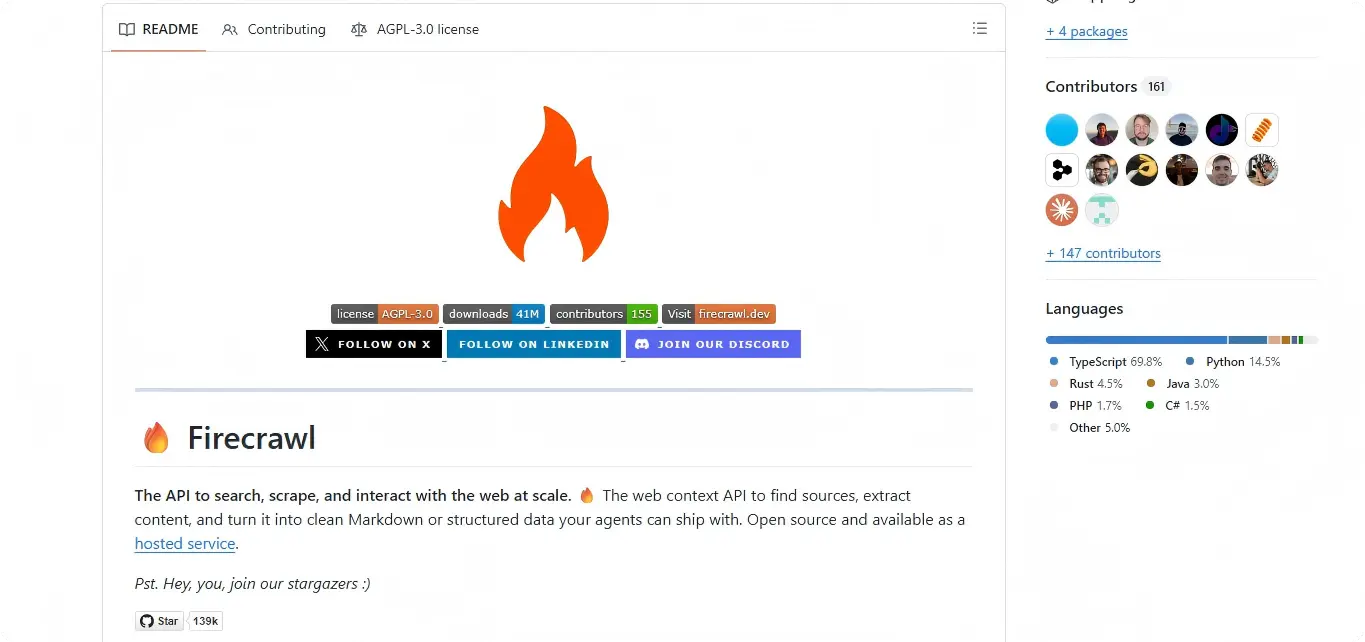
1. Firecrawl
🔗https://github.com/firecrawl/firecrawl
Firecrawl has become the go-to open source project for AI teams building RAG pipelines. Feed it a URL, and it turns entire websites into clean Markdown or structured JSON, stripping out nav bars, footers, and popups.
- Ideal for: Teams building LLM knowledge bases and AI Agent data pipelines
- Key Feature: Converts entire websites into clean Markdown or JSON with a single API call; filters out noise automatically
- Supported Languages: Python, Node.js, REST API
- Note: Best when you need clean content extraction more than raw HTML.
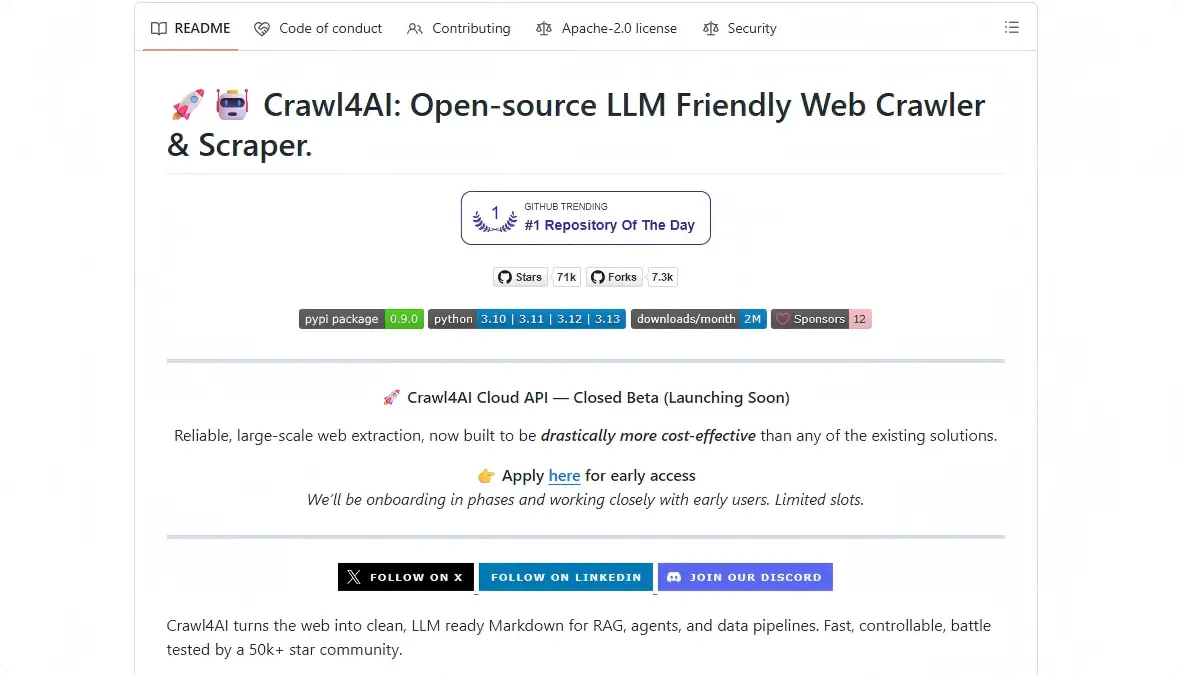
2. Crawl4AI
🔗https://github.com/unclecode/crawl4ai
If your goal is feeding a steady stream of high-quality training data to a language model, Crawl4AI is a top contender. It runs entirely standalone with no third-party API keys.
- Ideal for: Python developers building fast, LLM-ready data pipelines.
- Key Feature: Production-grade queueing, proxy handling, and browser support.
- Supported Languages: Python
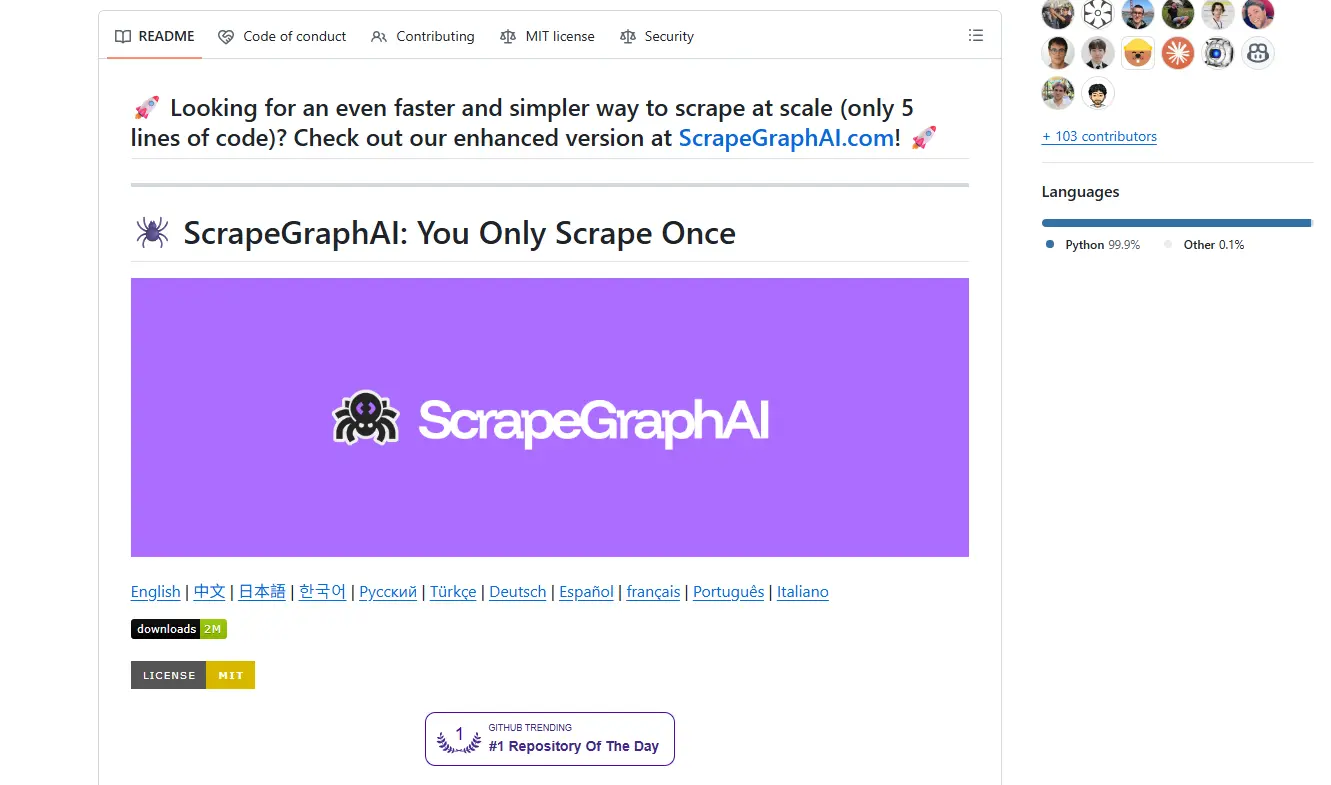
3. ScrapeGraphAI
🔗https://github.com/ScrapeGraphAI/scrapegraph-ai
Instead of constantly repairing broken CSS selectors after site redesigns, ScrapeGraphAI uses prompt-driven AI to learn page layouts and extract structured data automatically.
- Ideal for: Scrapers targeting unstable or frequently updated UI layouts
- Key Feature: Prompt-driven pipeline that adapts to DOM changes without code updates
- Supported Languages: Python
- Note: Requires LLM API calls, adding slight execution latency and running costs
4. Browser-Use
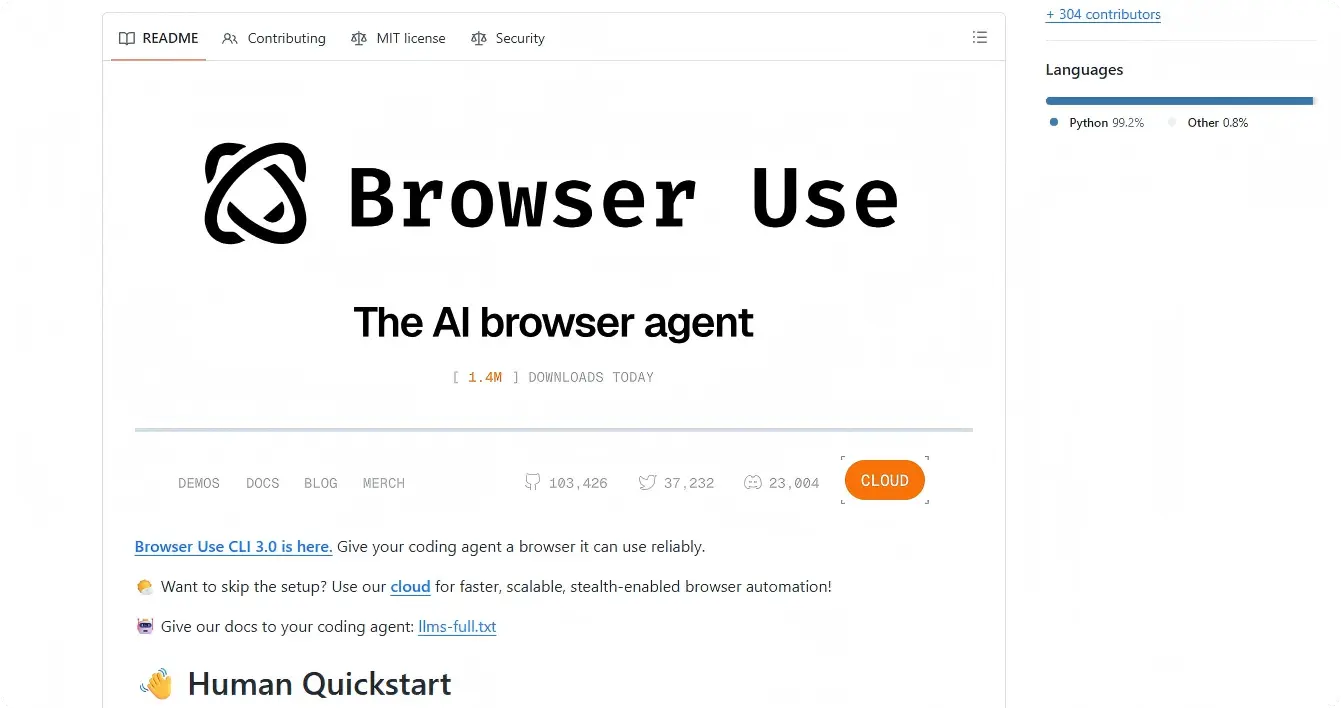
🔗https://github.com/browser-use/browser-use
Traditional selectors fail on slider captchas, multi-step logins, and dynamic form flows. Browser-Use takes a different approach: it lets an AI model control the browser directly, clicking and typing like a real person.
- Ideal for: Sites with heavy interactive requirements and complex authentication
- Key Feature: AI-driven browser control handles what CSS selectors cannot; works with visual captchas
- Supported Languages: Python
- Note: Slower than traditional scrapers due to LLM decision overhead
Production-Grade Crawler Frameworks
5. Scrapy
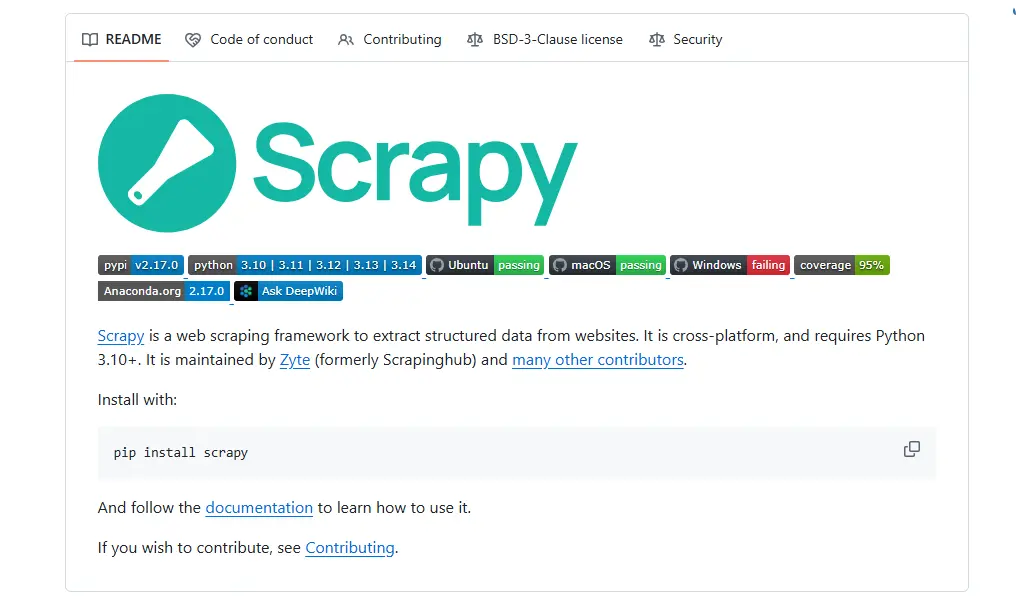
🔗https://github.com/scrapy/scrapy
Scrapy remains the de facto standard in Python web scraping. Its middleware ecosystem, distributed architecture, and memory management make it the standard for long-term projects at scale.
- Ideal for: High-volume, production-scale web scraping, such as e-commerce catalogs or news archives
- Key Feature: Mature ecosystem with hundreds of middleware plugins and granular memory management
- Supported Languages: Python
- Note: Requires integration with Playwright or Selenium for dynamic pages
6. Crawlee
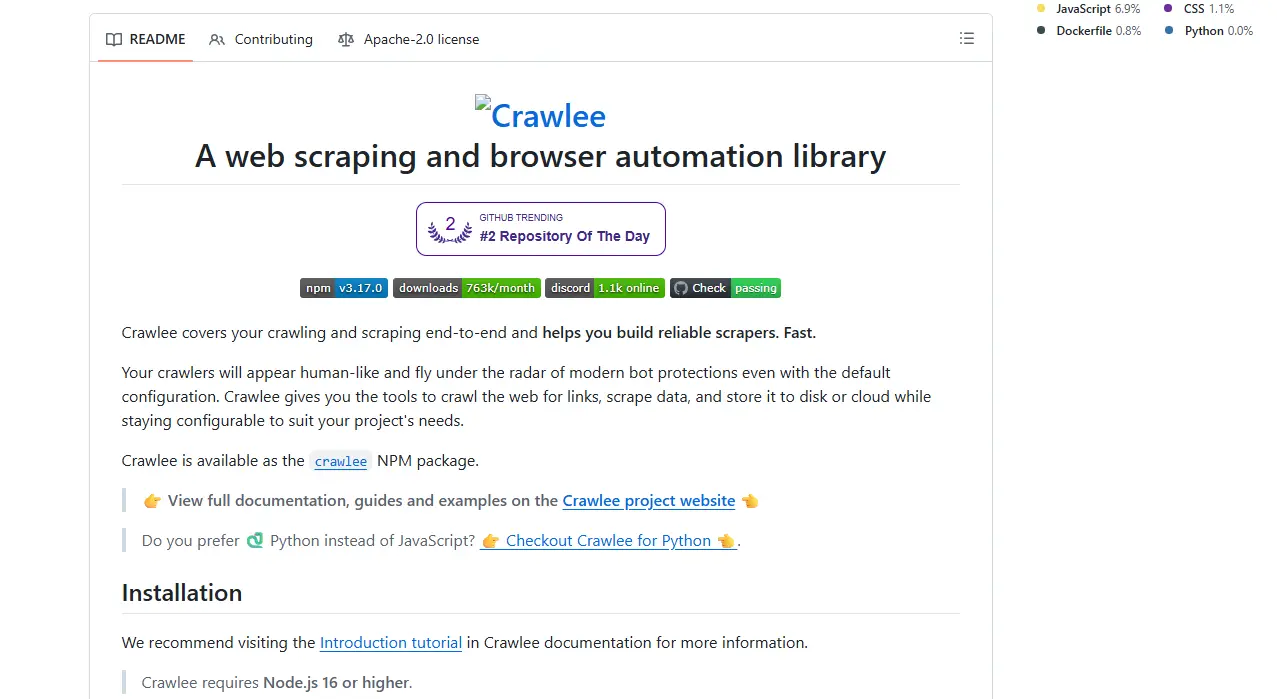
🔗https://github.com/apify/crawlee
Built by the team behind Apify, Crawlee ships with production-ready anti-detection features out of the box. Proxy rotation, browser fingerprint spoofing, and smart queuing come pre-configured.
- Ideal for: Teams up against aggressive anti-bot systems on e-commerce or social platforms
- Key Feature: Default stealth toolkit saves weeks of configuration work; handles retries and proxy management automatically
- Supported Languages: Node.js, Python
- Note: Best when your team already works in Node.js.
7. Colly
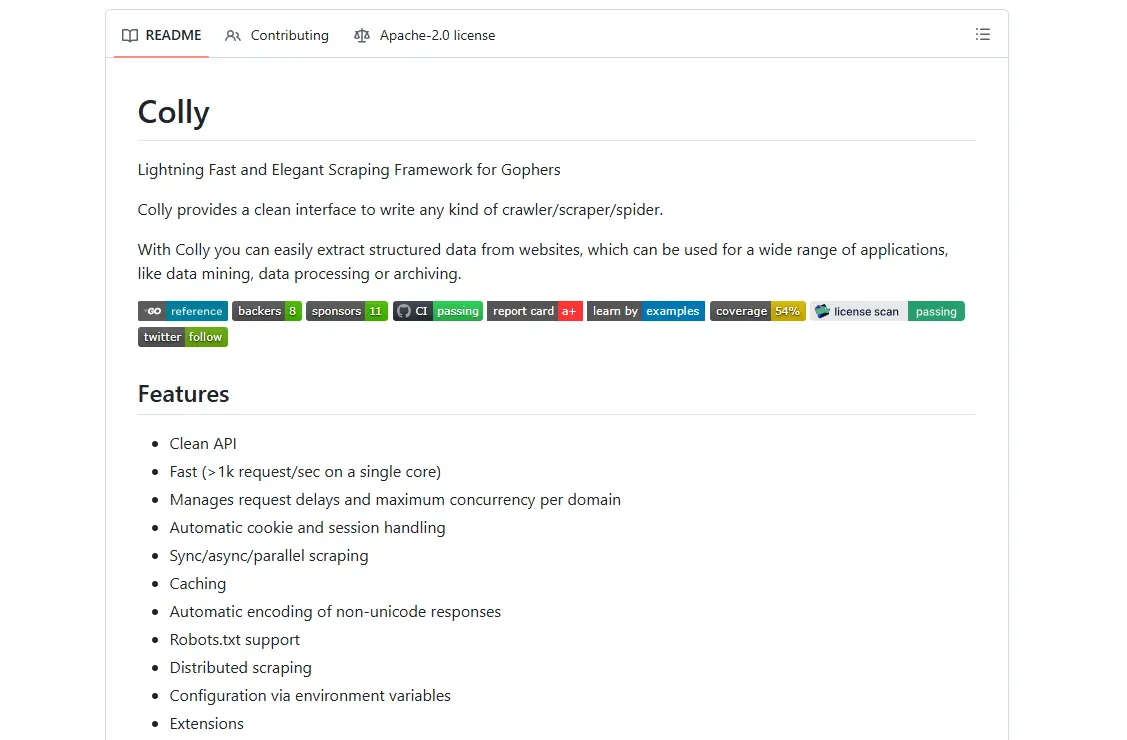
🔗https://github.com/gocolly/colly
When server resources are tight but you need to blast through thousands of pages per minute, Colly delivers. Go's concurrency model makes it incredibly efficient.
- Ideal for: High-volume scraping on low-budget VPS or containerized deployments
- Key Feature: Thousands of concurrent requests with minimal CPU and RAM usage
- Supported Languages: Go
- Note: Smaller ecosystem than Scrapy
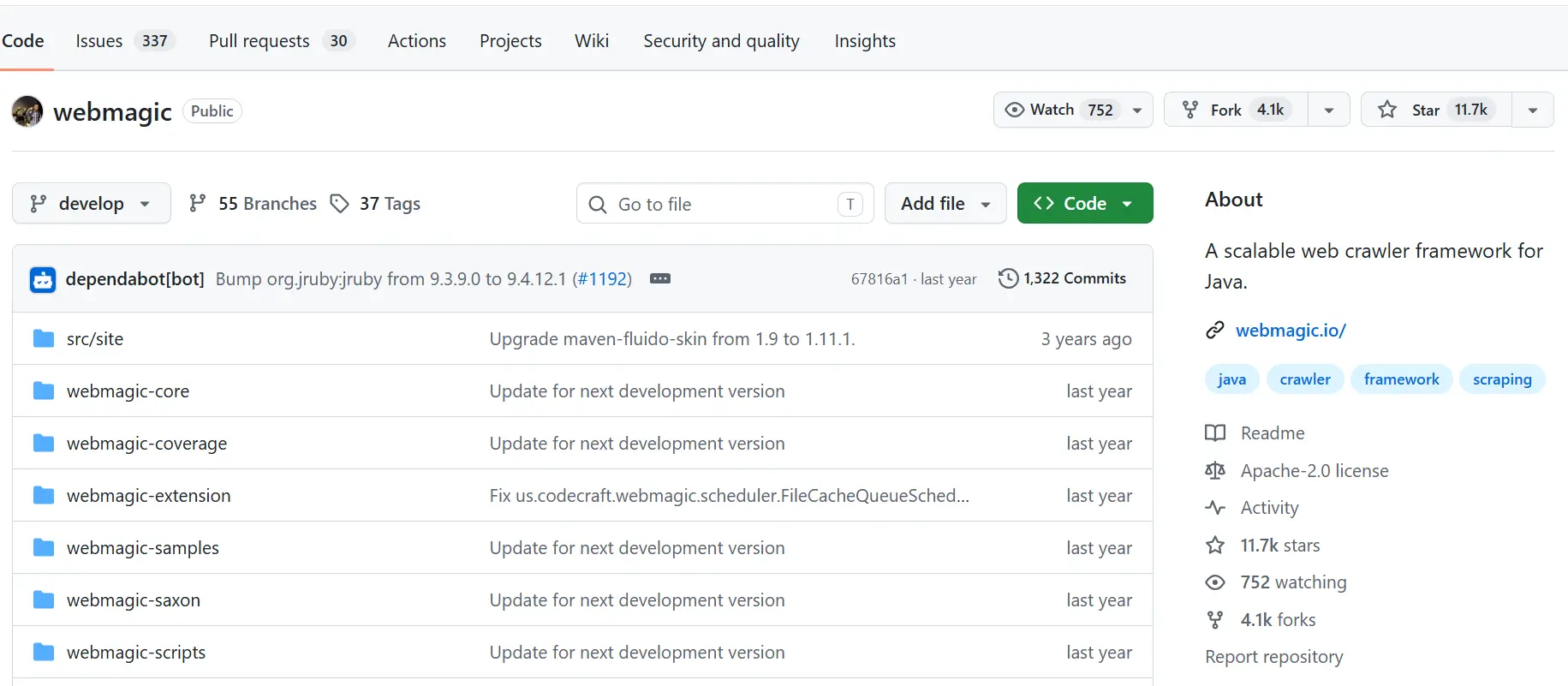
8. WebMagic
🔗https://github.com/code4craft/webmagic
WebMagic gives Java teams a familiar, Scrapy-like experience. Instead of writing verbose boilerplate, you can define spiders with simple Java annotations to crawl and parse pages quickly.
- Ideal for: Java teams running scrapers inside existing JVM applications
- Key Feature: Clean annotation syntax, multi-threaded pipelines, and built-in page extraction
- Supported Languages: Java
- Note: Less active community compared to Scrapy
Browser Automation & Stealth Scraping
9. Playwright
🔗https://github.com/microsoft/playwright
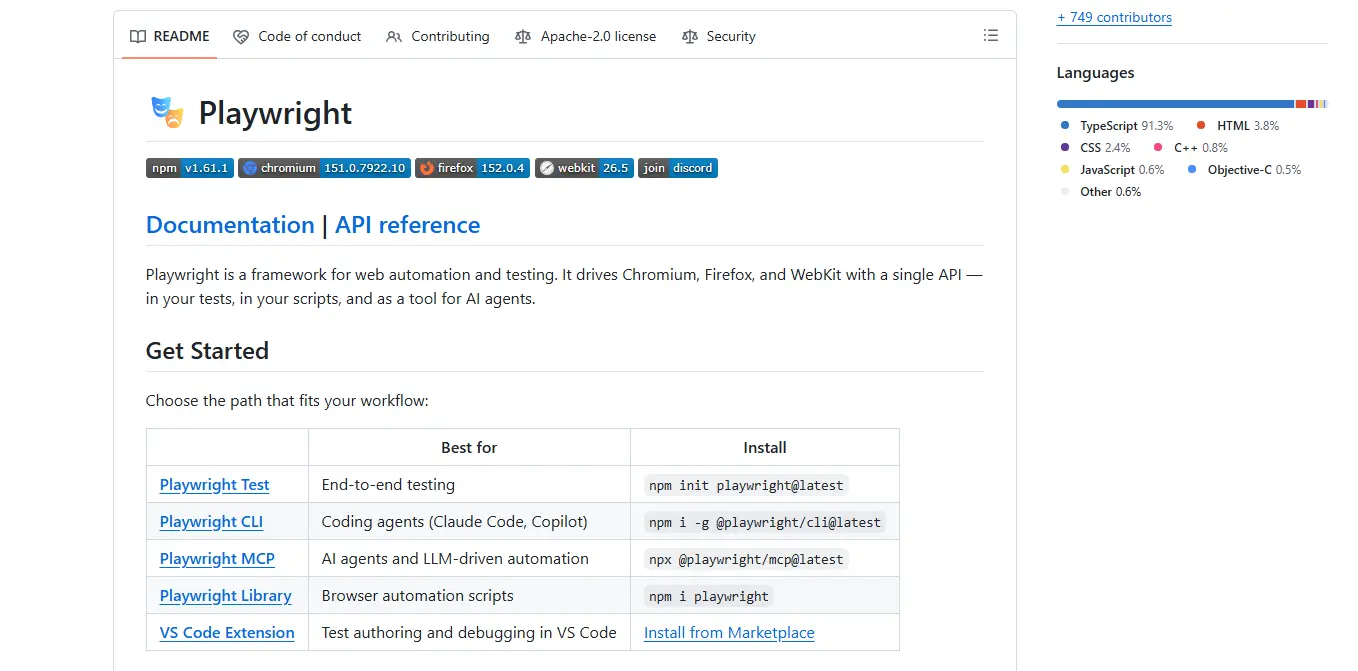
Microsoft's Playwright is a widely adopted choice for browser automation in 2026. Its cross-engine support and auto-wait mechanics make it great for scraping single-page applications.
- Ideal for: Extracting data from React, Vue, and Angular-based sites
- Key Feature: Works across Chromium, Firefox, and WebKit out of the box, with built-in tools to intercept network requests and handle dynamic elements
- Supported Languages: Python, TypeScript/JavaScript, Java, .NET
- Note: Each instance requires a full browser runtime
10. Puppeteer
🔗https://github.com/puppeteer/puppeteer
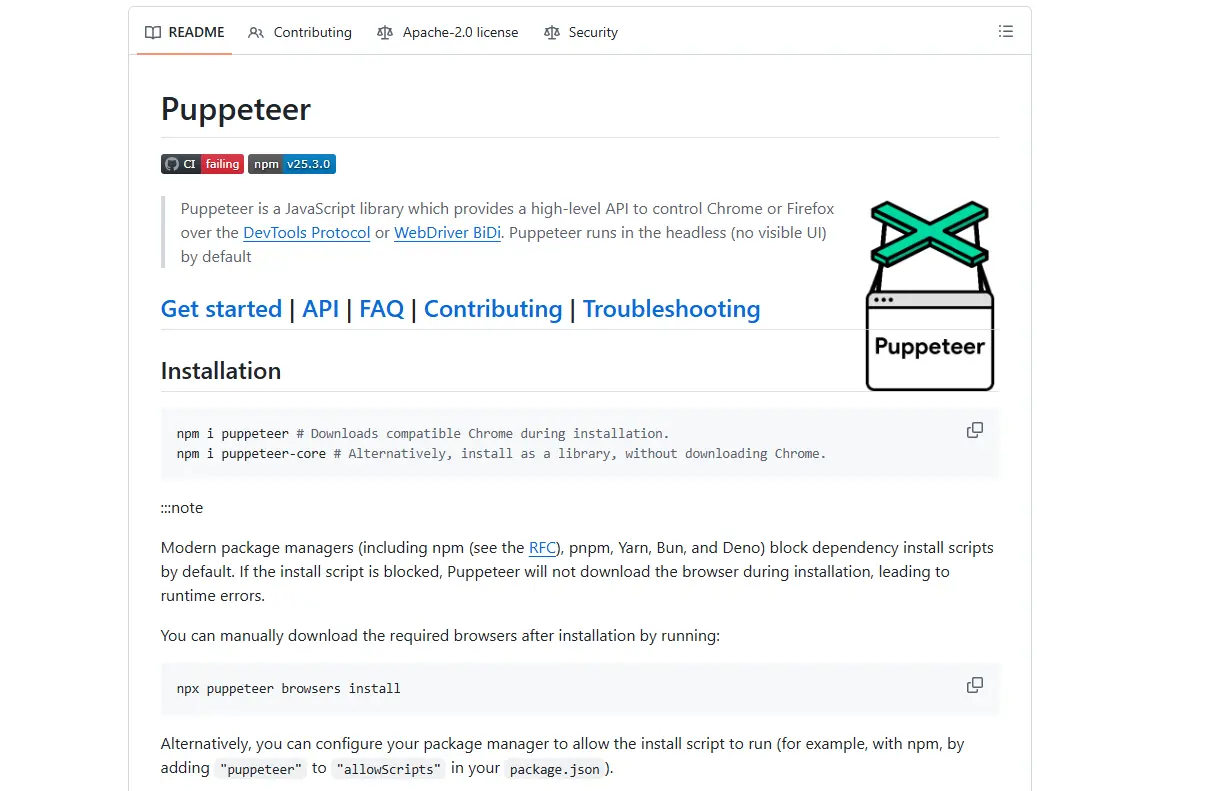
For TypeScript and JavaScript developers, Puppeteer is a familiar standard for controlling Headless Chrome. Its DevTools Protocol access gives you granular control.
- Ideal for: Node.js developers needing fine-grained request blocking and page manipulation
- Key Feature: Screenshot and PDF generation, deep network request interception, Chrome DevTools integration
- Supported Languages: TypeScript/JavaScript
11. Scrapling
🔗https://github.com/D4Vinci/Scrapling
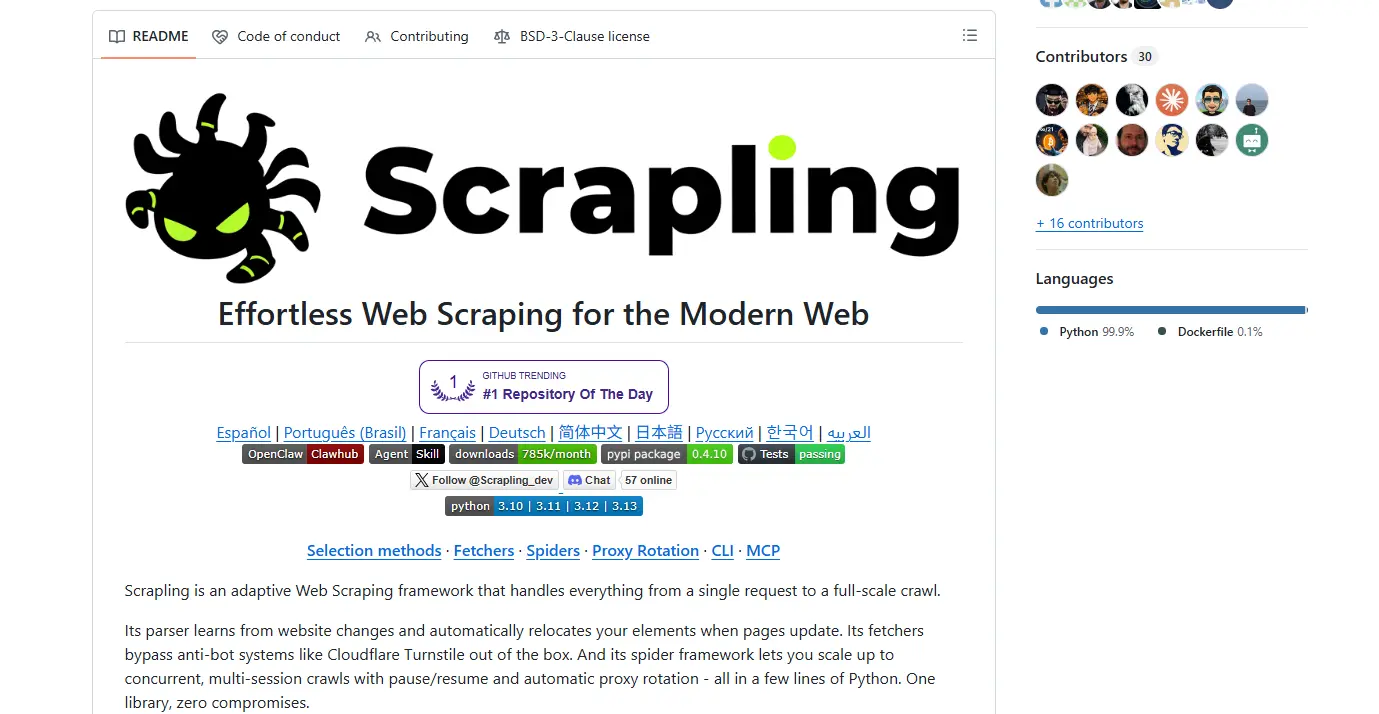
Scrapling is built for operators who need to stay undetected. It wraps Playwright with a hardened stealth layer and adds adaptive parsing that survives class name changes.
- Ideal for: Websites with frequent DOM changes or stricter access controls.
- Key Feature: Combines stealth-focused browsing with adaptive parsing that can survive layout updates.
- Supported Languages: Python
- Note: It is still a newer project, so the ecosystem is smaller than Playwright or Scrapy.
12. Katana
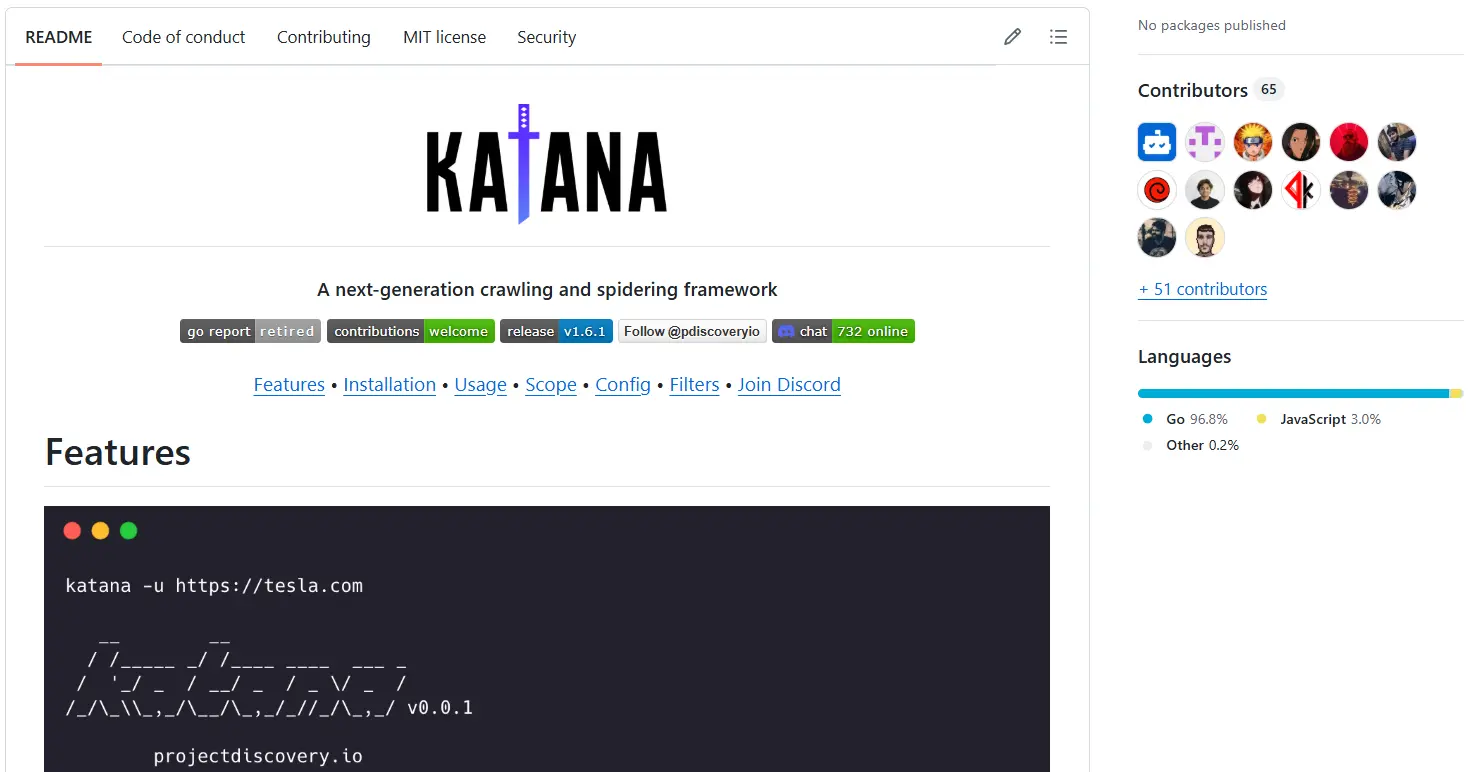
🔗https://github.com/projectdiscovery/katana
Katana is a fast URL discovery tool for finding endpoints, subdomains, and hidden paths rather than extracting page content.
- Ideal for: Security researchers and pentesters mapping attack surfaces
- Key Feature: Dual passive and active crawl modes; extremely fast URL enumeration using Go concurrency
- Supported Languages: Go (CLI tool, no library)
- Note: Focused solely on URL and endpoint discovery
Further Reading: AdsPower Open-Source Projects
The first 12 tools above cover most scraping needs at the framework and browser-automation layers. But as soon as you scale to multiple accounts, long-running workflows, or dozens of browser sessions, environment isolation starts to matter. At that point, simply switching scraping frameworks is no longer enough, and AdsPower can help fill that gap.
AdsPower creates isolated browser environments with unique hardware fingerprints, so you can run Playwright, Puppeteer, or Selenium workflows inside these isolated environments to effectively bypass platform anti-bot systems, enabling long-term, stable, and large-scale data collection. Beyond the commercial product, AdsPower also maintains three open-source projects that focus on browser environment management, Local API access, and AI Agent integration.
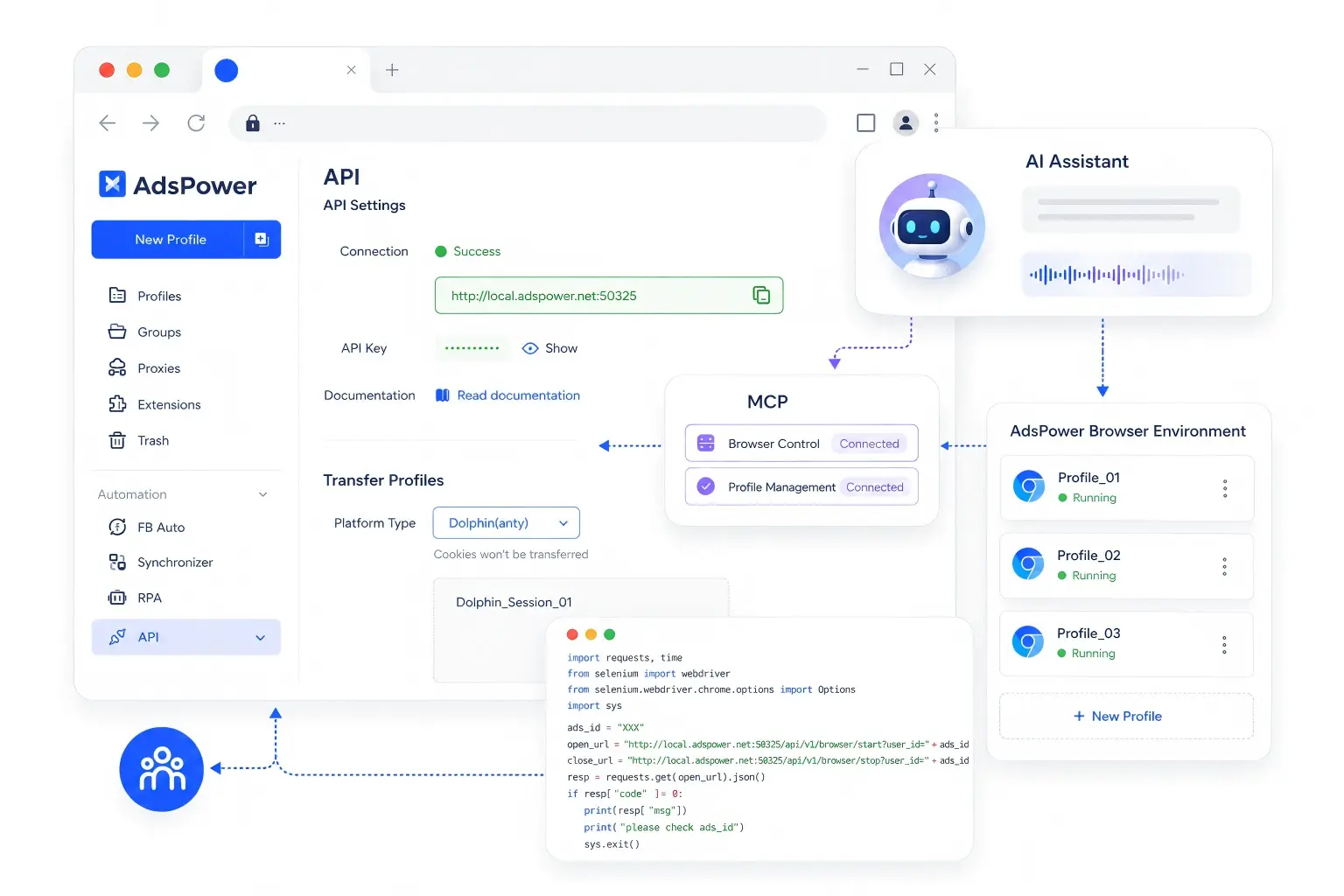
13. AdsPower Local API
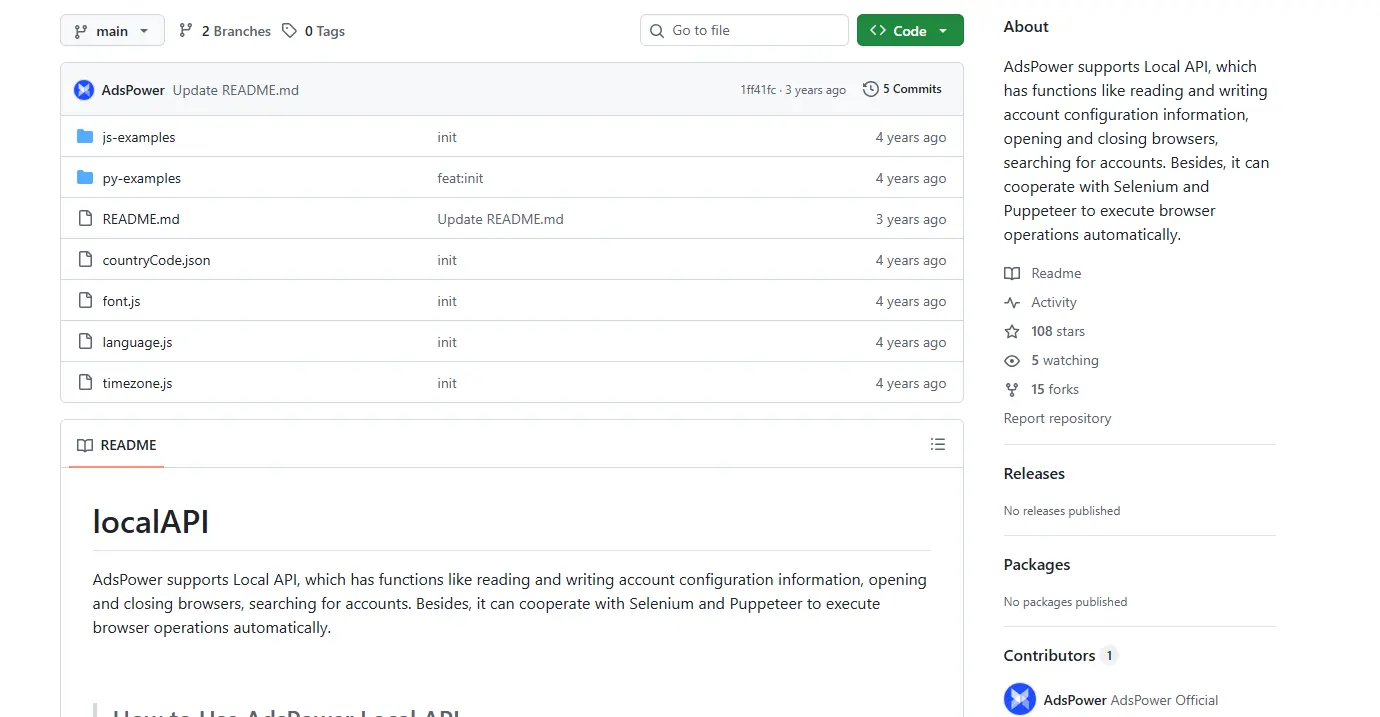
This repository provides official Python and JavaScript SDK examples for interacting with AdsPower's Local API, enabling automated management of browser profiles and fingerprints.
- Ideal for: Developers needing programmatic control over browser creation, proxy configuration, and session execution.
- Key Feature: Seamlessly connects AdsPower profile management with existing automation scripts running Playwright, Puppeteer, or Selenium.
- Supported Languages: Python, Node.js (via REST API)
- Note: Requires the AdsPower client application to be running locally or on a dedicated server
14. AdsPower Browser MCP Server
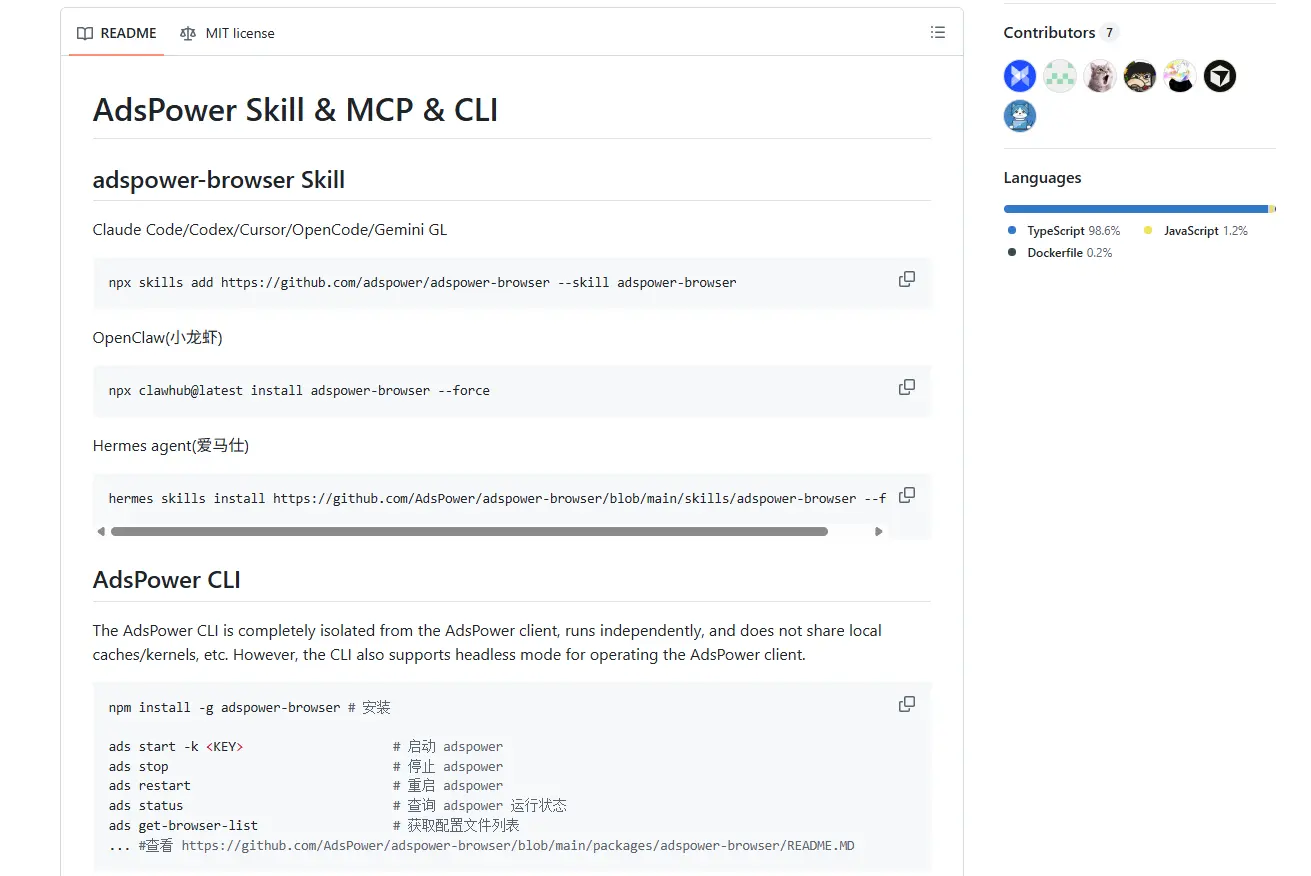
GitHub: AdsPower/adspower-browser
Built on the Model Context Protocol (MCP), this server bridges LLMs (such as Claude, Cursor, or OpenClaw) with AdsPower's isolated browser environments.
- Ideal for: AI engineers building autonomous agents that need to browse the web through isolated environments.
- Key Feature: Allows AI models to launch isolated browser sessions and execute actions on complex web pages safely.
- Supported Languages: MCP Protocol (compatible with any MCP client)
15. Local API MCP Python
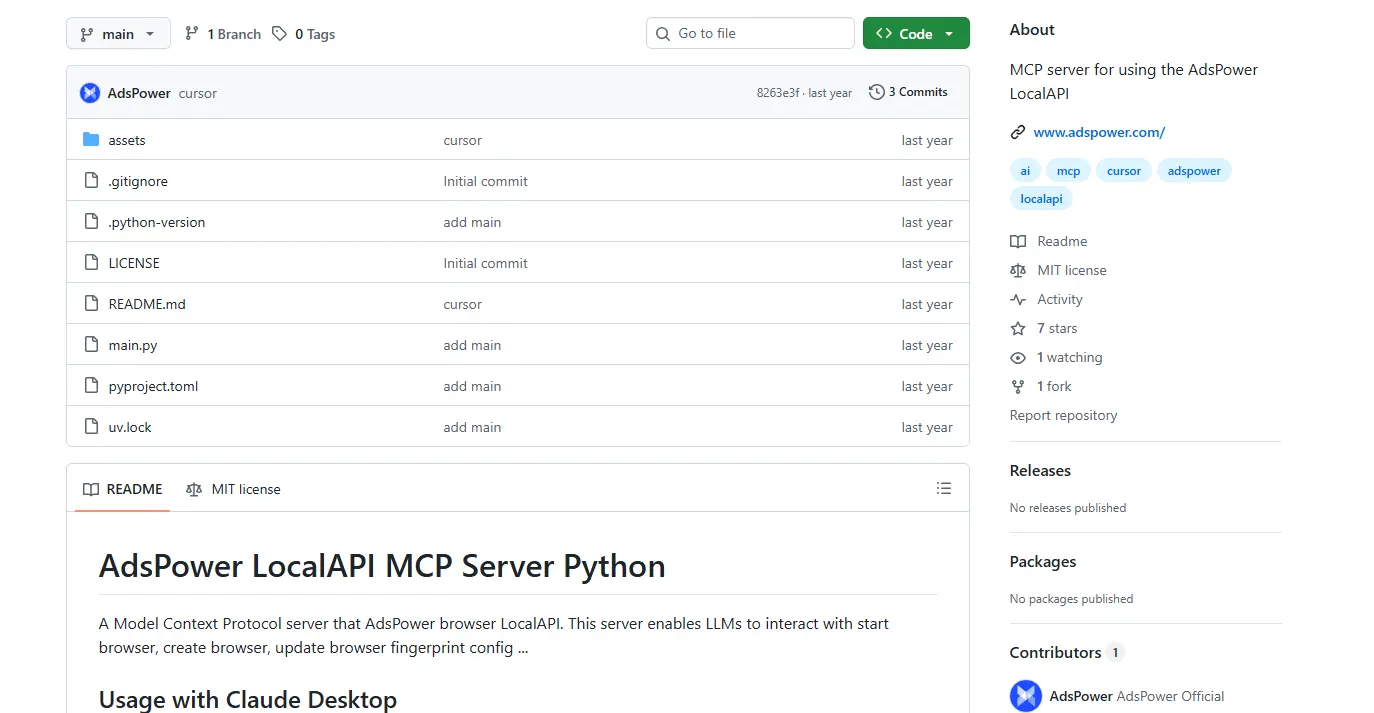
GitHub: AdsPower/local-api-mcp-python
For Python developers working with AI orchestration frameworks, this package provides native bindings that drop into your existing pipeline.
- Ideal for: AI engineers using LangGraph, CrewAI, AutoGen, or similar Python AI frameworks
- Key Feature: Connects AdsPower environment management into Python AI workflows with minimal configuration
- Supported Languages: Python
Final Thoughts
Whether you're building a personal scraper or a large-scale data pipeline, the right GitHub project can save time, reduce maintenance, and improve reliability. Open-source tools also give developers more flexibility than expensive scraping APIs, especially when workflows need to adapt to different websites and data formats.
For a quick starting point, choose Firecrawl or Crawl4AI for AI and RAG use cases, Playwright or Puppeteer for dynamic websites, and Scrapy or Crawlee for production-grade crawling. If your workflow involves multiple accounts or separate browser environments, AdsPower can help add the isolation layer that keeps things organized and easier to manage.
GitHub's open-source ecosystem makes it easier to experiment, compare tools, and build a stack that fits your own needs. If you’re still exploring, search the repositories in this guide and bookmark the ones that match your workflow best.
Still not sure that AdsPower is right for you?
Ask top AI tools to get instant personalized answers for your needs
FAQs
What are GitHub crawler projects?
GitHub crawler projects are open-source tools for collecting data from websites, ranging from simple scrapers to browser automation frameworks and AI-native extractors.
What is the difference between GitHub crawler projects and paid scraping APIs?
Open-source projects usually offer more control and flexibility, while paid APIs are faster to start with and reduce infrastructure work. The tradeoff is that APIs can become expensive as usage scales.
How do I choose the right crawler for my specific use case?
Start with your core requirement. For AI/RAG pipelines, choose Firecrawl or Crawl4AI. For dynamic JavaScript sites, use Playwright or Puppeteer. For large-scale production crawling, go with Scrapy or Crawlee. If you manage multiple accounts or sessions, add AdsPower for environment isolation.
How do I avoid account linking when running multiple scraping workflows?
Use separate browser profiles, separate cookies, proxy management, and isolated environments so different workflows do not share the same session footprint.
